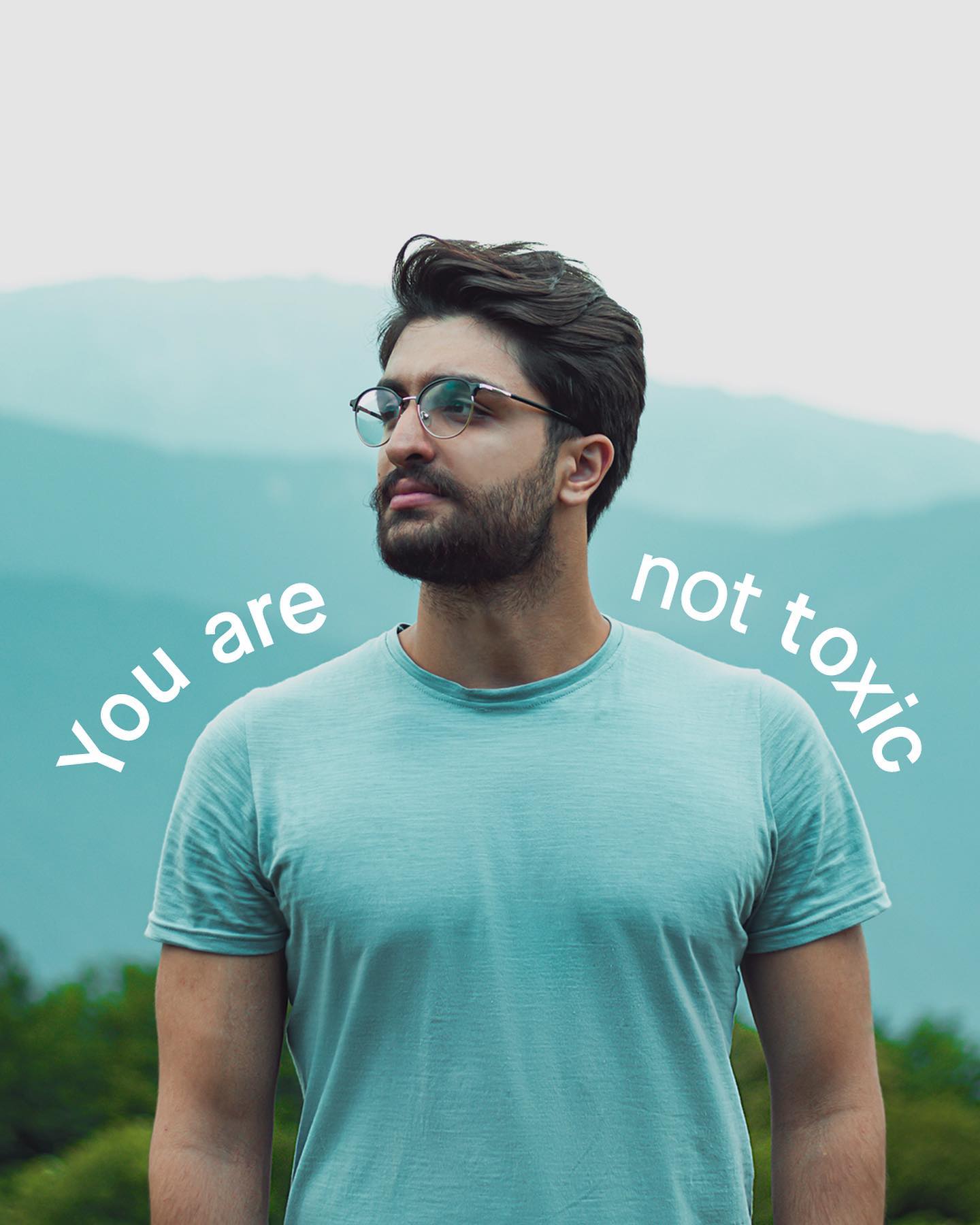
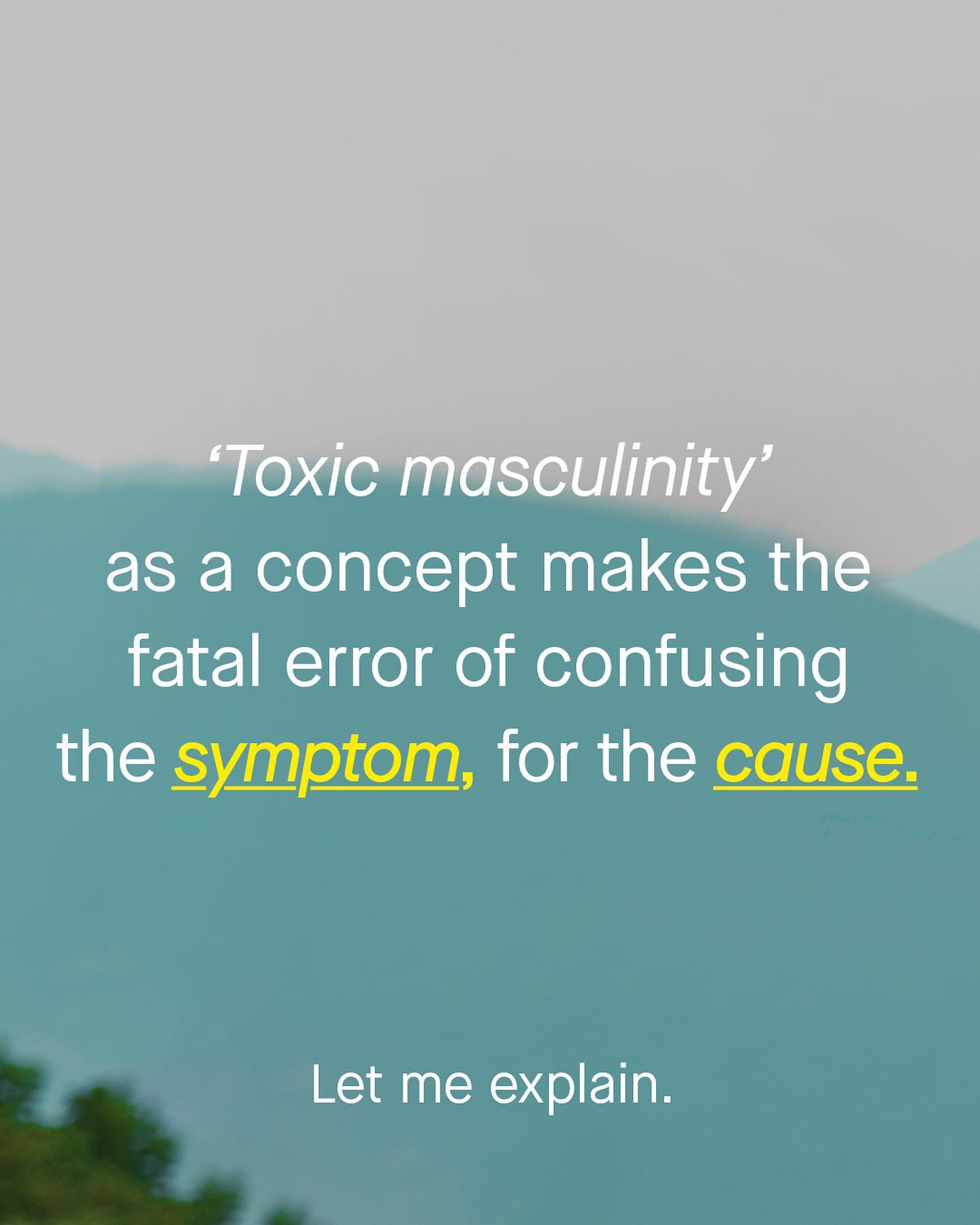
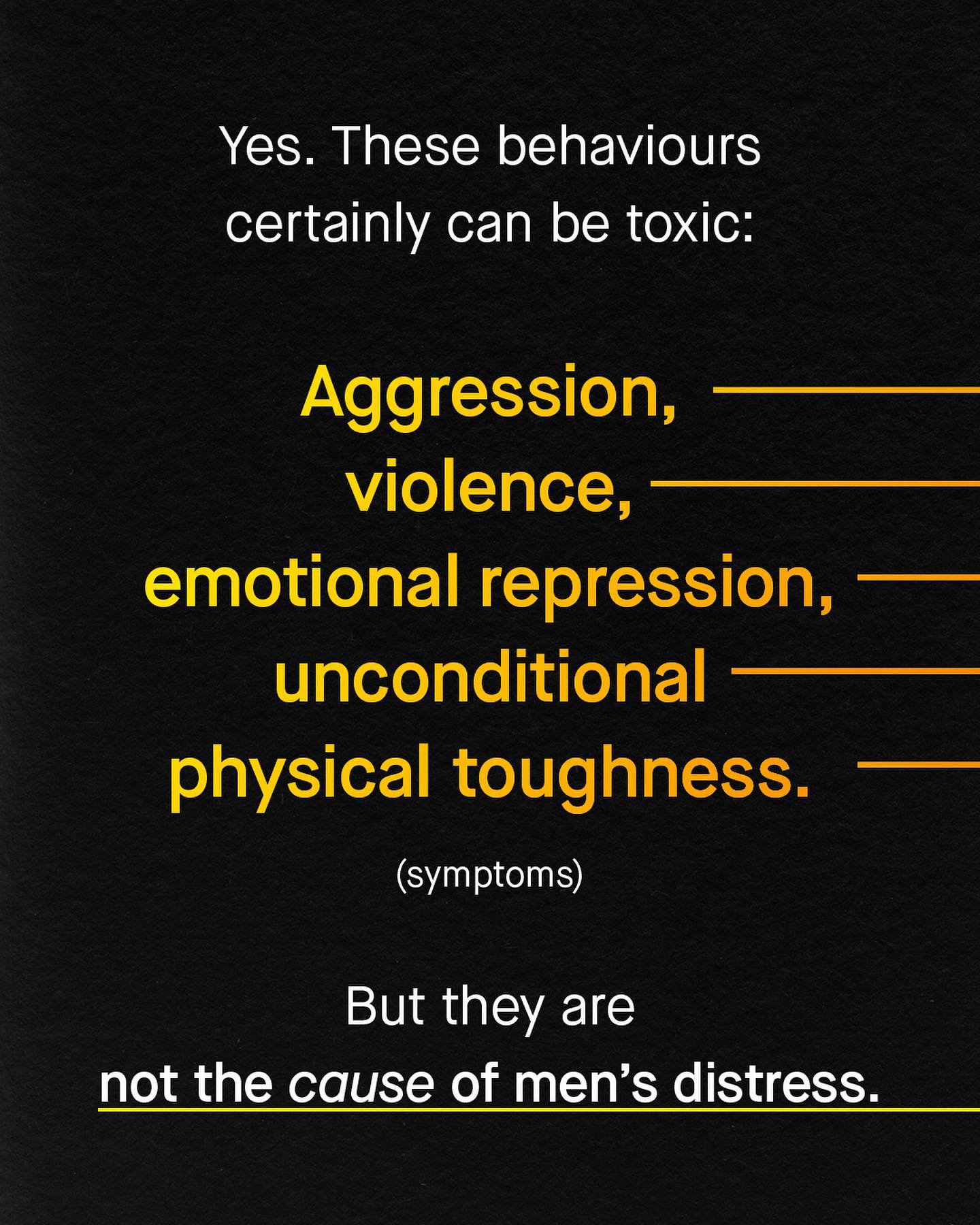
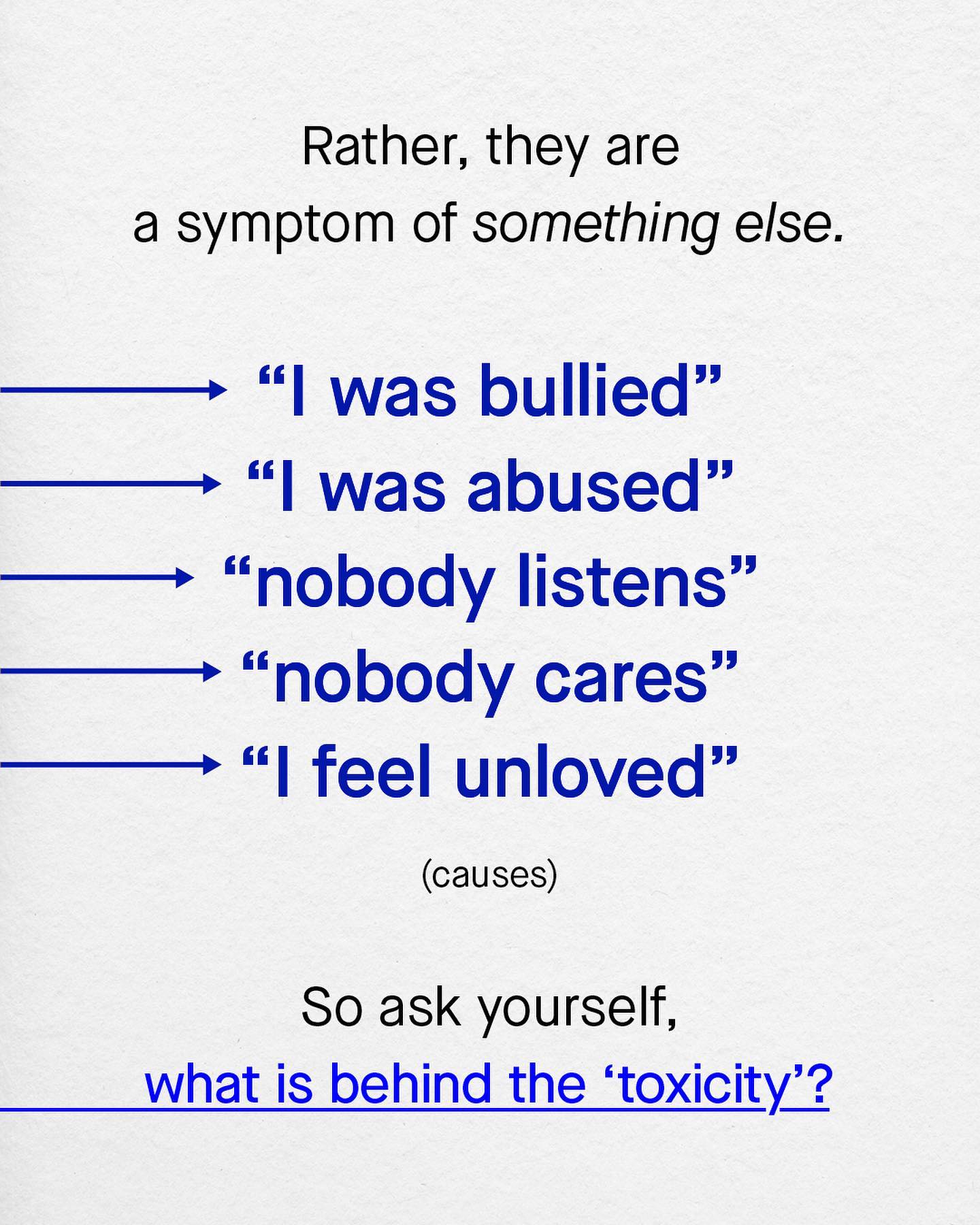
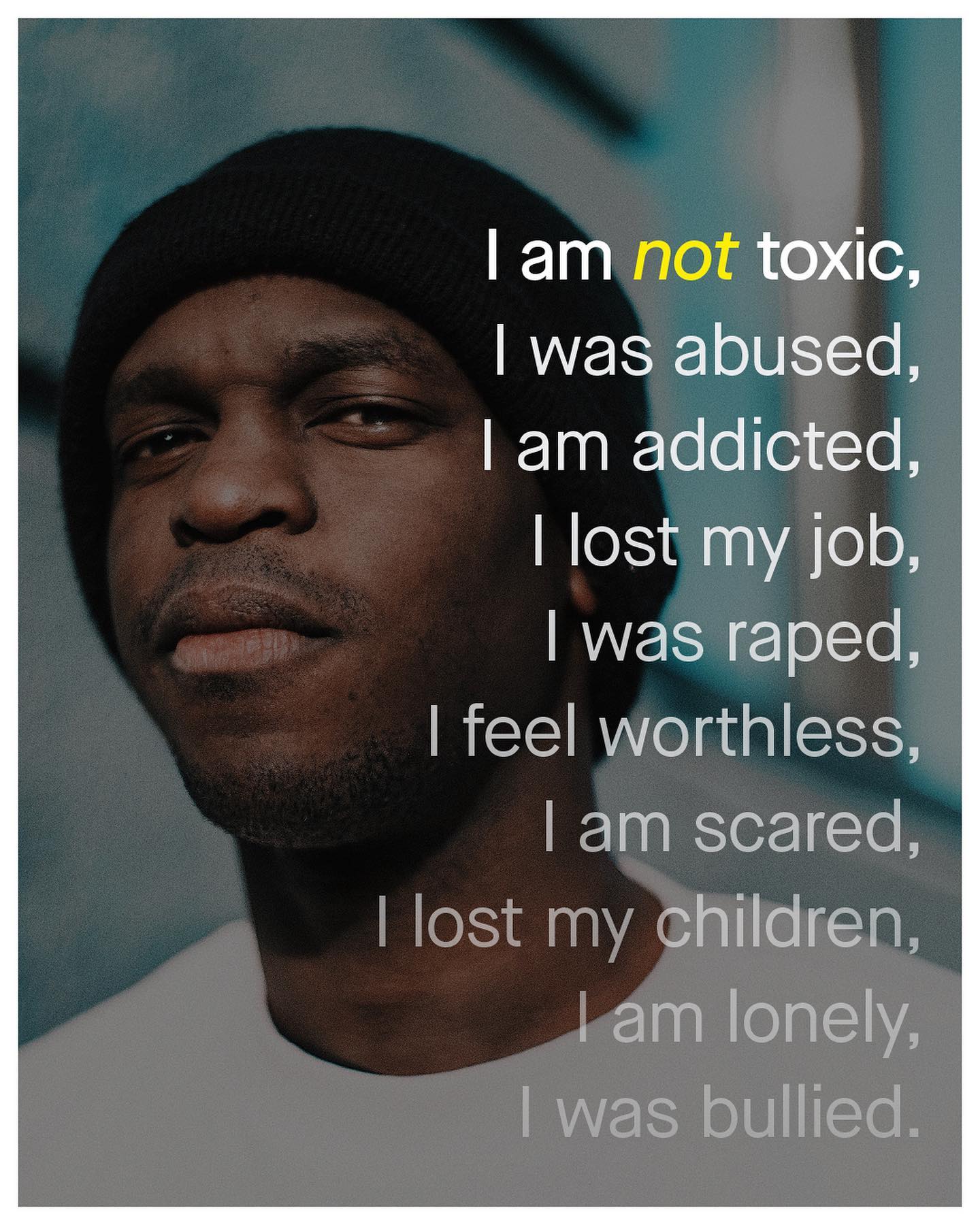
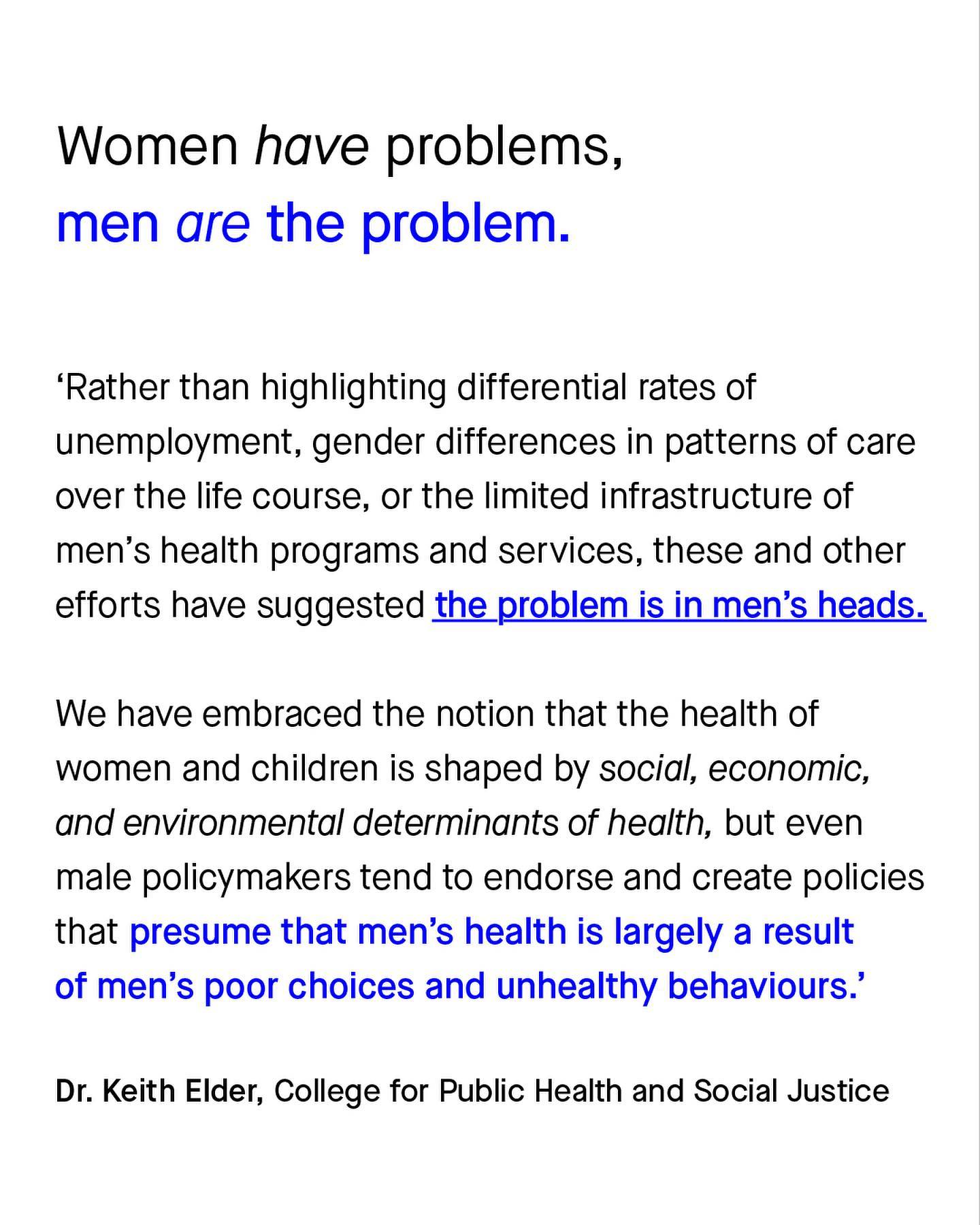
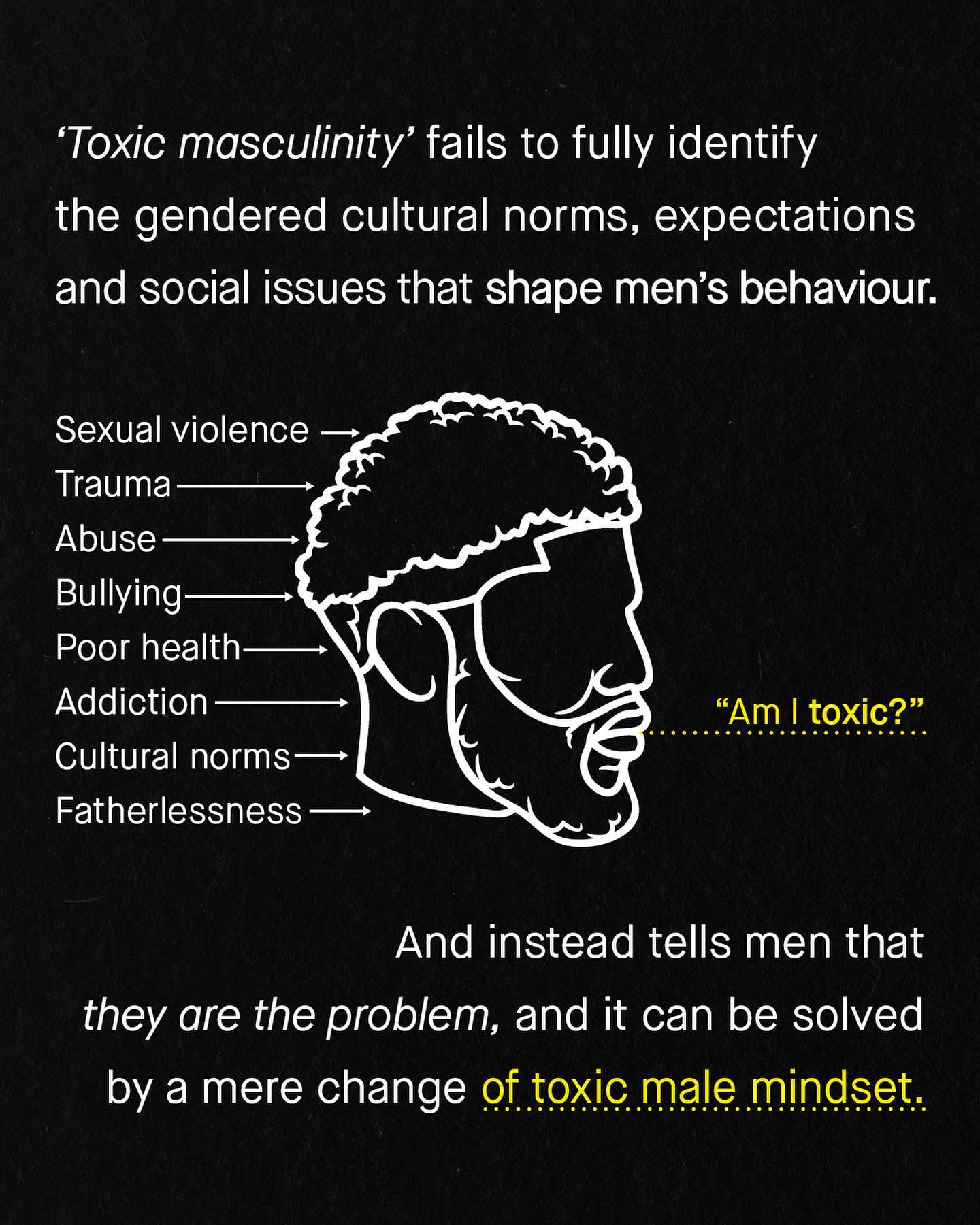
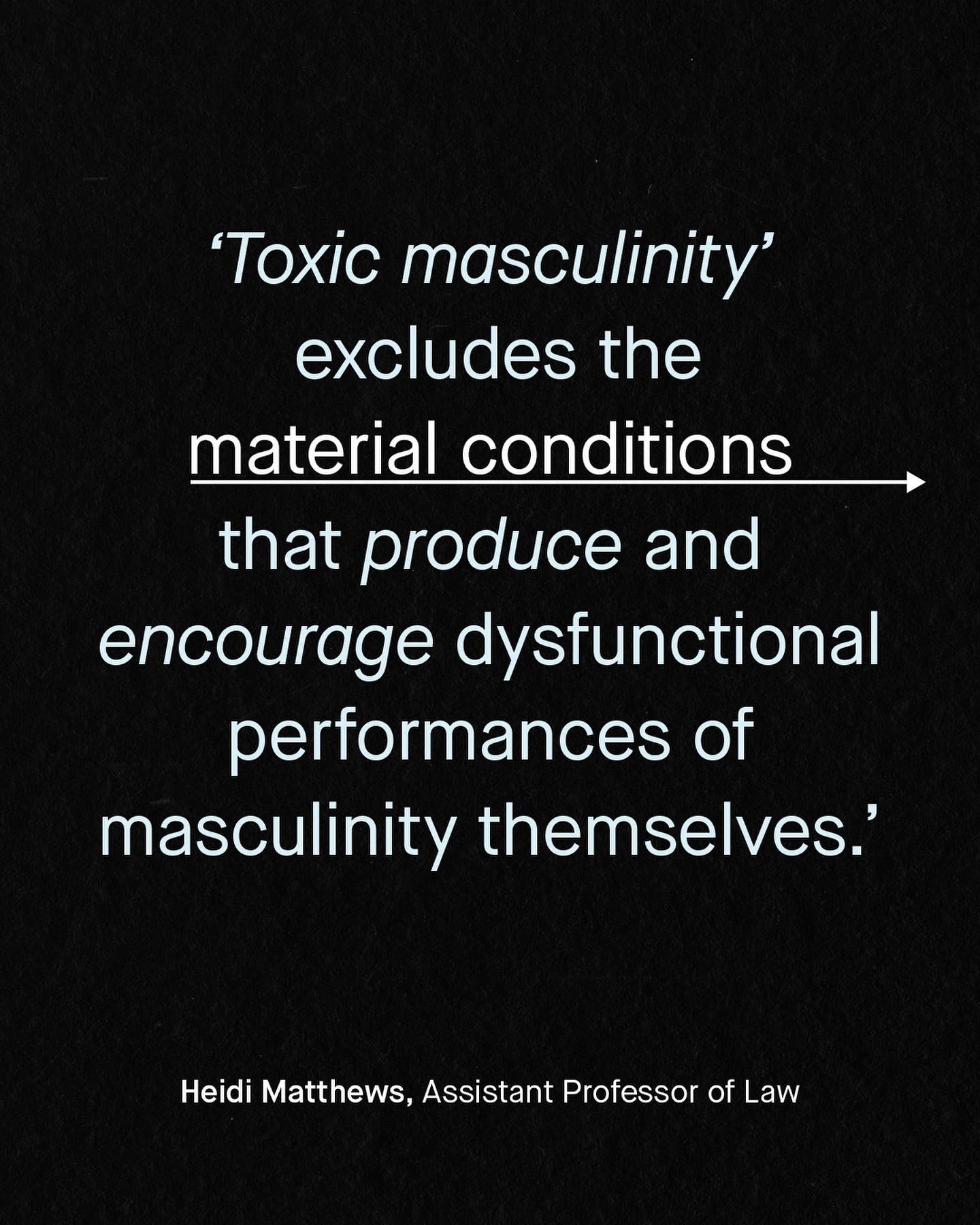
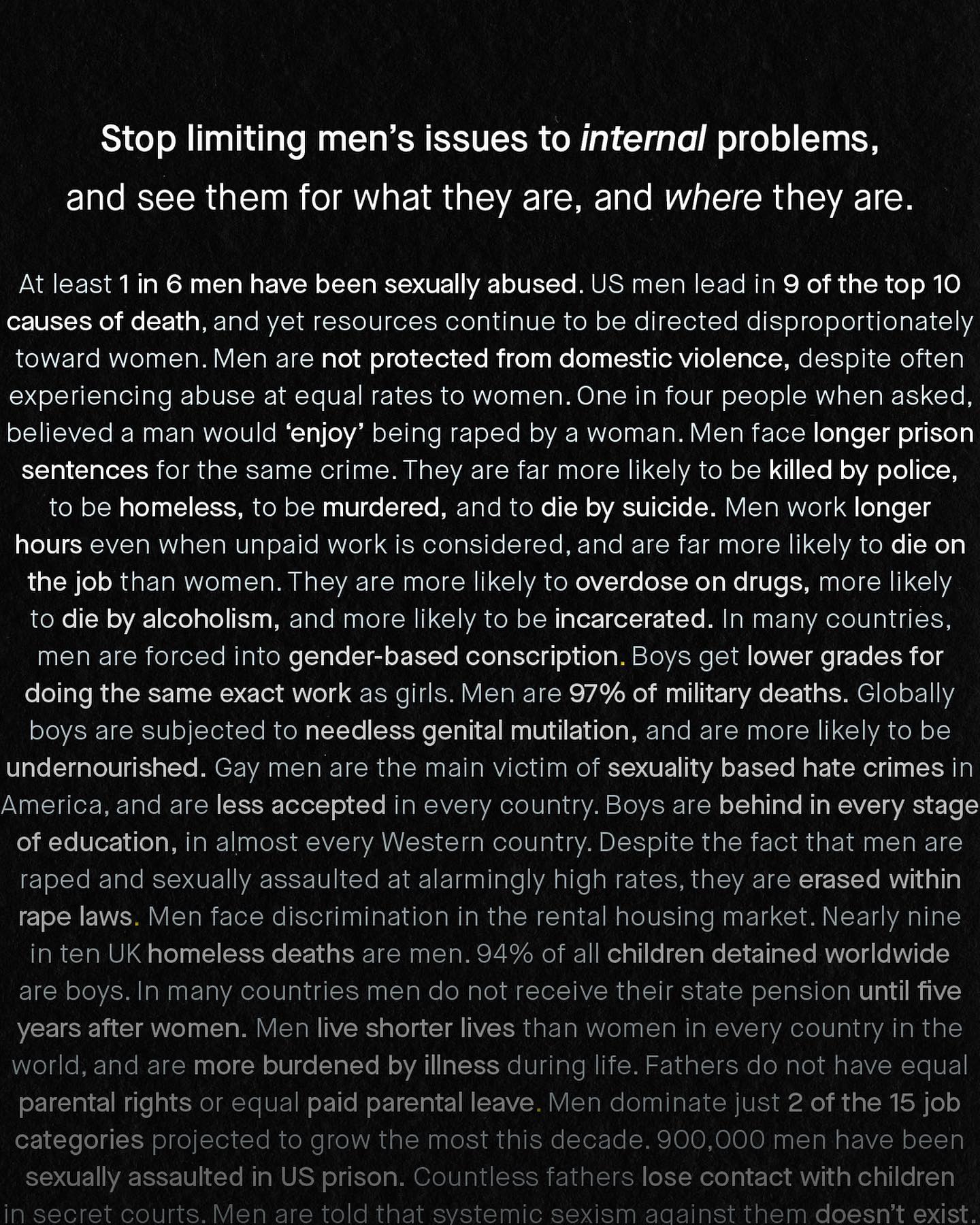
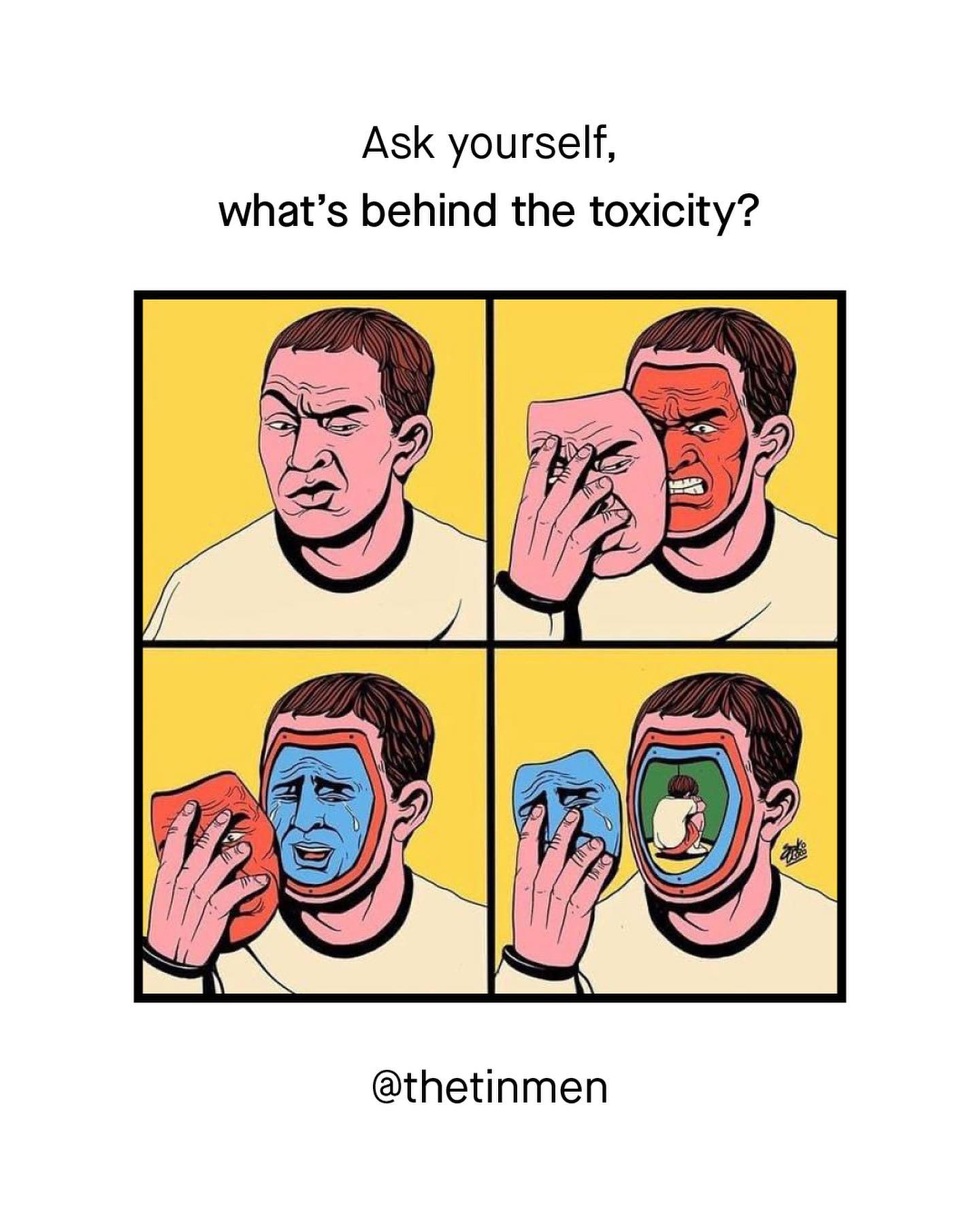
We have arrived at a point of social advocacy, that provides a beautifully nuanced and rich analysis of women’s issues. And yet one word simplistic solutions for men, laden with shame and condemnation. We know that women’s issues are shaped by social, economic, structural, political and environmental factors; and their behaviour, including criminal behaviour, influenced by their experiences, their childhood and their traumatic past. But men’s problems are their own, and only they can solve them. Their behaviour, especially criminal behaviour, is a consequence of their gender, and their experiences are inconsequential (men don’t have problems, didn’t you know?) In nutshell – women *have* problems, men *are* the problem. When women have issues we rightly ask ‘how can we fix society?’ But when men have issues, we ask ‘how can men fix themselves?’ And it is this narrow and harmful mindset that has led the world to grapple with highly problematic ideas such as ‘toxic masculinity’. A concept that limits men’s issues to internal problems, and presents a mere change of problematic male mindset as the answer. It gaslights men. Cry a little, talk more, stop being a total piece of shit, and you’ll be just fine guys! Who cares about your past, who cares about your trauma, who cares about the structural and societal problems that impact you, and which shape your distress. For we have bought into a dogmatic patriarchal worldview that cannot (and will never) be able to reconcile such systemic male disadvantages and pain, so we’ll just deny it exists. So is it time we brought the same richness and complexity to how we view men’s issues? Is it time we extended the same level of compassion to men, as we already do to women? Is it time we ended discourse around #toxicmasculiunity? ~ Images by Black Kiwi Hug, Marie Michele Bouchard, Amir Riazipour, Kiki Hug, from Unsplash. Illustration by Hey Rabbit #mensmentalhealth #menshealth #malesuicideawareness #malesuicide
2023-02-27