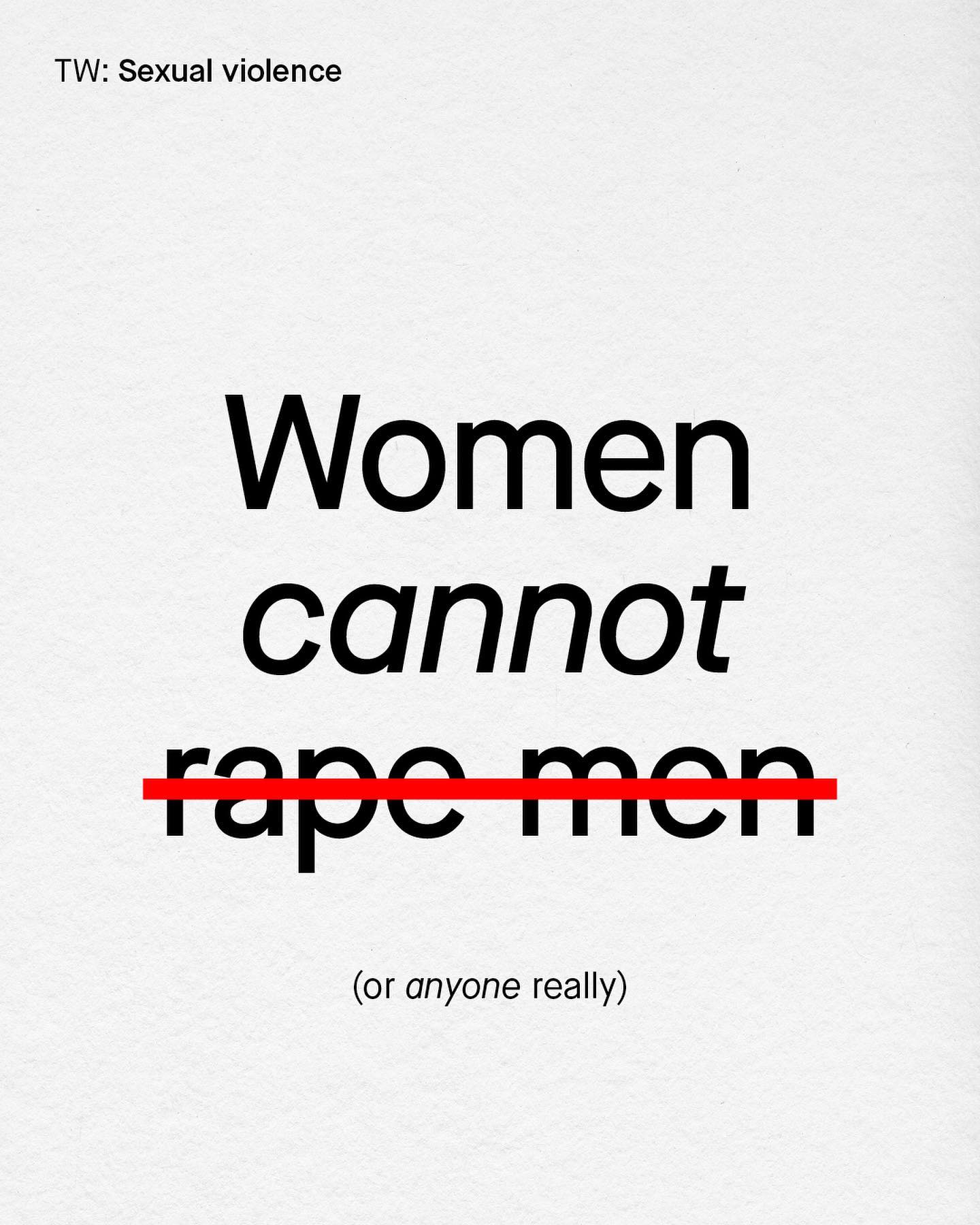
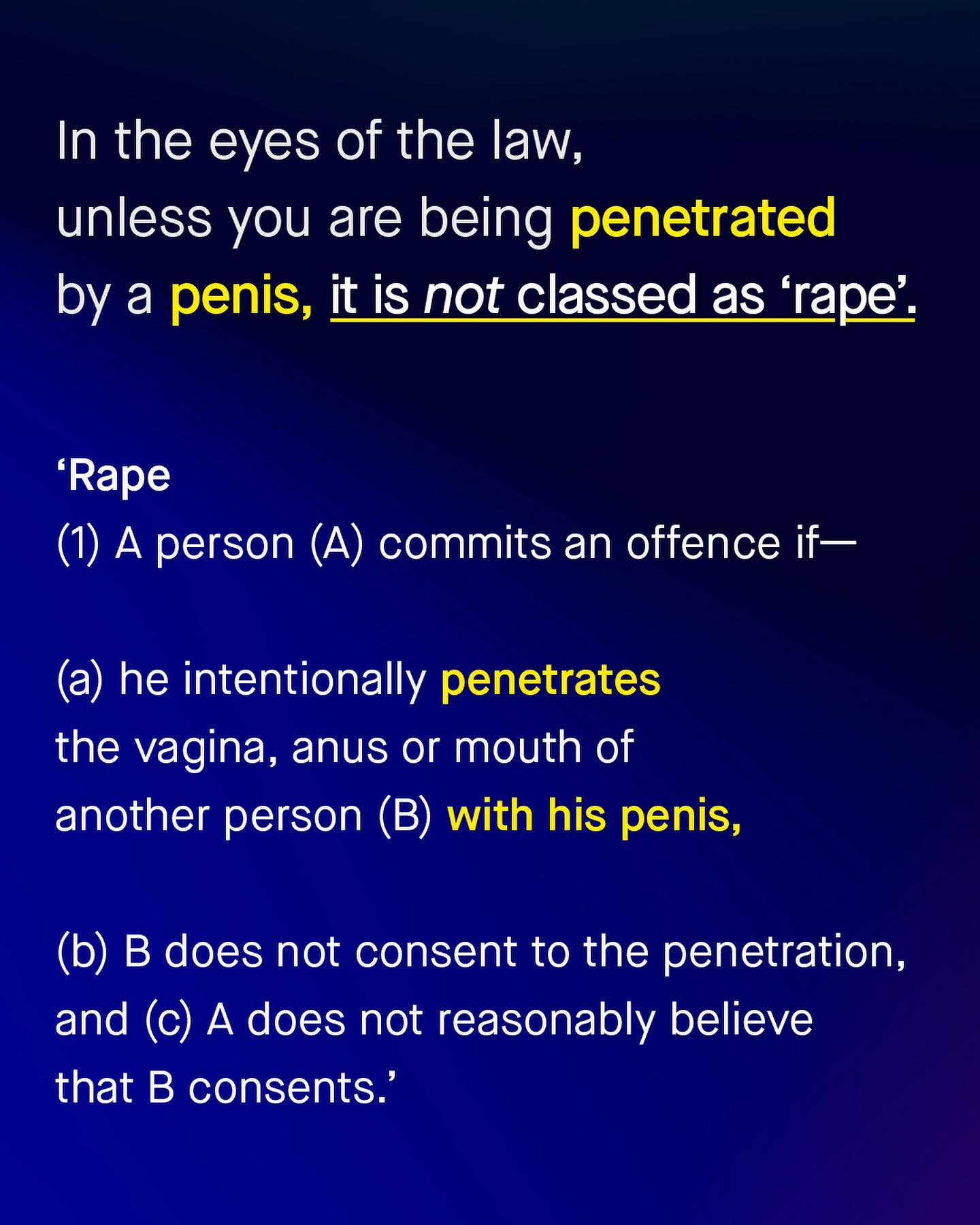
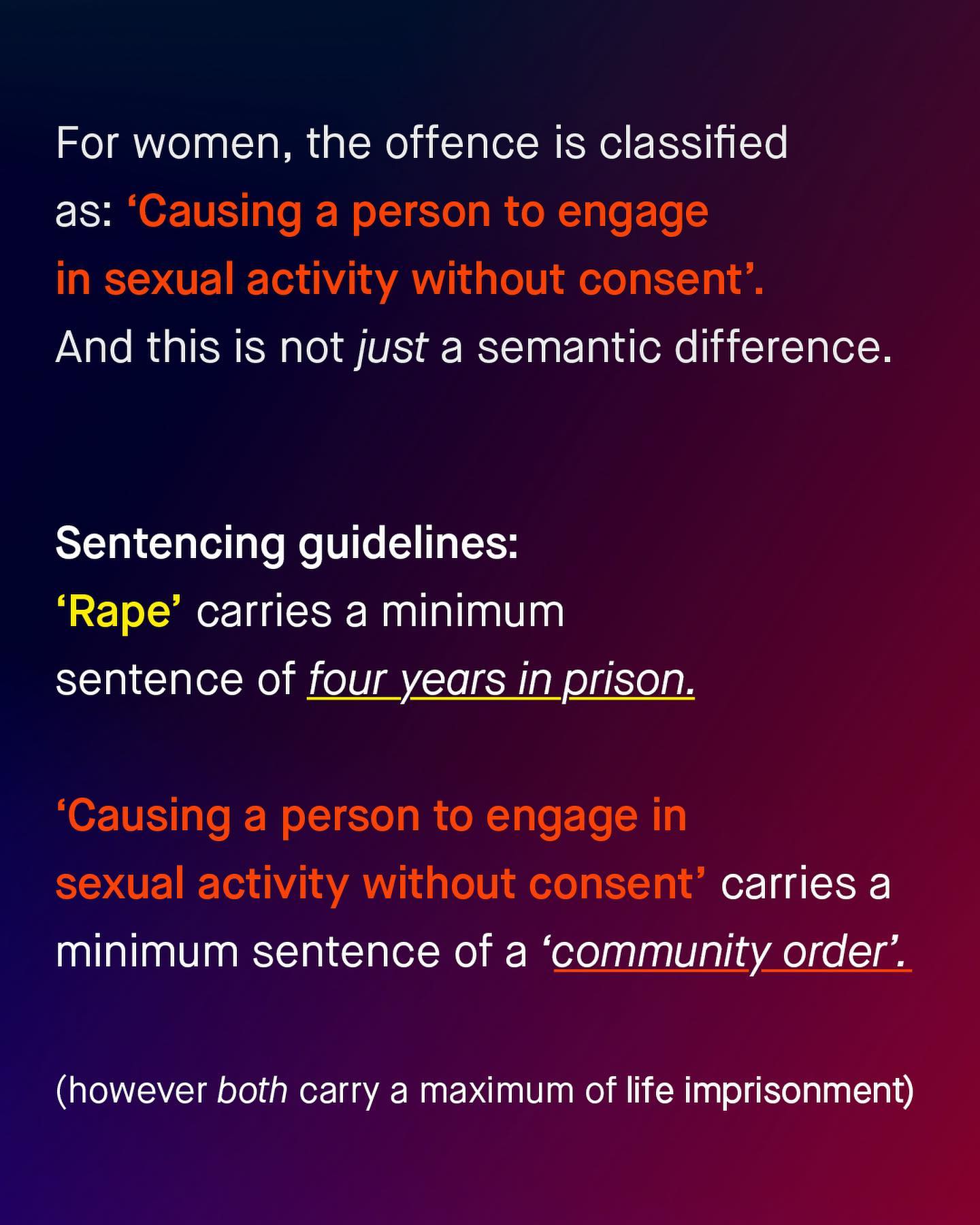
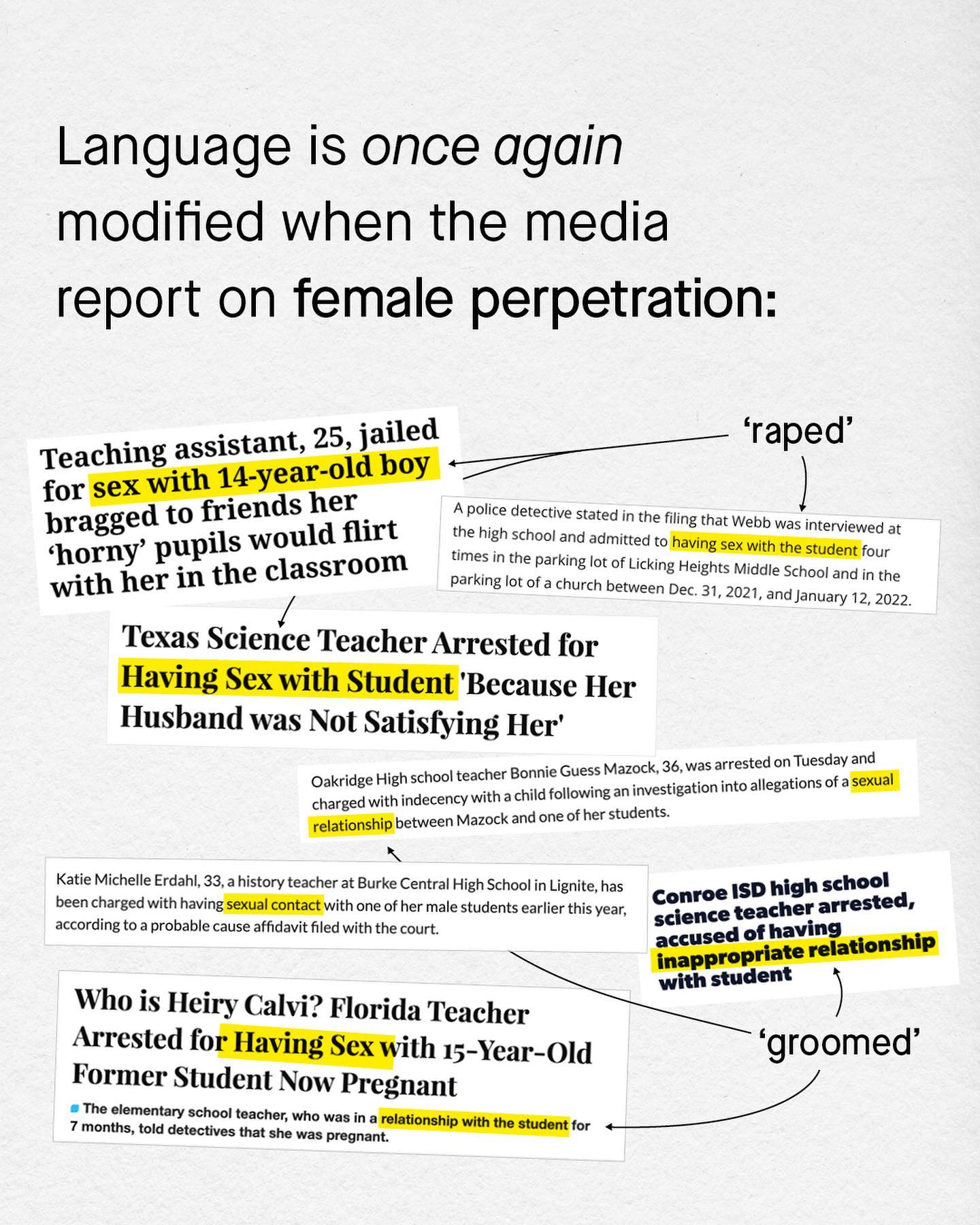

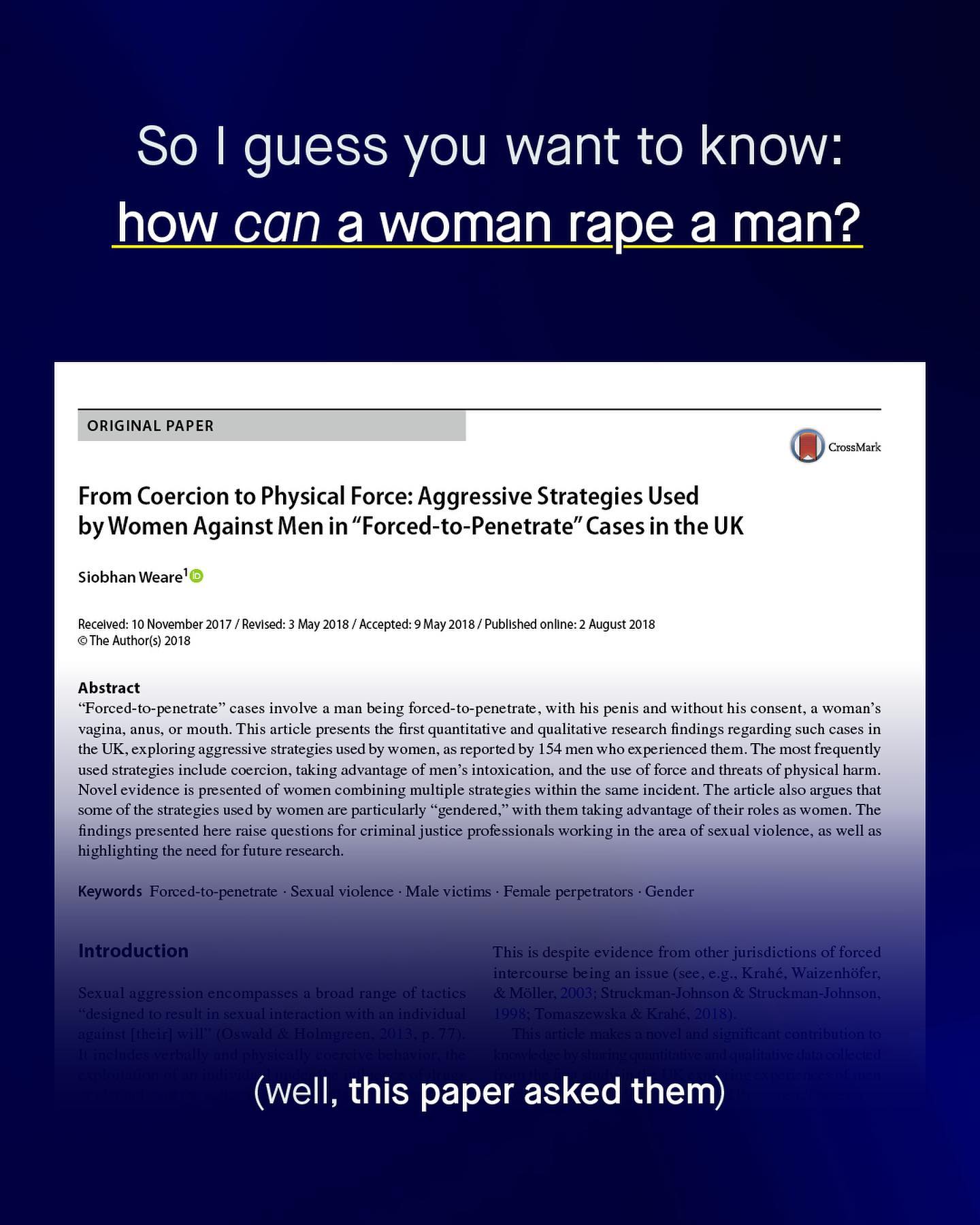
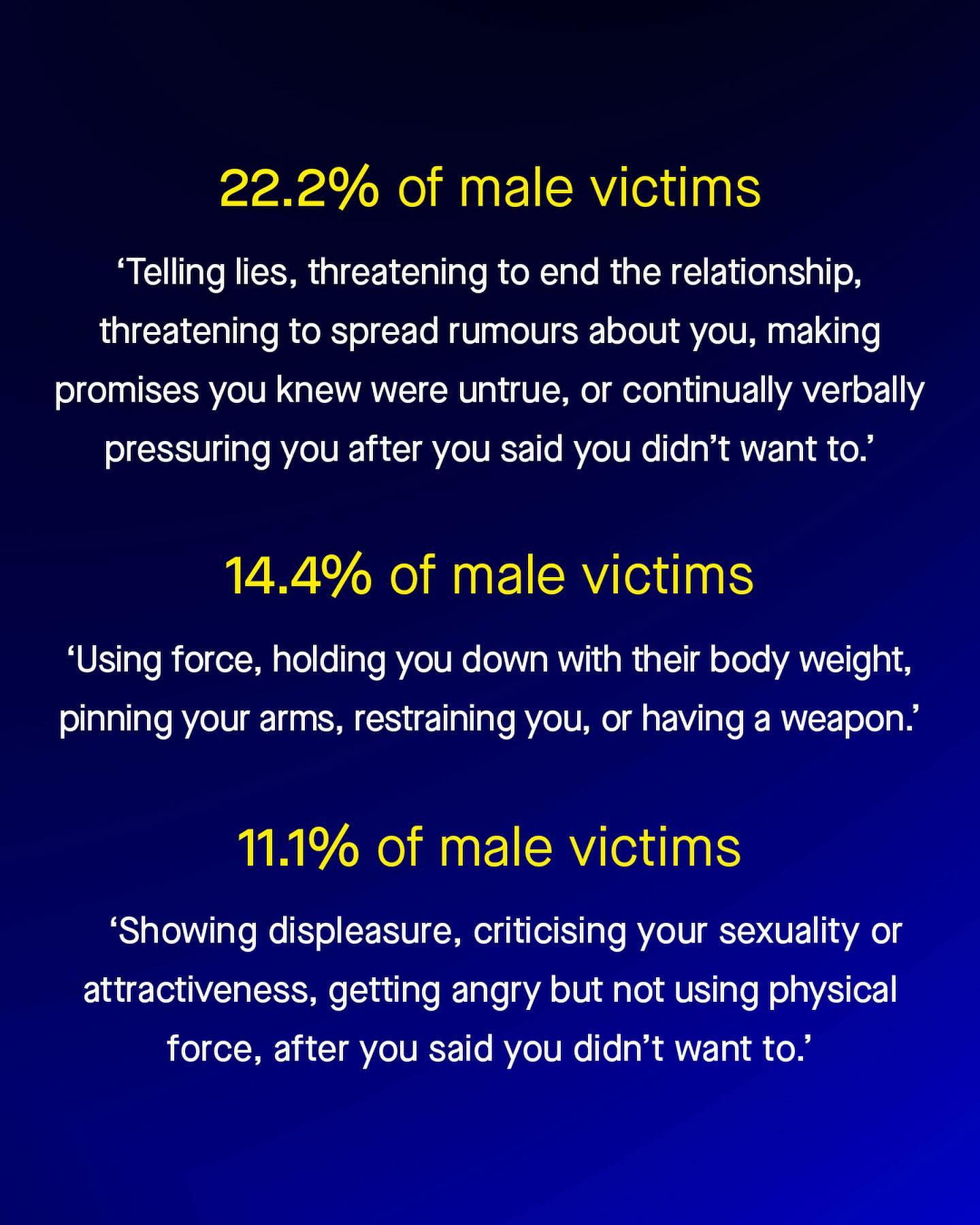
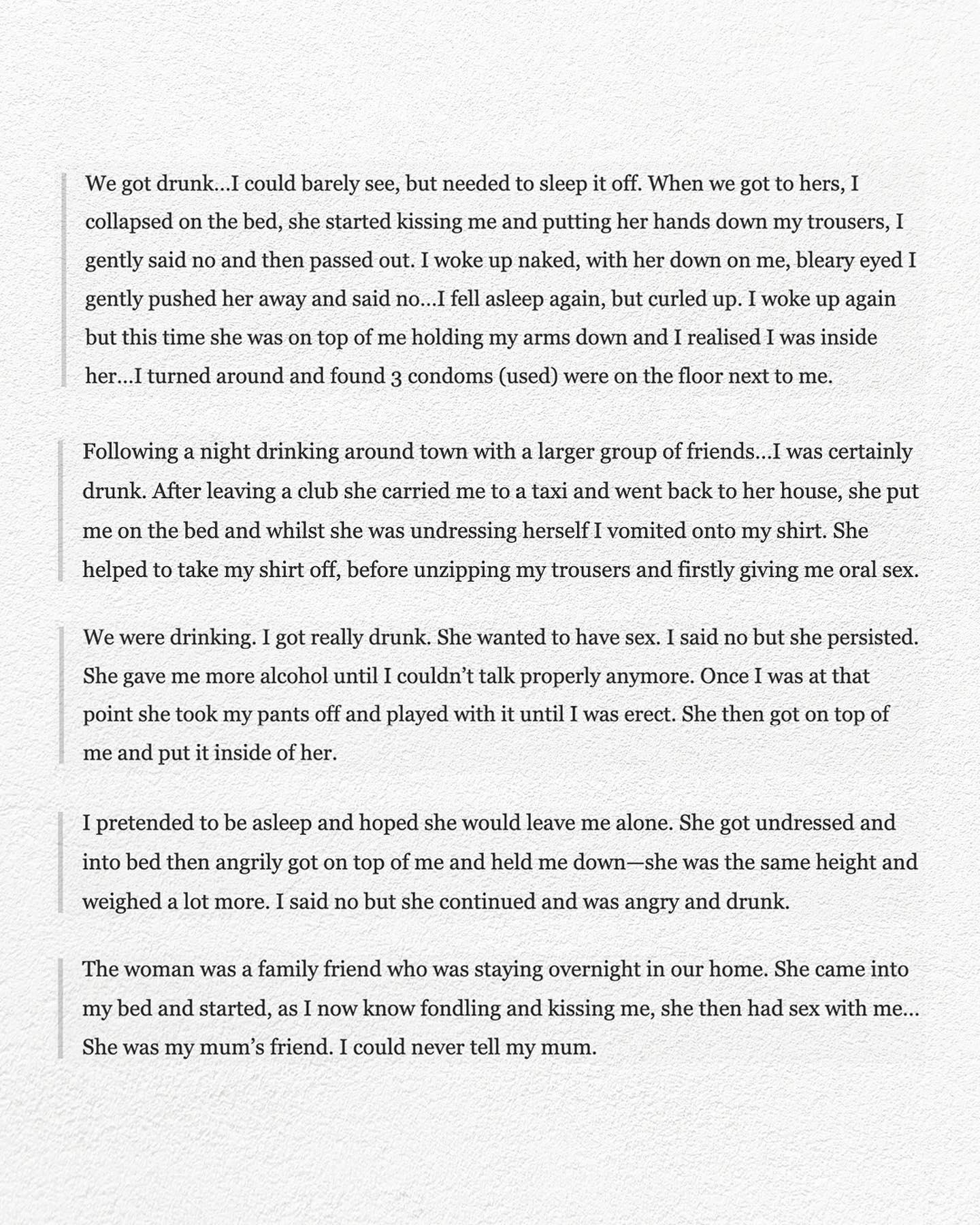
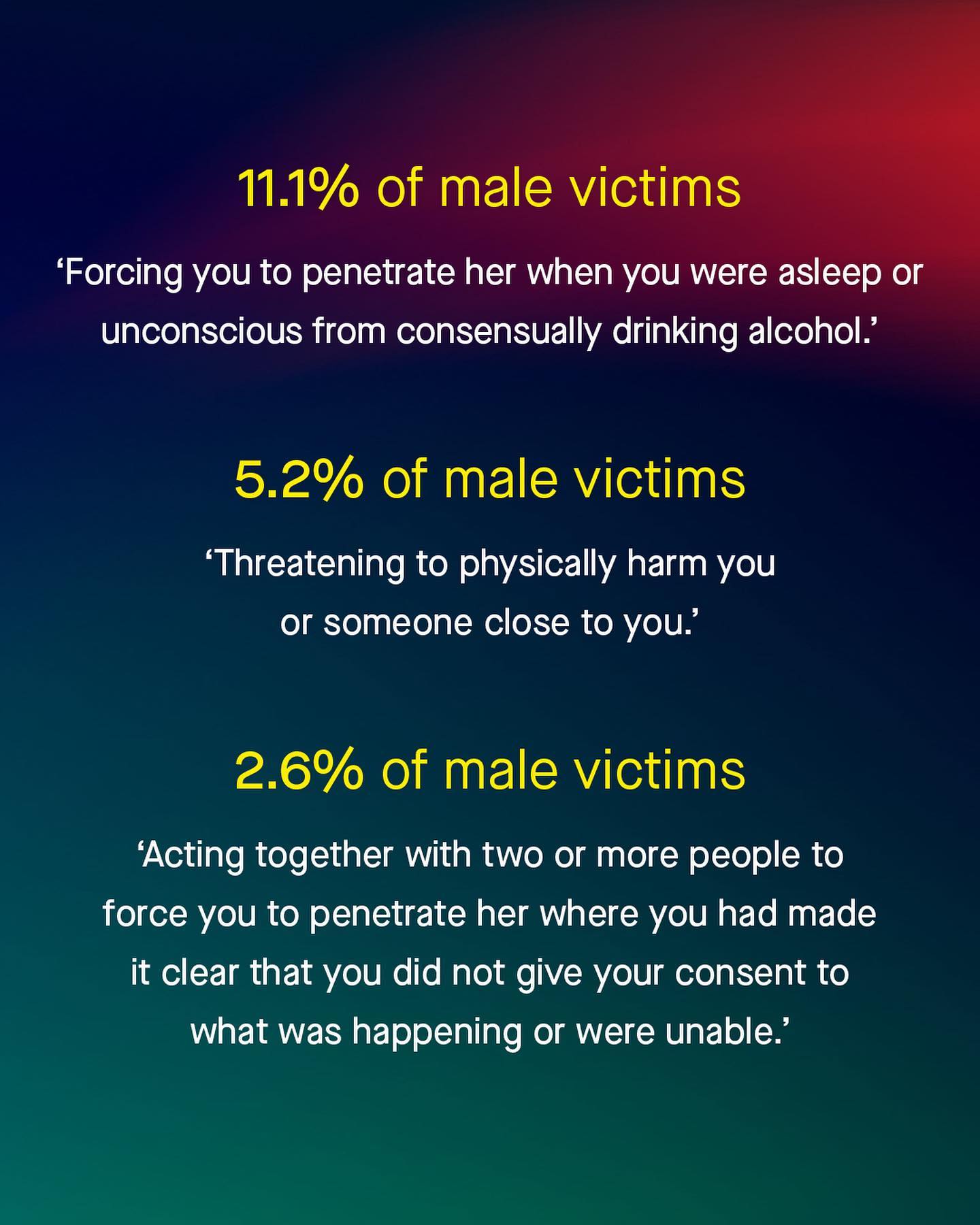
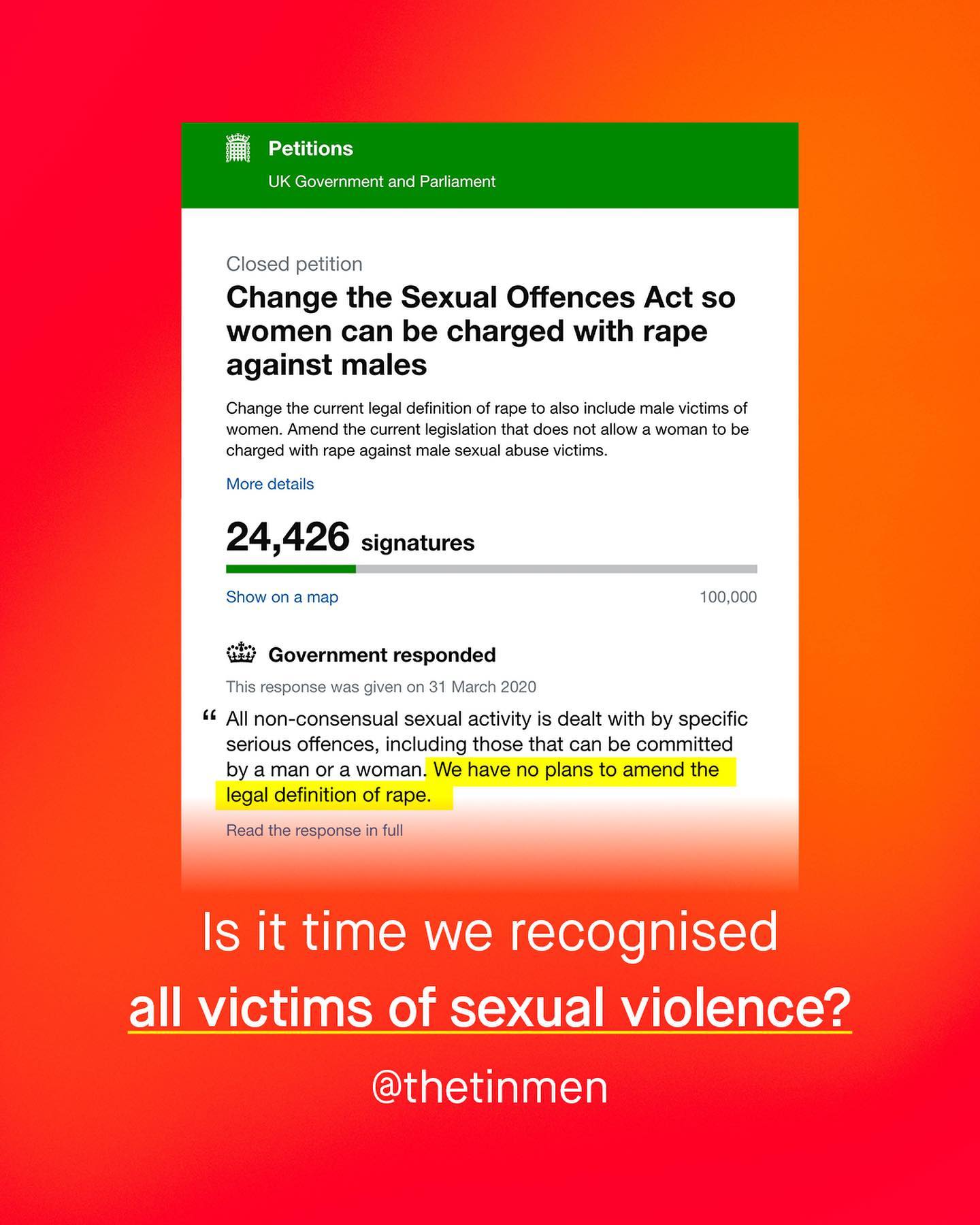
Despite the progress of the Women’s Movement over the past hundred years, there remains a place where women are still not ‘equal under the law’. And that is the ability to be held fully accountable for sexual violence. Because what so many people do not realise (and are shocked to find out) is that it is still legally impossible for a woman to rape a man. And whilst I am speaking of the highly gendered sexual violence laws in Great Britain, this regressive approach to legislation exists in many countries (such as India). In a world of ‘police officers’ and ‘fire fighters’, how such gendered language and legisatlion has escaped any sort of gender neutral scrutiny, is beyond me. Time and time again the Government have been pressured to change their gendered definition of ‘rape’, and time and time again they’ve refused. Not only does it erase male victims of female perpetration from visibility and validation, but it also dictates sentencing guidelines, academia, statistics, and even how someone is placed onto a Sex Offenders Register. So too this wording impacts the way we capture sexual violence data. The ONS tells us that 98% of rapists are men, but what it also tells us (in small print) is that unless you have a penis, you cannot be considered a rapist, not matter what you do. Such one sided data lead us to think that men can’t be raped, or aren’t, and it is here that someone usually compares male victims to ‘the chances of being struck by lighting’, or ‘shark attacks’. But they are not rare. 12.6 million (one in nine) U.S. men have been ‘forced to penetrate’ someone during their lifetime. So is it time we changed our language, our laws and perspectives to see men and boys too? Is it time we listen to all survivors of sexual violence? ~ NISVS 2017 Study ~ Images by Gradienta, Kiwi Hug, Mathias Reding, and Nordwood Themes from Unsplash. #sexualviolence
2023-02-20