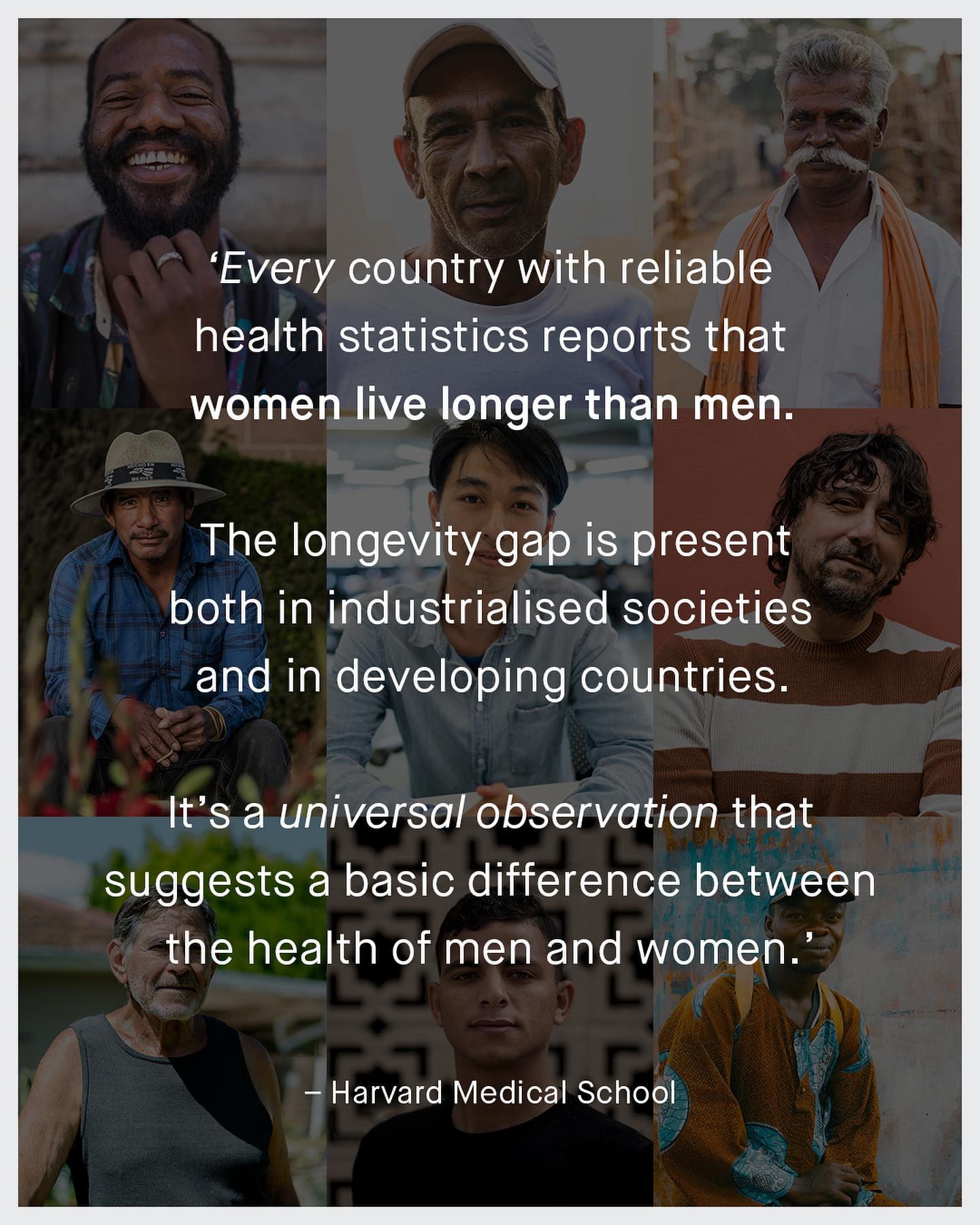
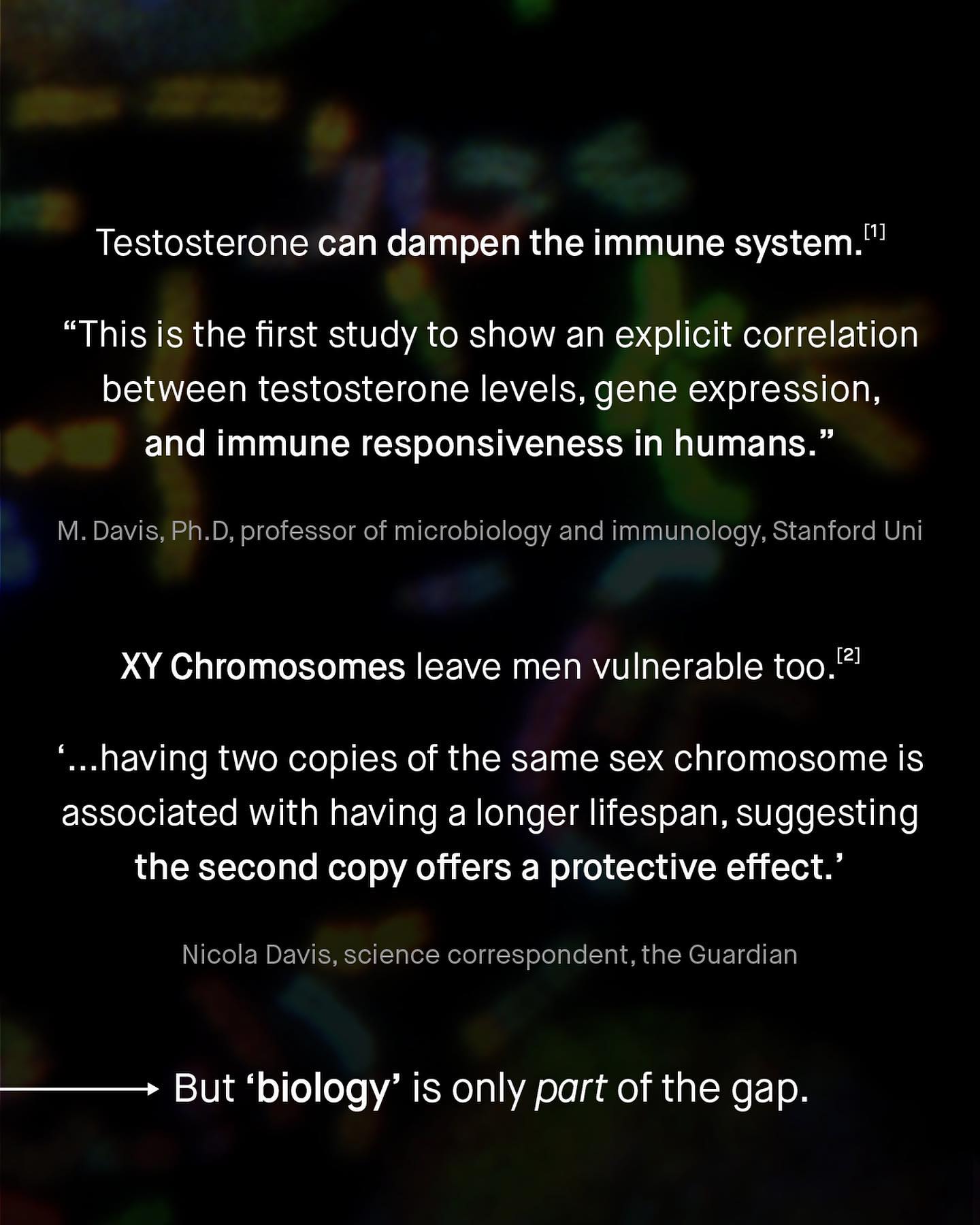
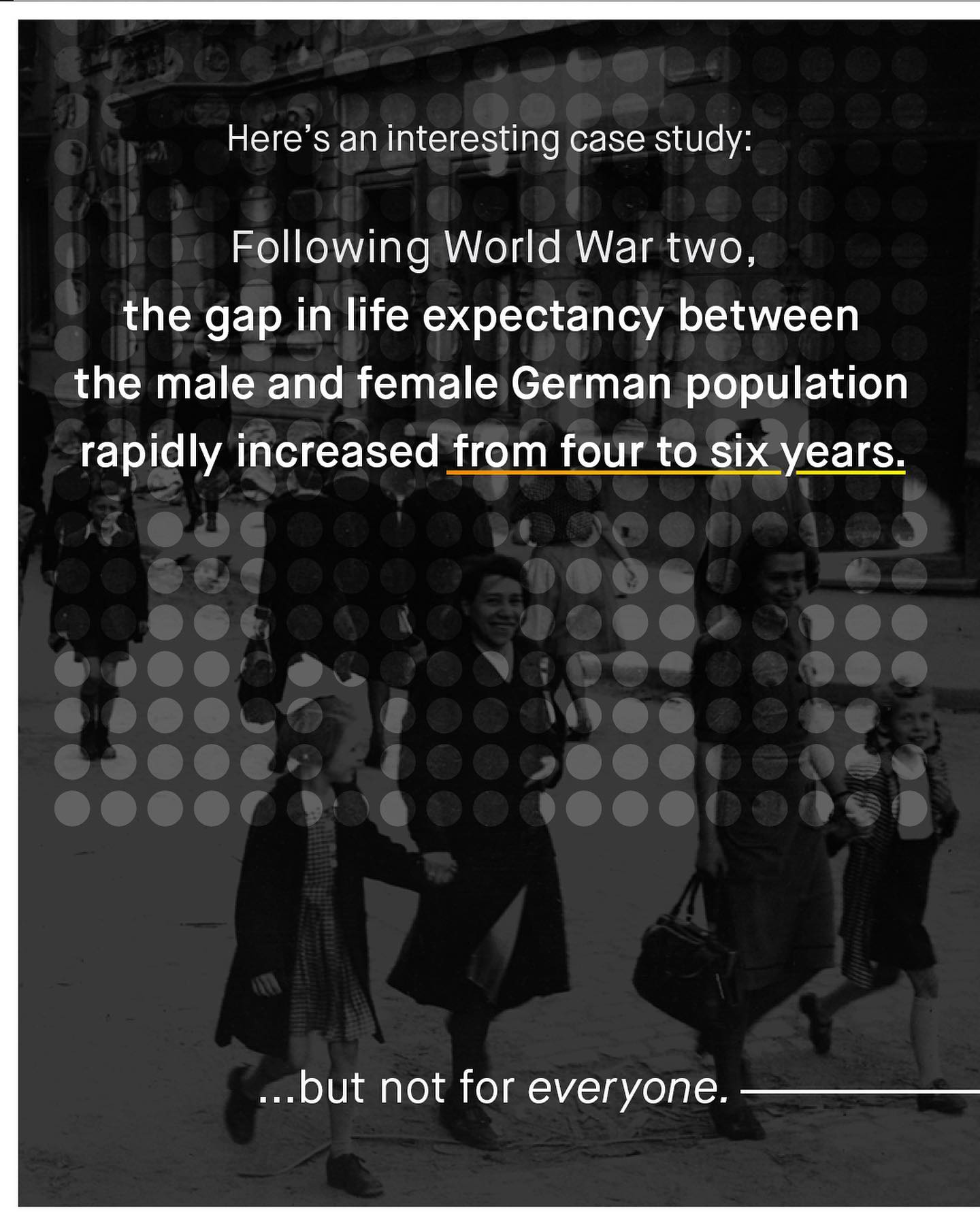
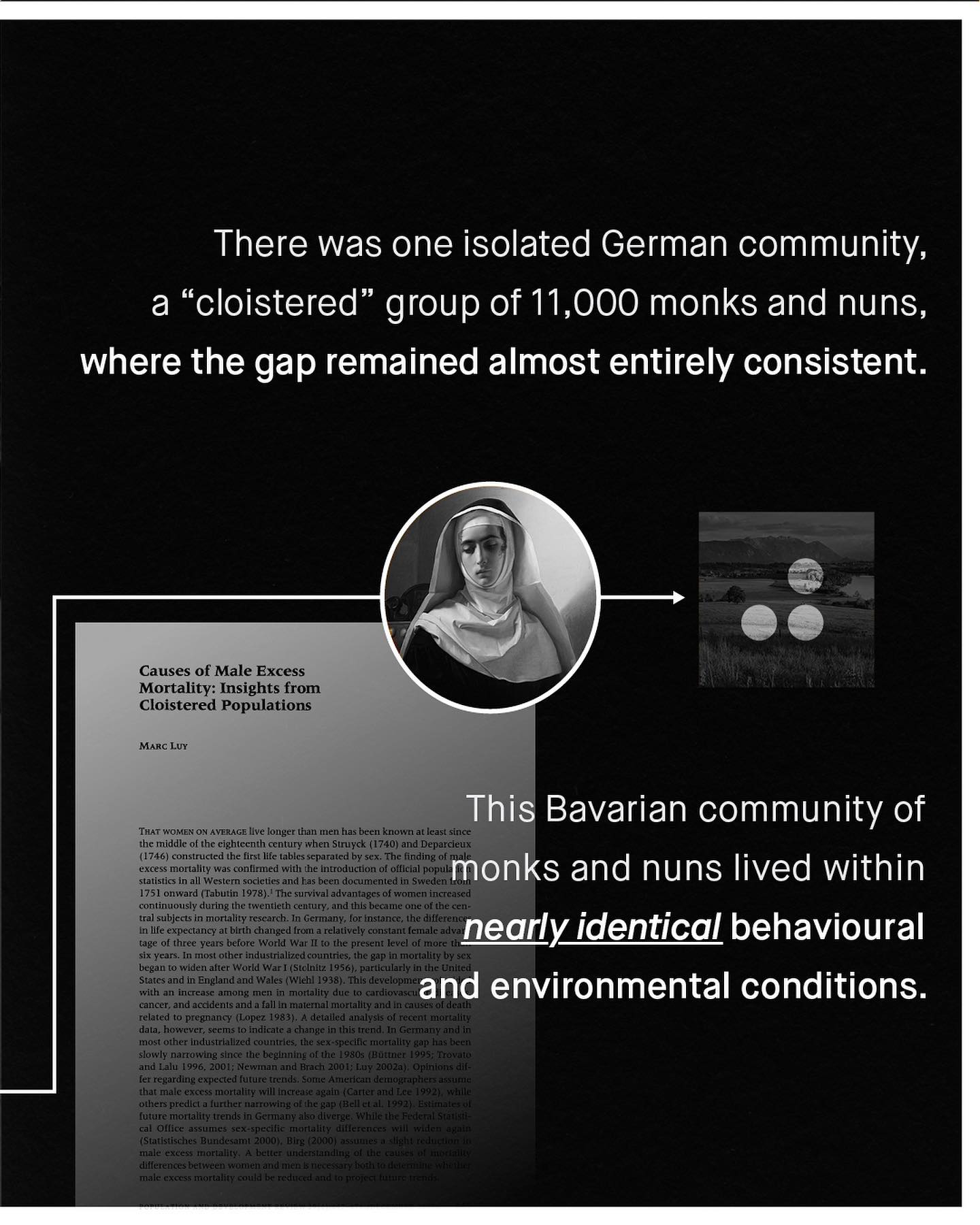
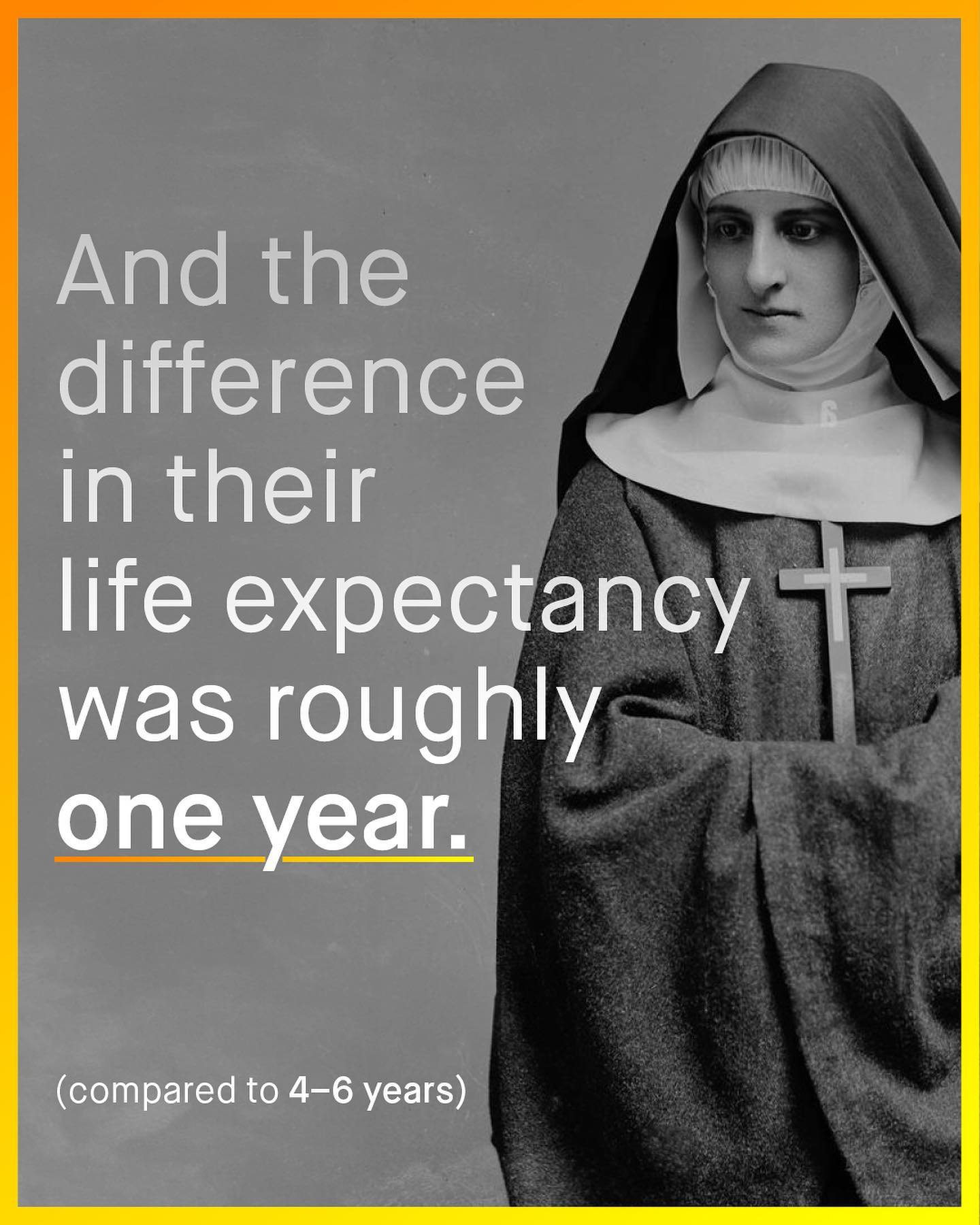
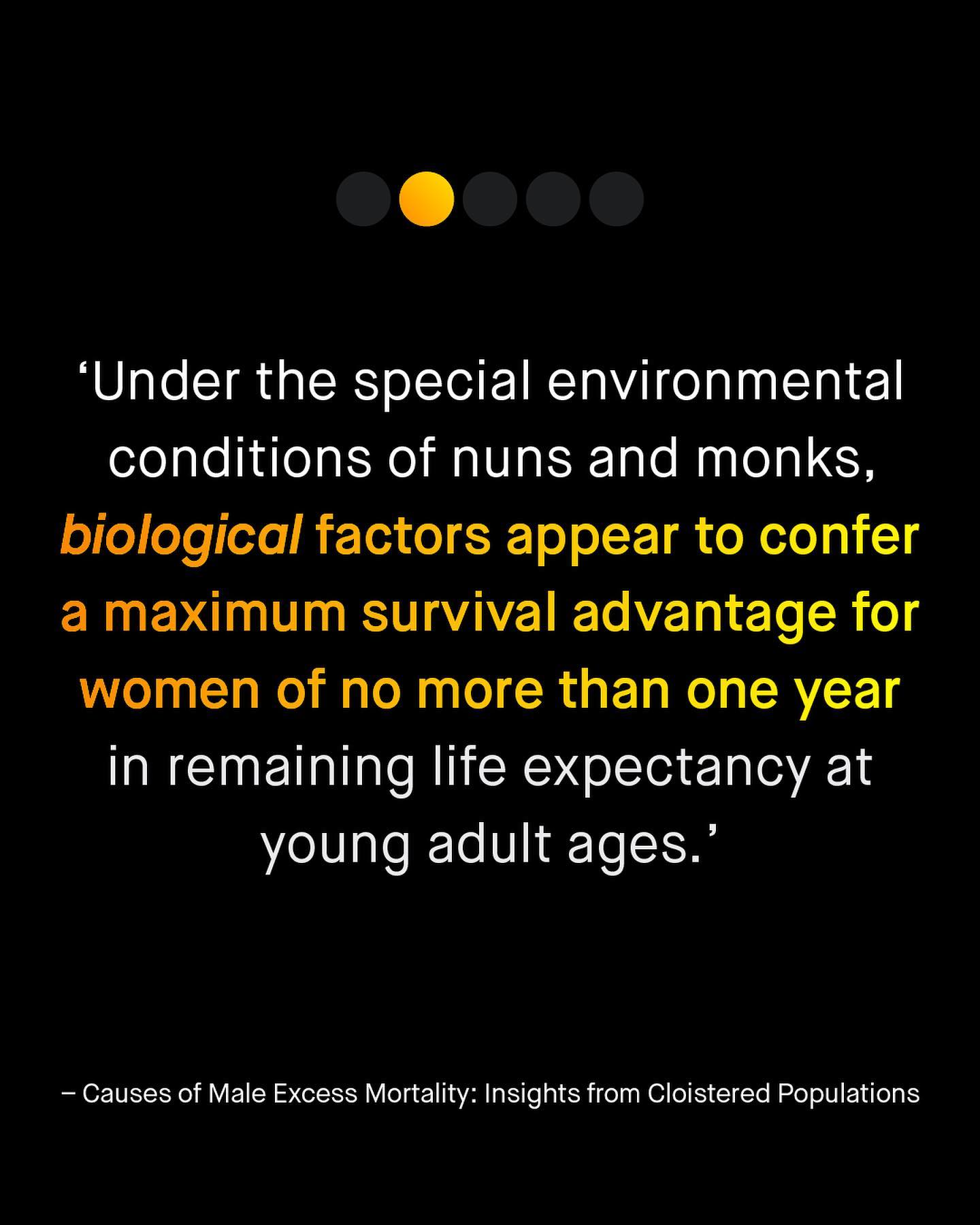
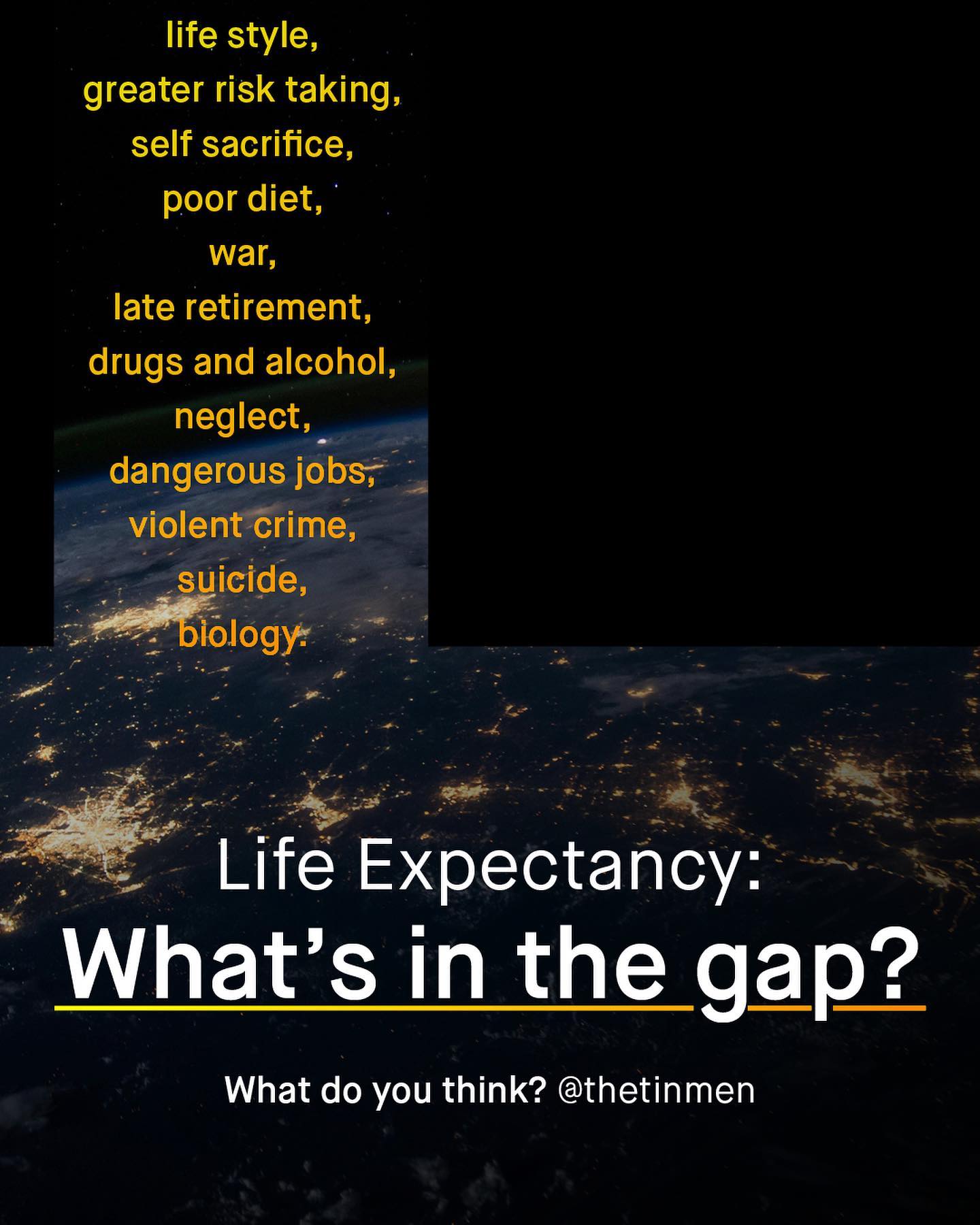
The gender equality debate is riddled with countless ‘gaps’ of different designs, levels of importance, shapes and sizes, and at various stages of being closed. The STEM gap. The gap in childcare. The gap in political leaders. The pocket gap, in home ownership, in app designers. The orgasm gap. And the infamous pay gap, to name a few. But one gap, that impacts every single male in existence, which is rarely (if ever) discussed – is the #lifeexpectancy gap. It’s a gap that tells us, no matter what country you are from, no matter if it’s a developed or developing nation, or from any continent; men will have a shorter life expectency than women. Yup. Sometimes it’s four years, sometimes its ten (!) but there’s always a gap, and it’s always the man who pays for it. Sadly, this universal gap in life expectancy remains disinteresting within the world of gap-based-politics. At most, ‘it’s their biology’ you’ll hear, as the gap is waved away. And this is true, biology is part of the gap – but mens’ biological vulnerabilities are not a big enough part to explain all, or even most, of the gap. Nor is such a thing a reason to do nothing at all. Professionally, I’ve worked with numerous vulnerable groups, to close similar gaps. When I worked with the NHS, to explore black people’s genetic vulnerabilities to diabetes, at no point did anyone say ‘well it’s their biology’, and announce case closed. So when it comes to men living shorter lives, why should such a thing be so nonchalantly accepted? And why won’t people ask, what else is in the gap, if not just biology? So I’ll ask you, why are men living shorter lives than women, in every country in the world? Why do they have highly mortality rates, at every age? What’s in the gap? ~ Harvard Med School [1] [2] Cloistered study #genderequality
2024-02-29