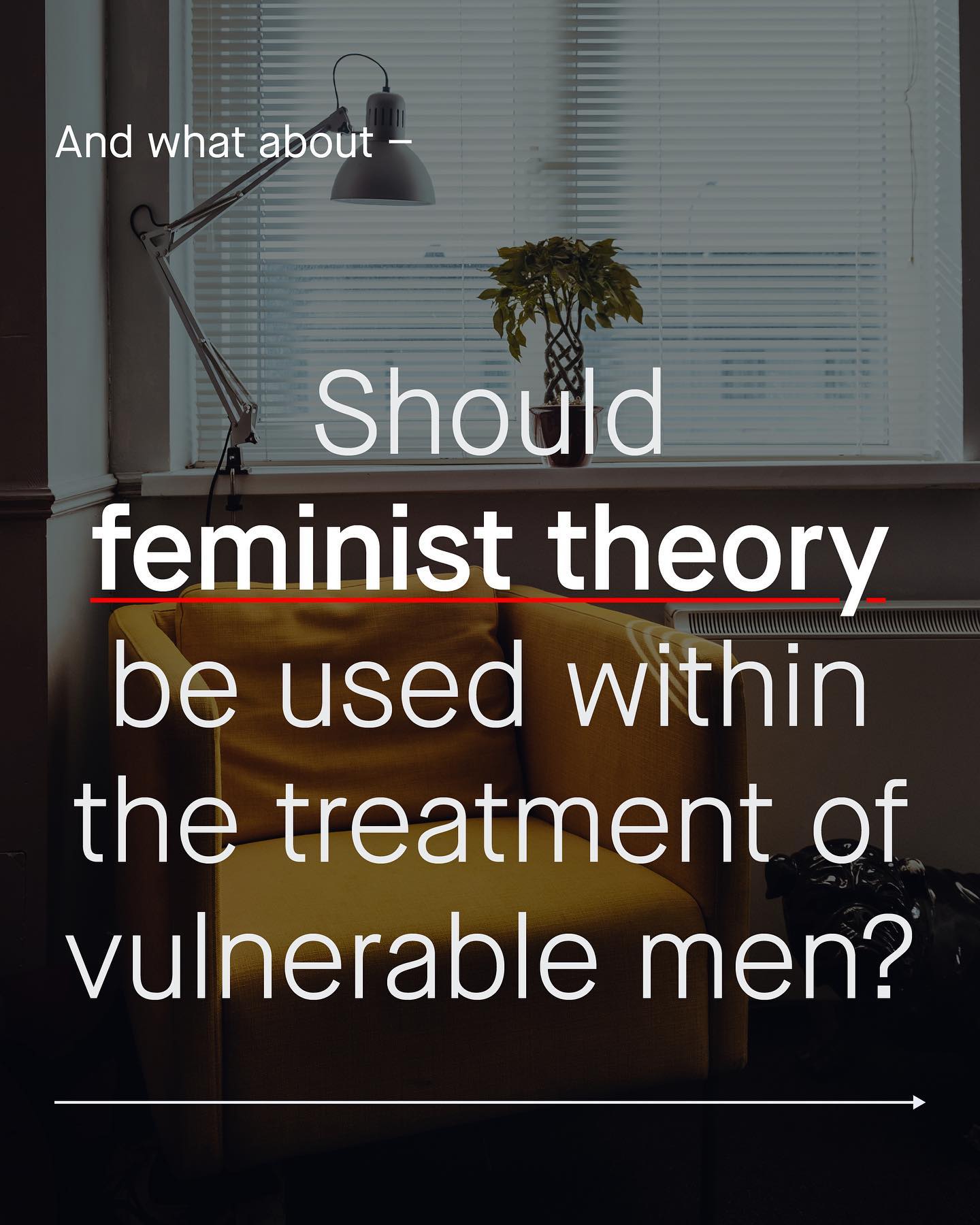
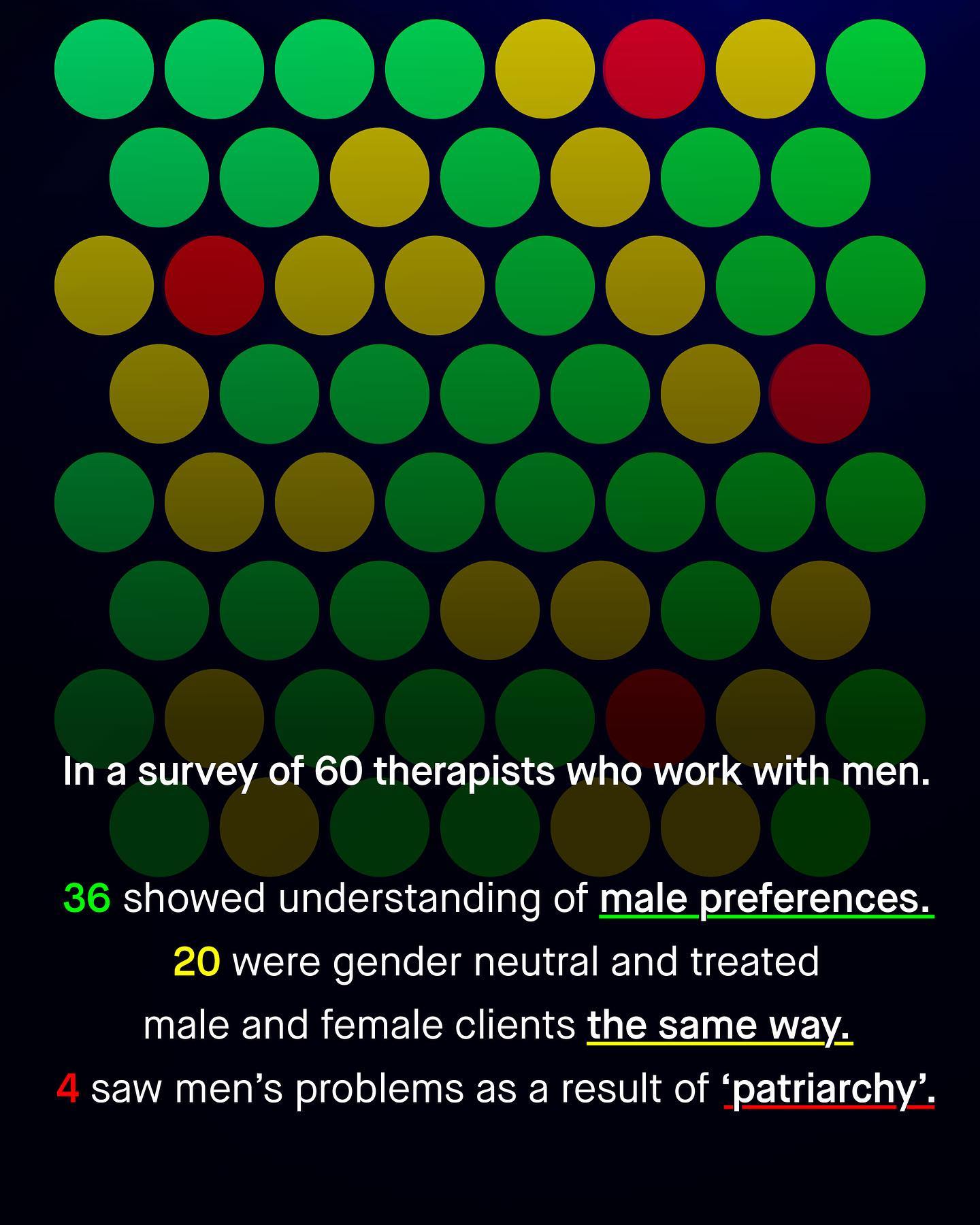
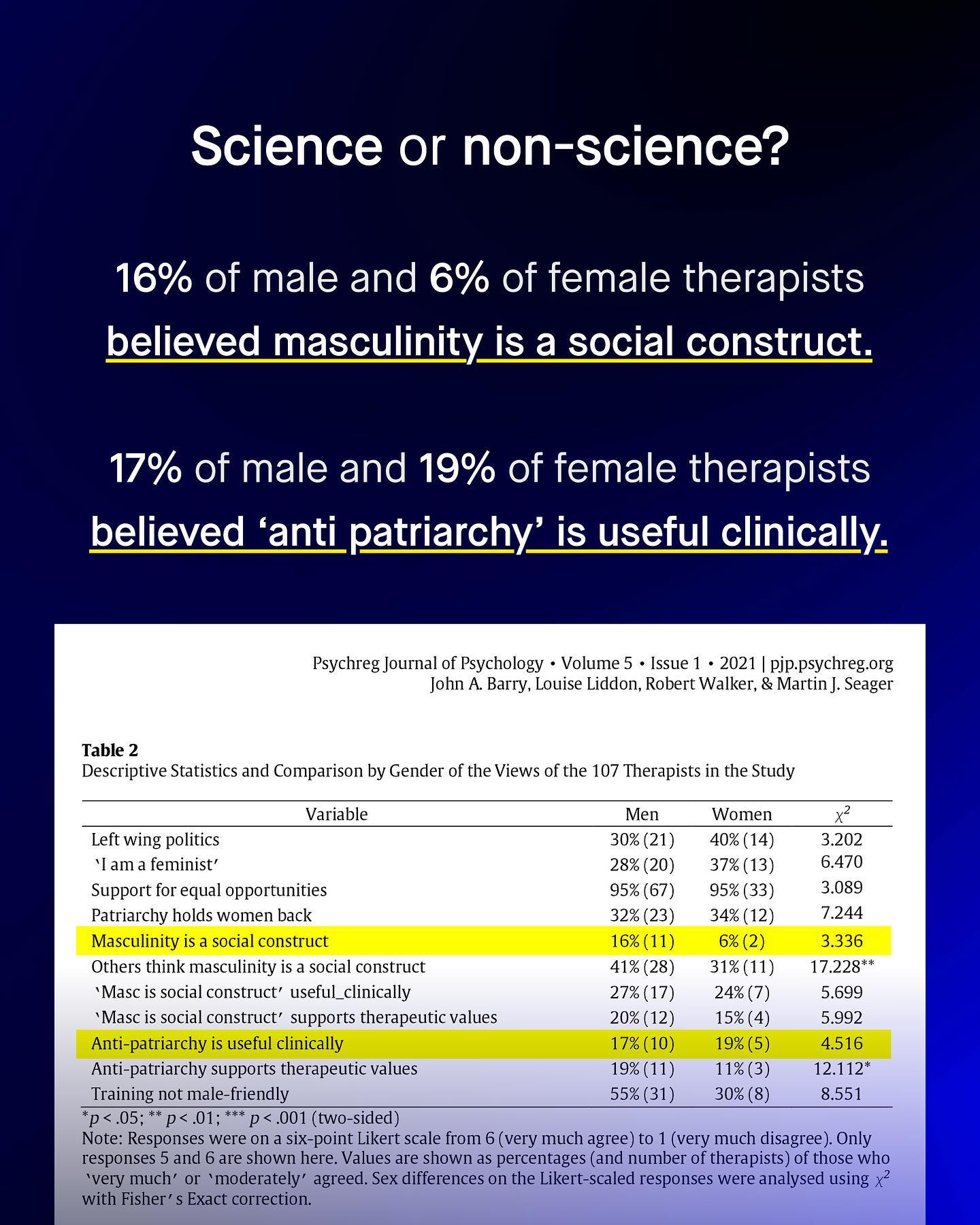
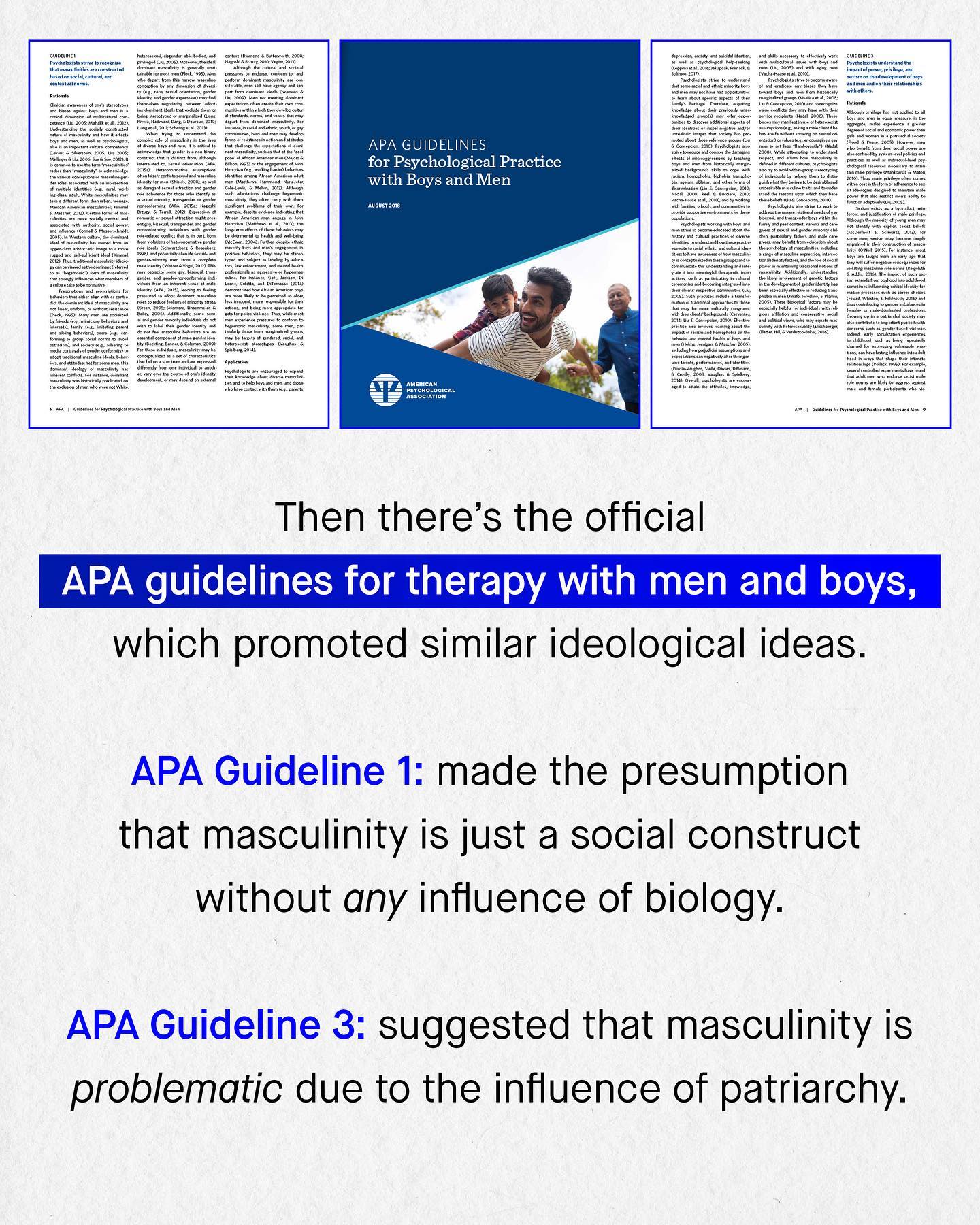
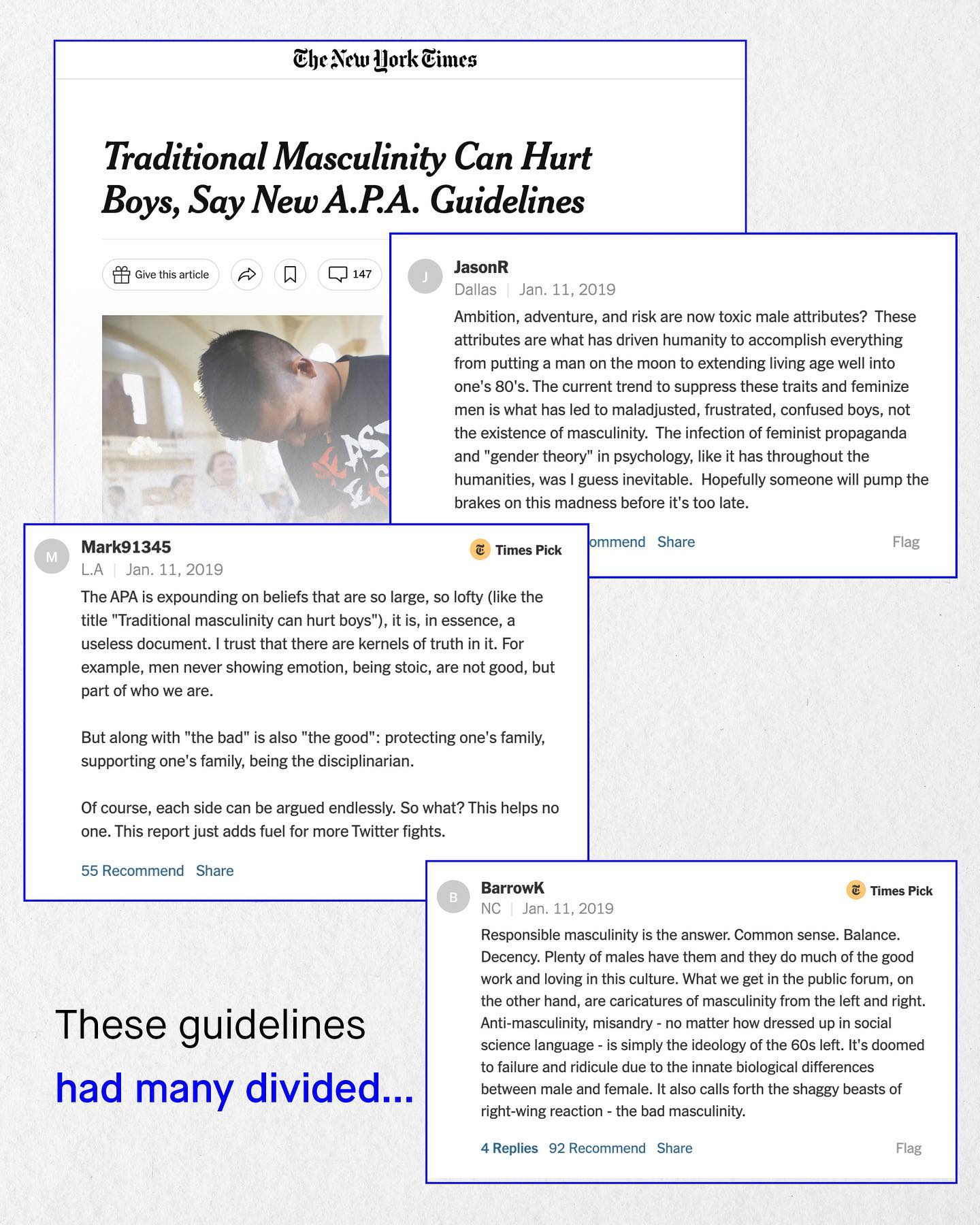
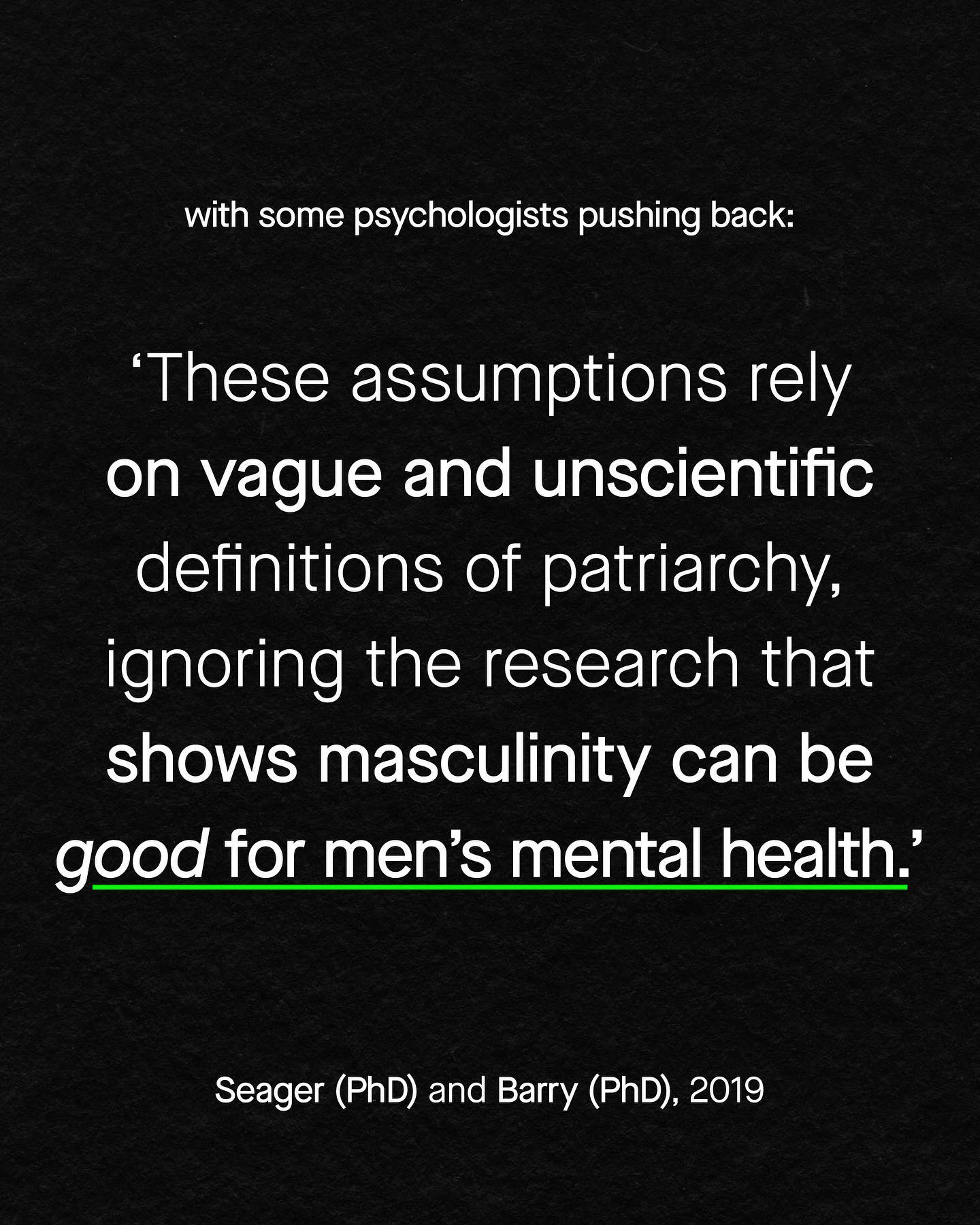
Similar to politics, I consider myself religiously agnostic. Whilst I may not agree, I will always try to listen. No matter who you are, or what you believe, I am open to speaking with anyone. So too your personal beliefs are yours, and they ought to be respected. I feel the same about feminism, and those who identify as such for personal reasons, they also have my respect, and I want to hear your story too. The issue for me, is when personal beliefs are pushed onto others and institutionalised; taken into schools, twisted into politics, used to monopolise social support, and shoe horned into psychological practice. That’s where my sympathy ends. I don’t ever want to hear the words ‘patriarchy’ used by a clinical psychologist who is working with vulnerable men. I don’t ever want to see ideological dogma printed as ‘science’ in textbooks, and certainly not practiced upon those reaching out for help. I don’t ever want to see suicidal men greeted with bogus ideas such as ‘toxic masculinity’. Yet this is what is happening. The American Psychological Association’s 2018 Guidelines for practice on men and boys made this very clear – masculinity is socially constructed, and is problematic due to the influence of patriarchy. Excuse me what? Save those words for your next sermon, and keep them out of the realm of science. It’s not just in the APA, but these divisive non-evidence based political ideas are being used in therapeutic environments. And so the psychological industry is increasingly at odds, with political infighting bloodying the nose of many, and shunning others, within a push and pull of ideas with men and boys at its centre. So has the psychological industry lost its way? Has it failed vulnerable men and boys? And if so, how does it need to change? What do you think? ~ Study Images by Kiwi Hug, Cathal Mac an Bheatha, Klim Musalimov, Gradienta, Michael Oxendine, from Unsplash. #psychology #malepsychology #mensmentalhealth #malesuicideawareness
2023-04-10