
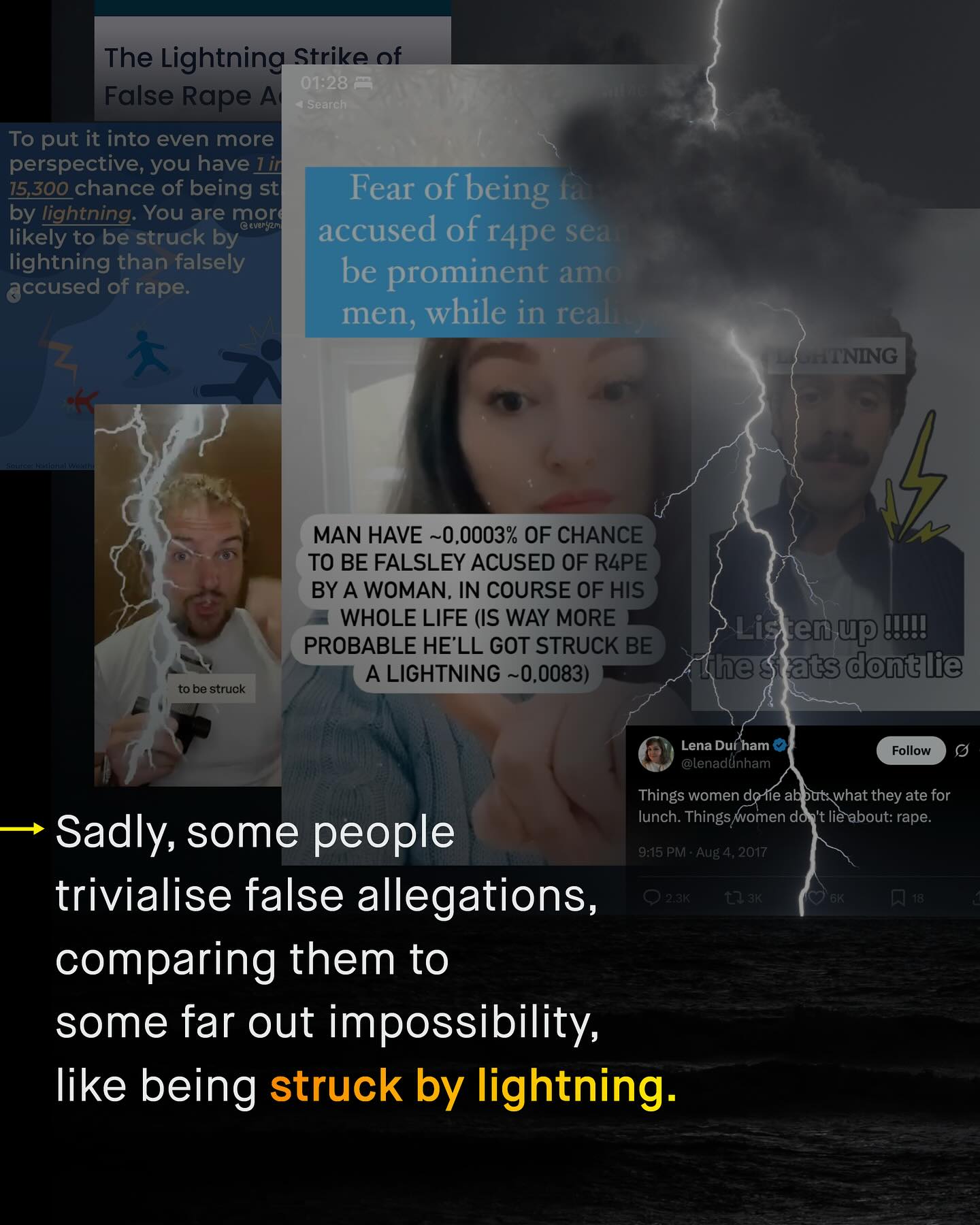
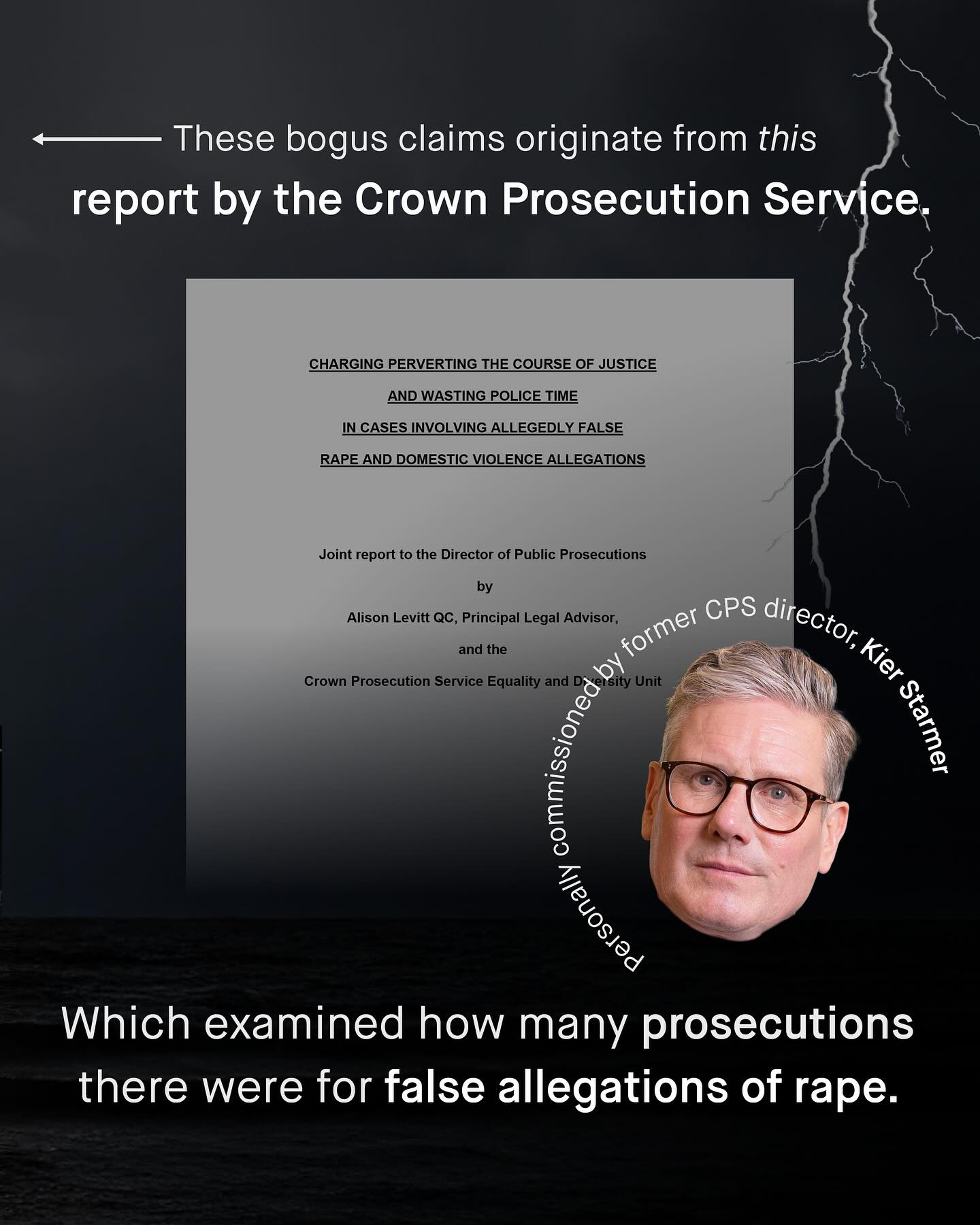
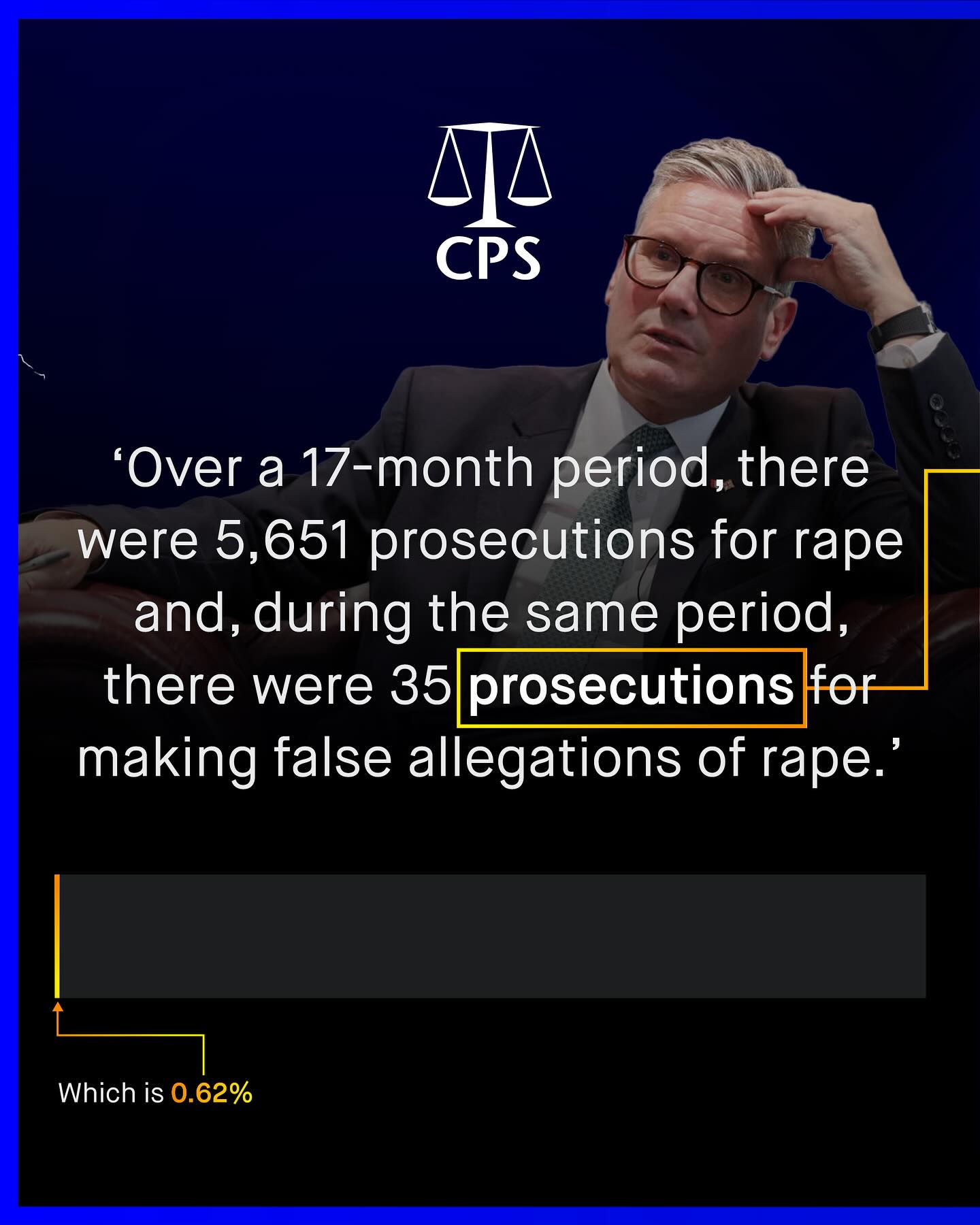
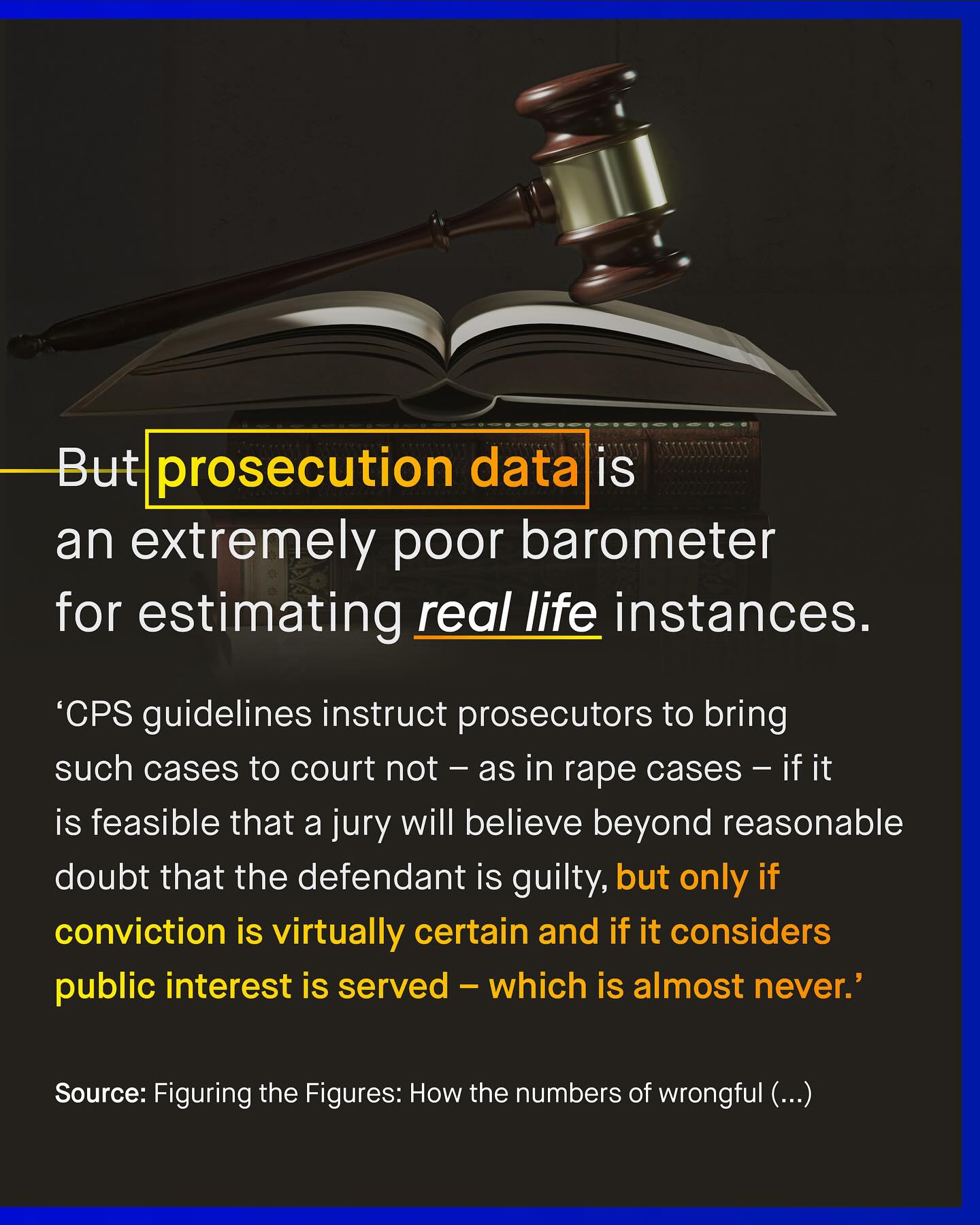
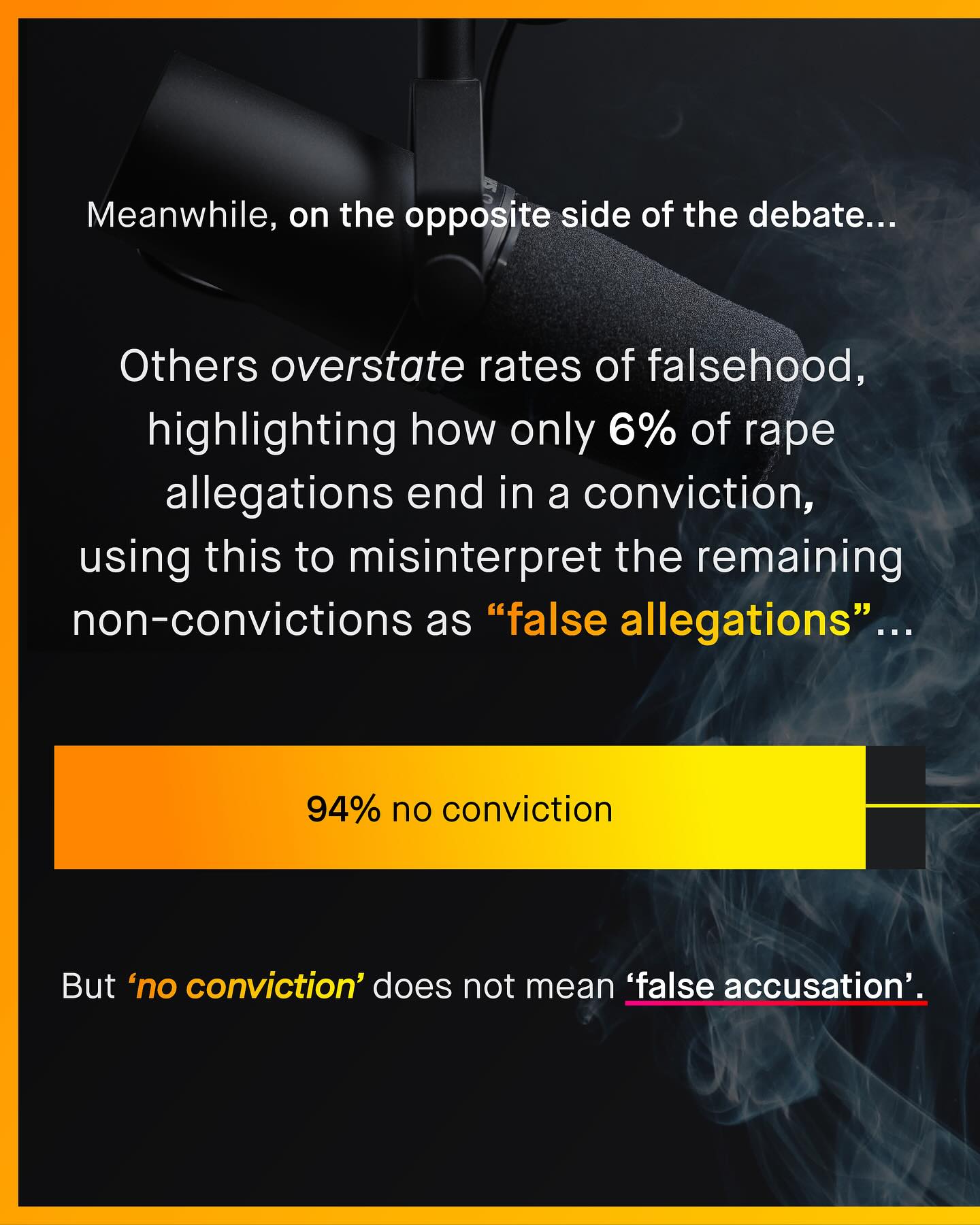
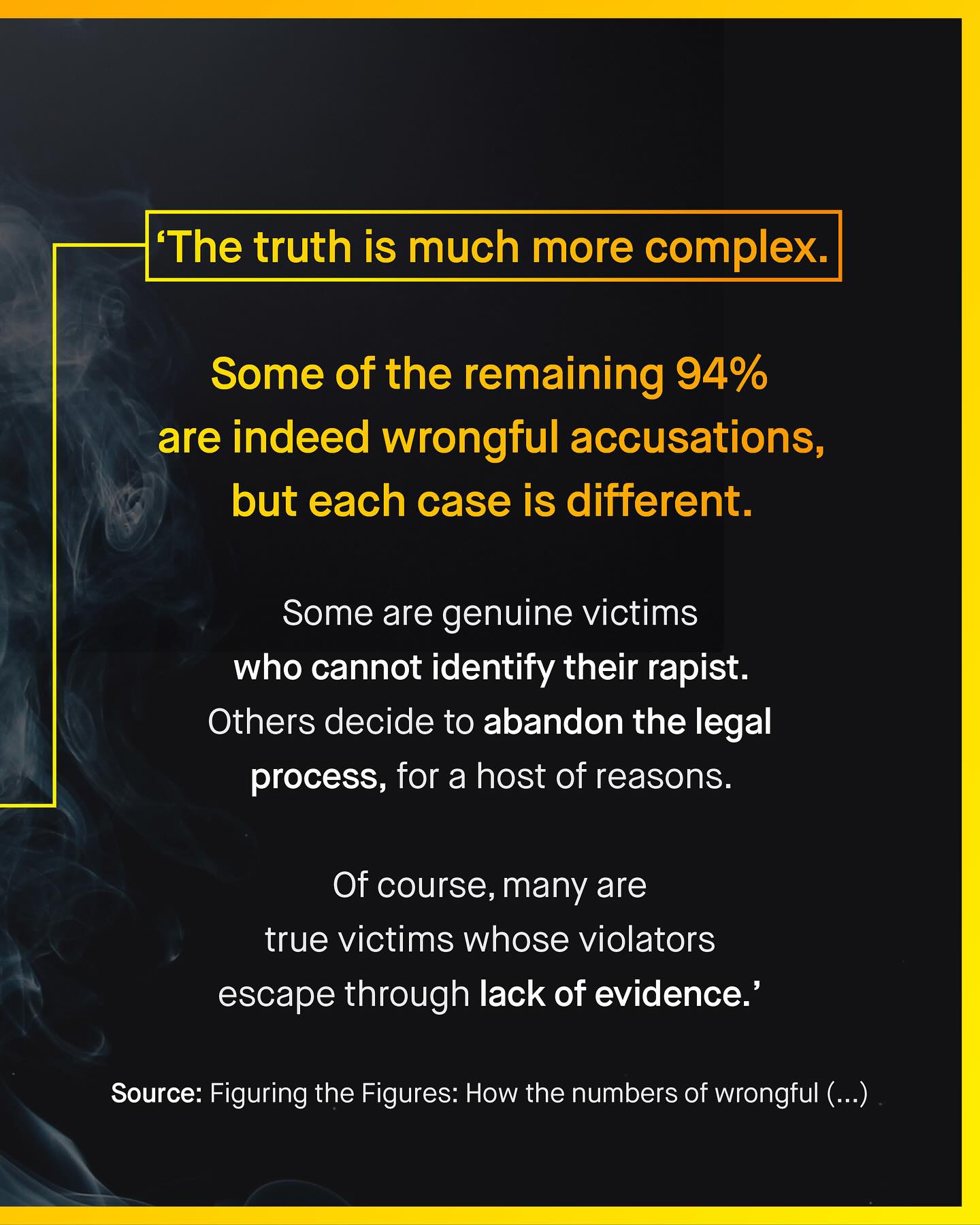
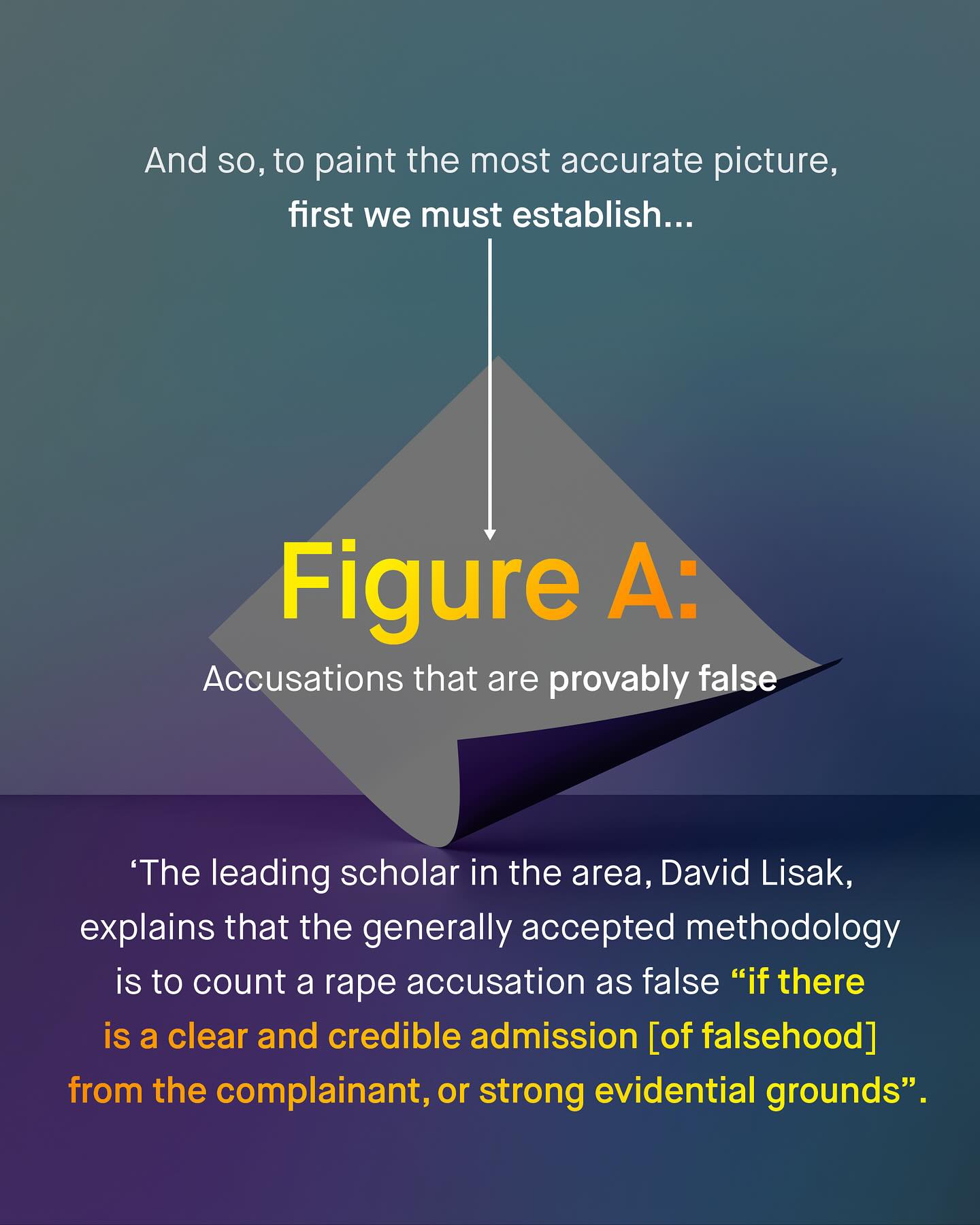
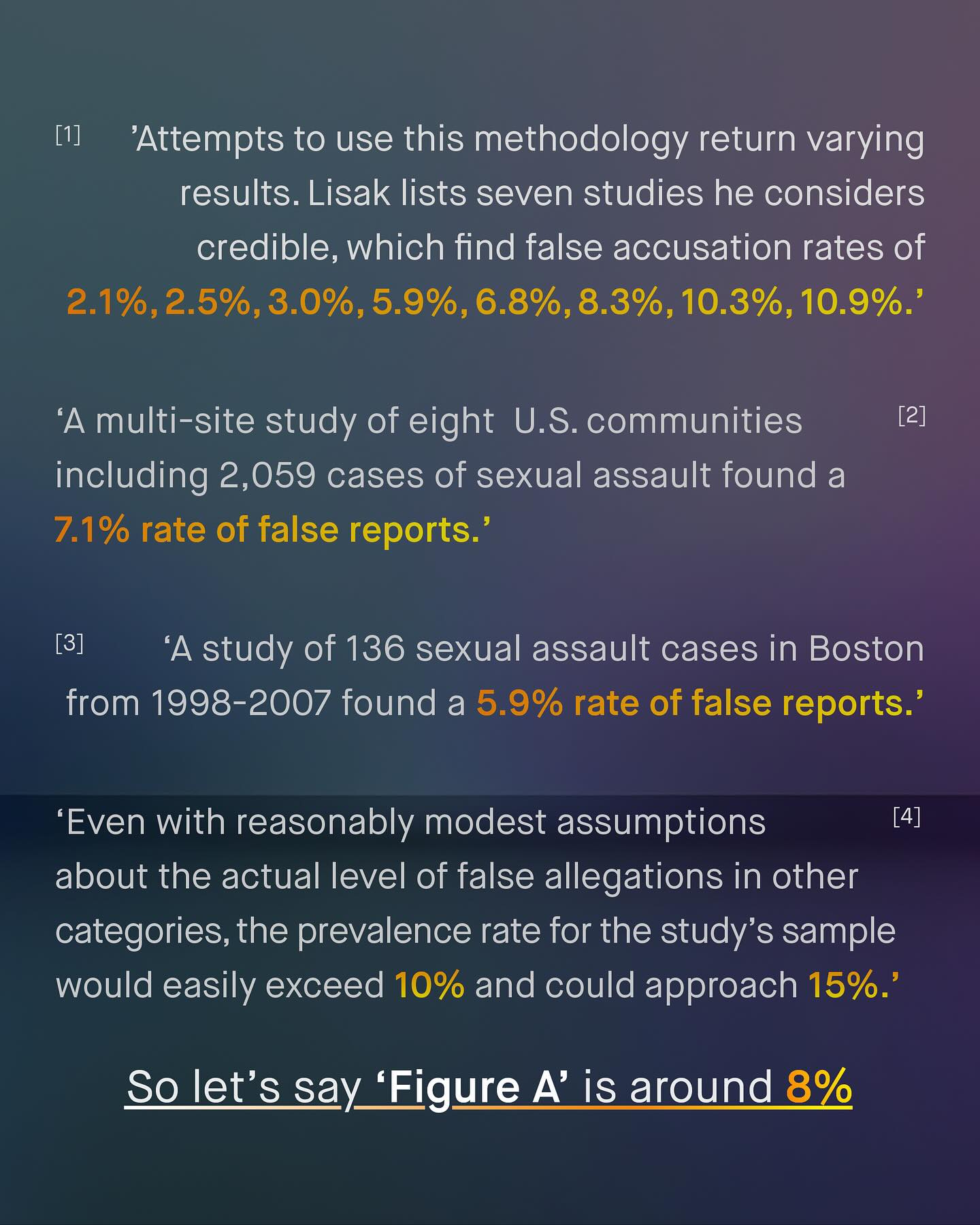
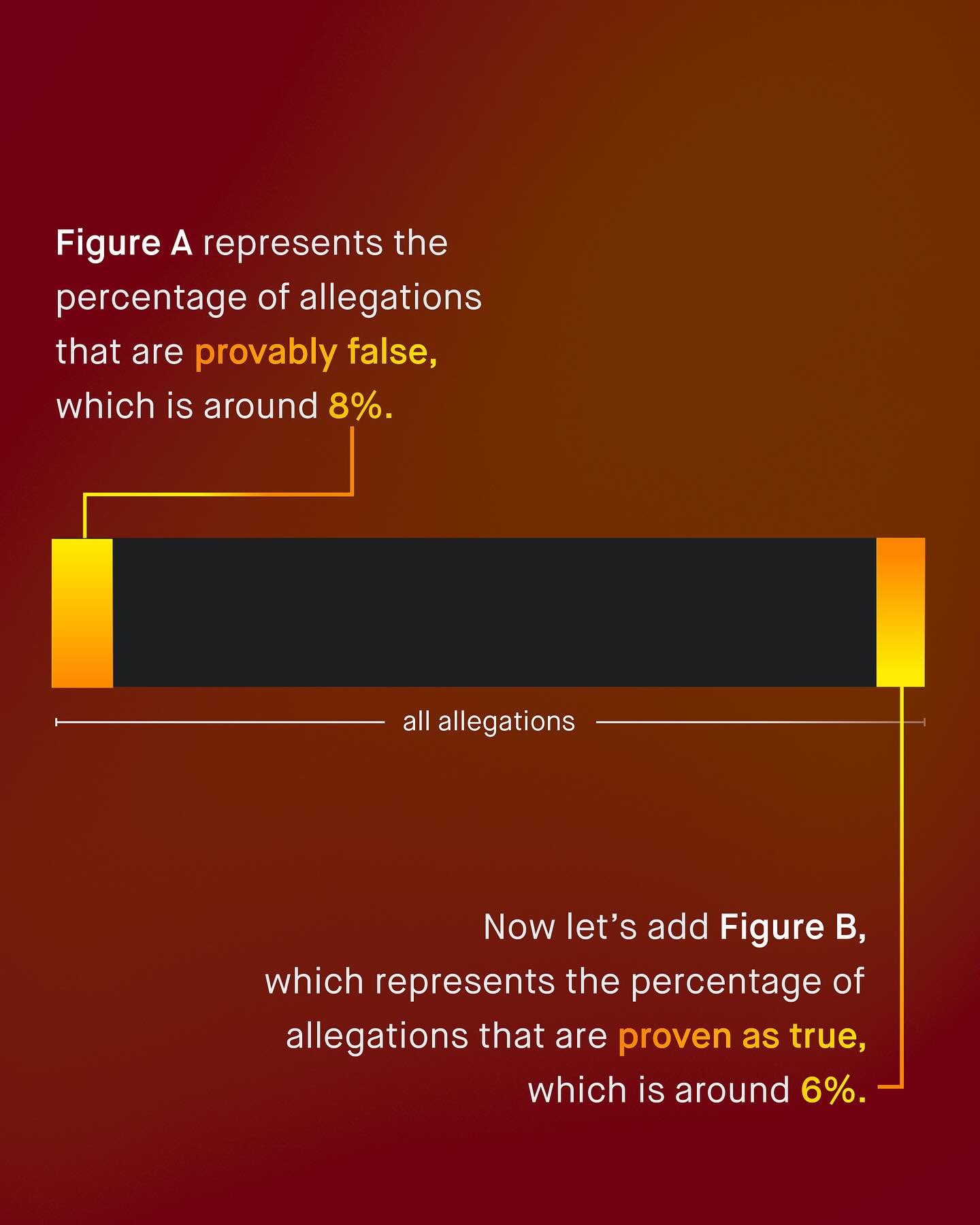
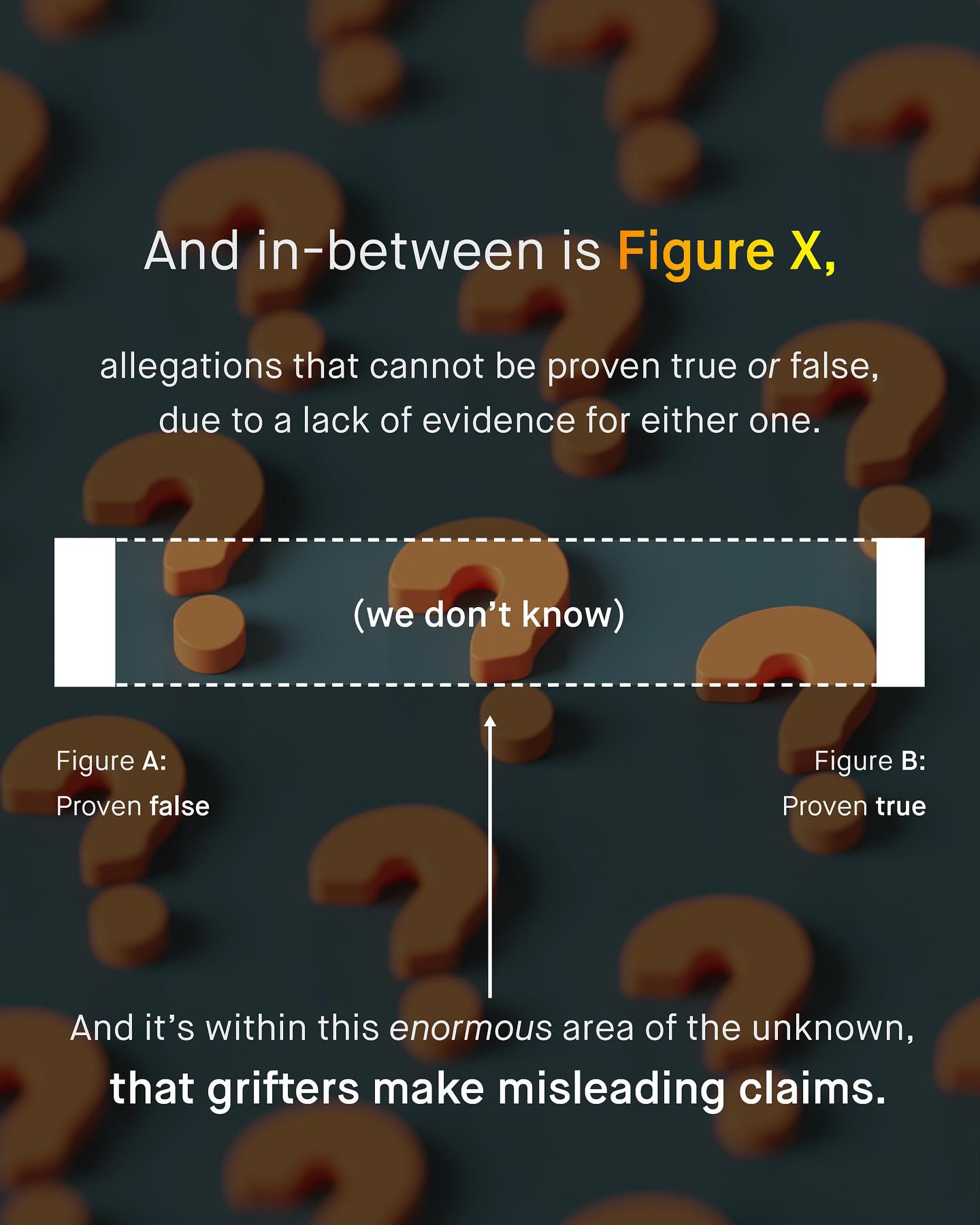
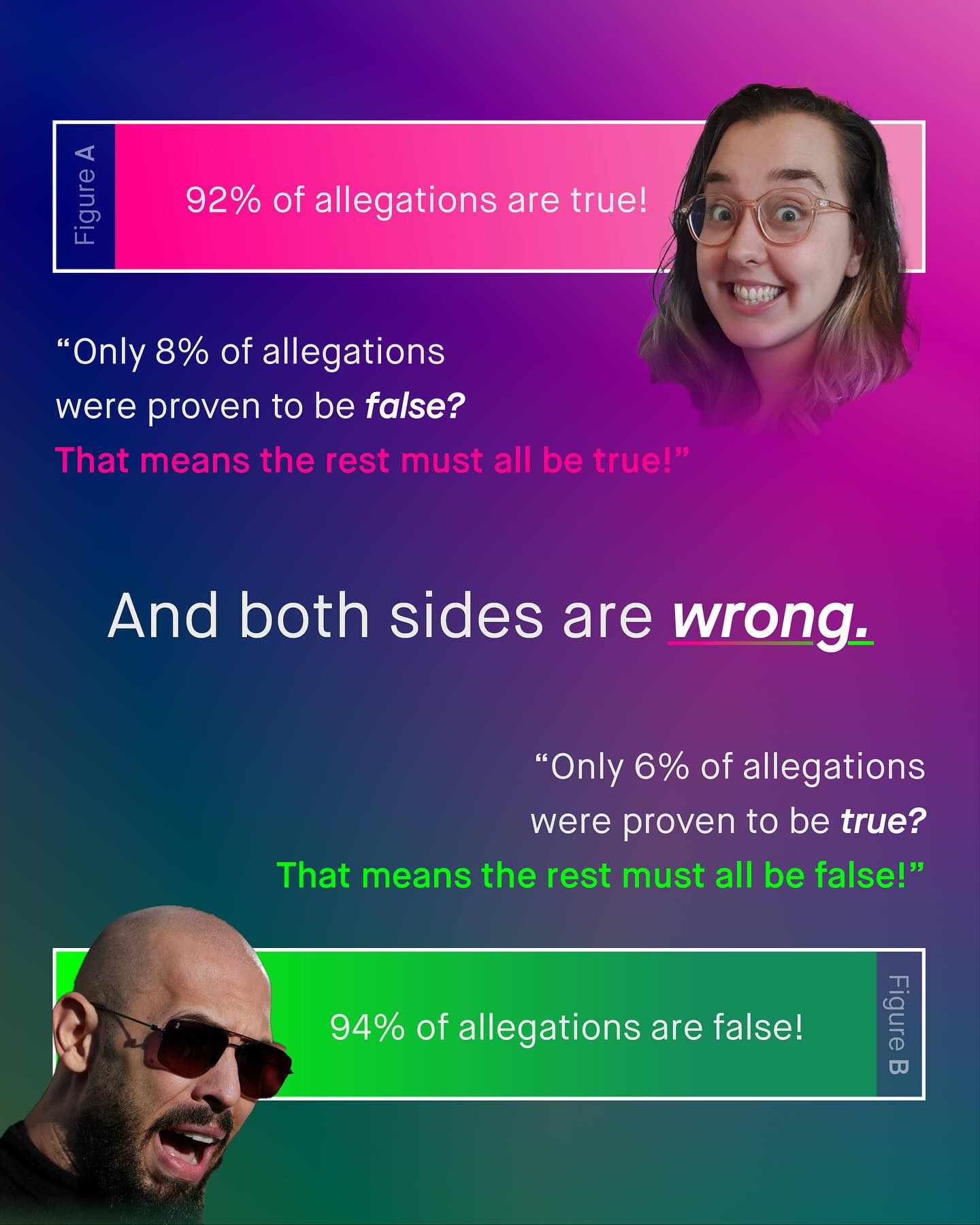
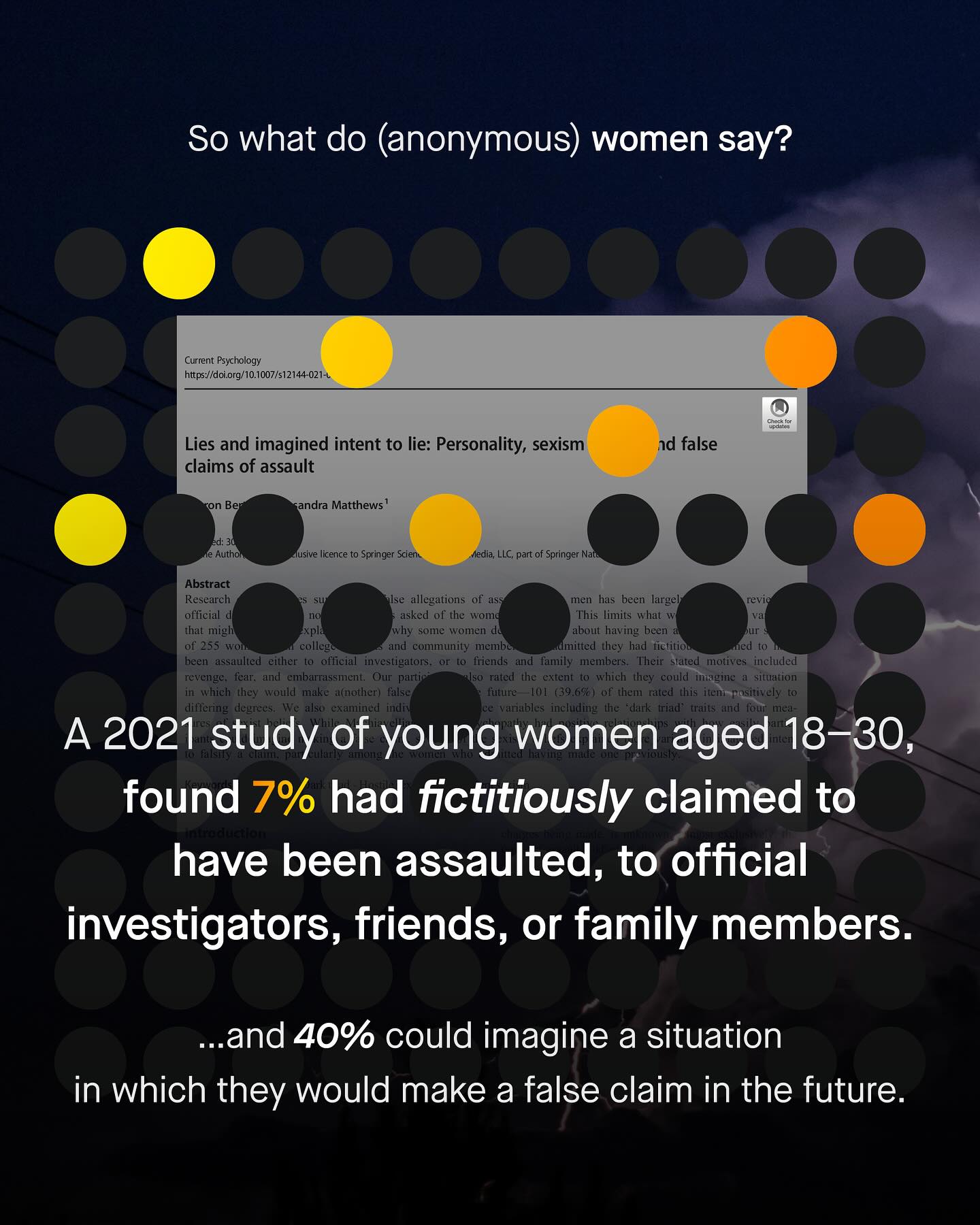
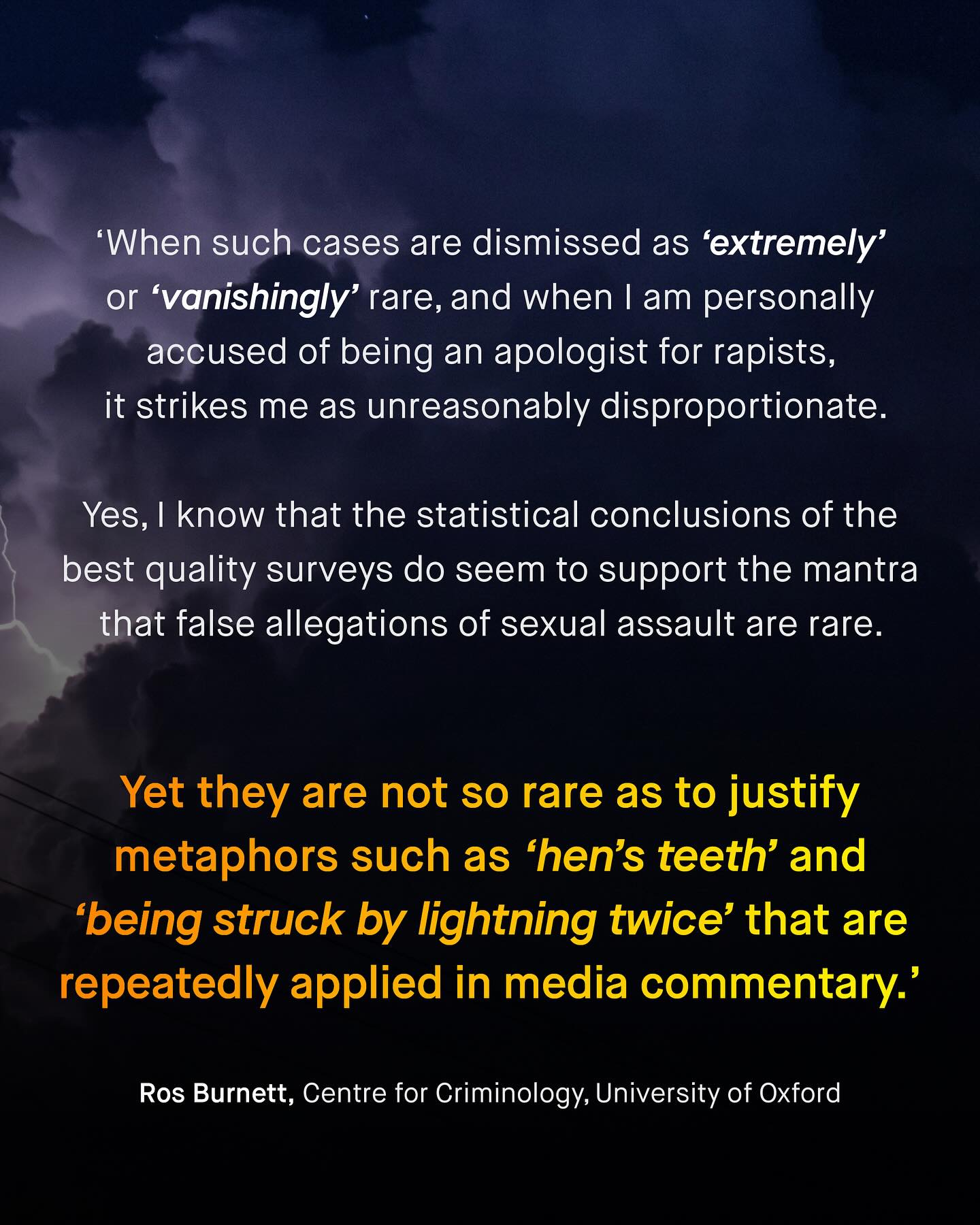
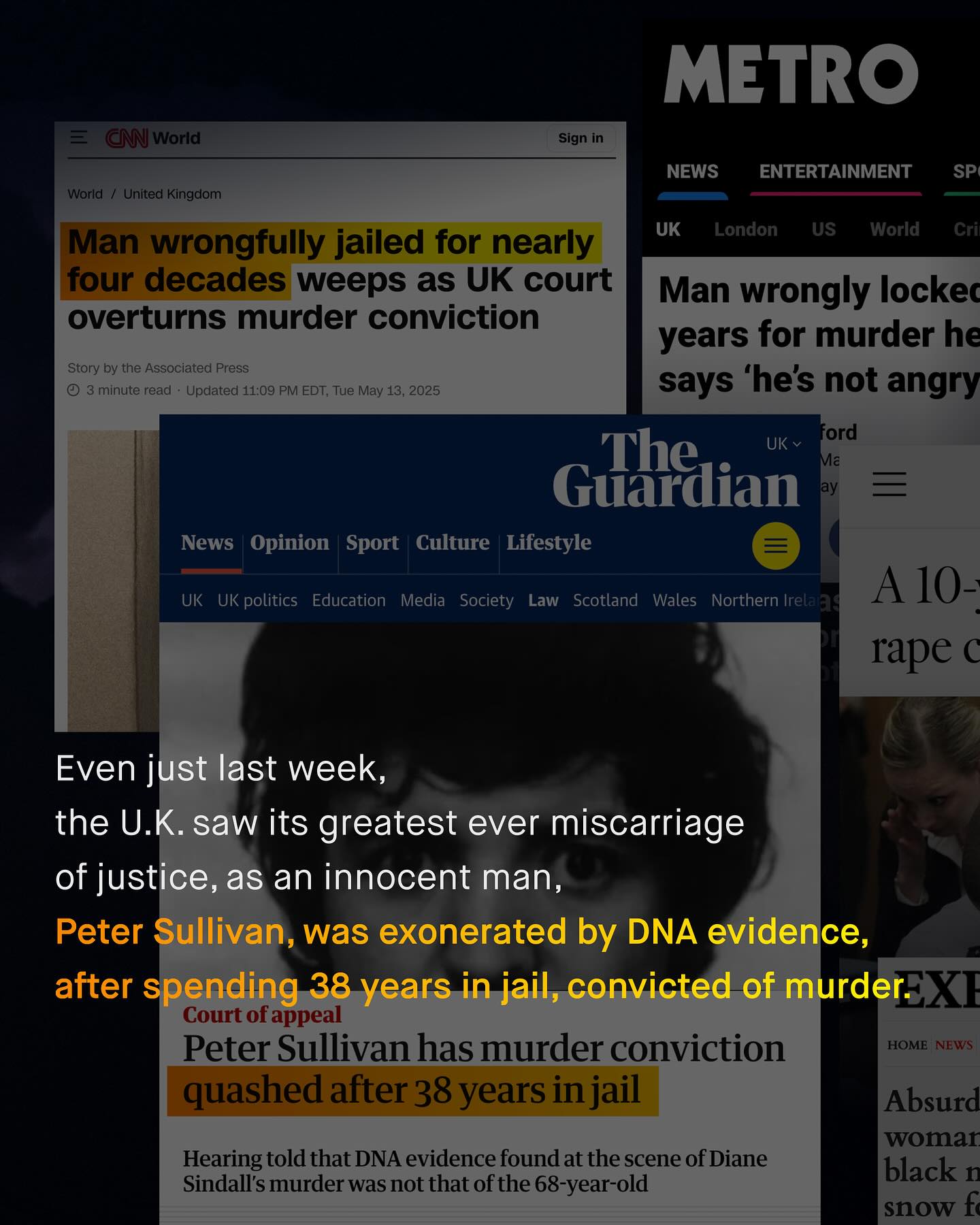
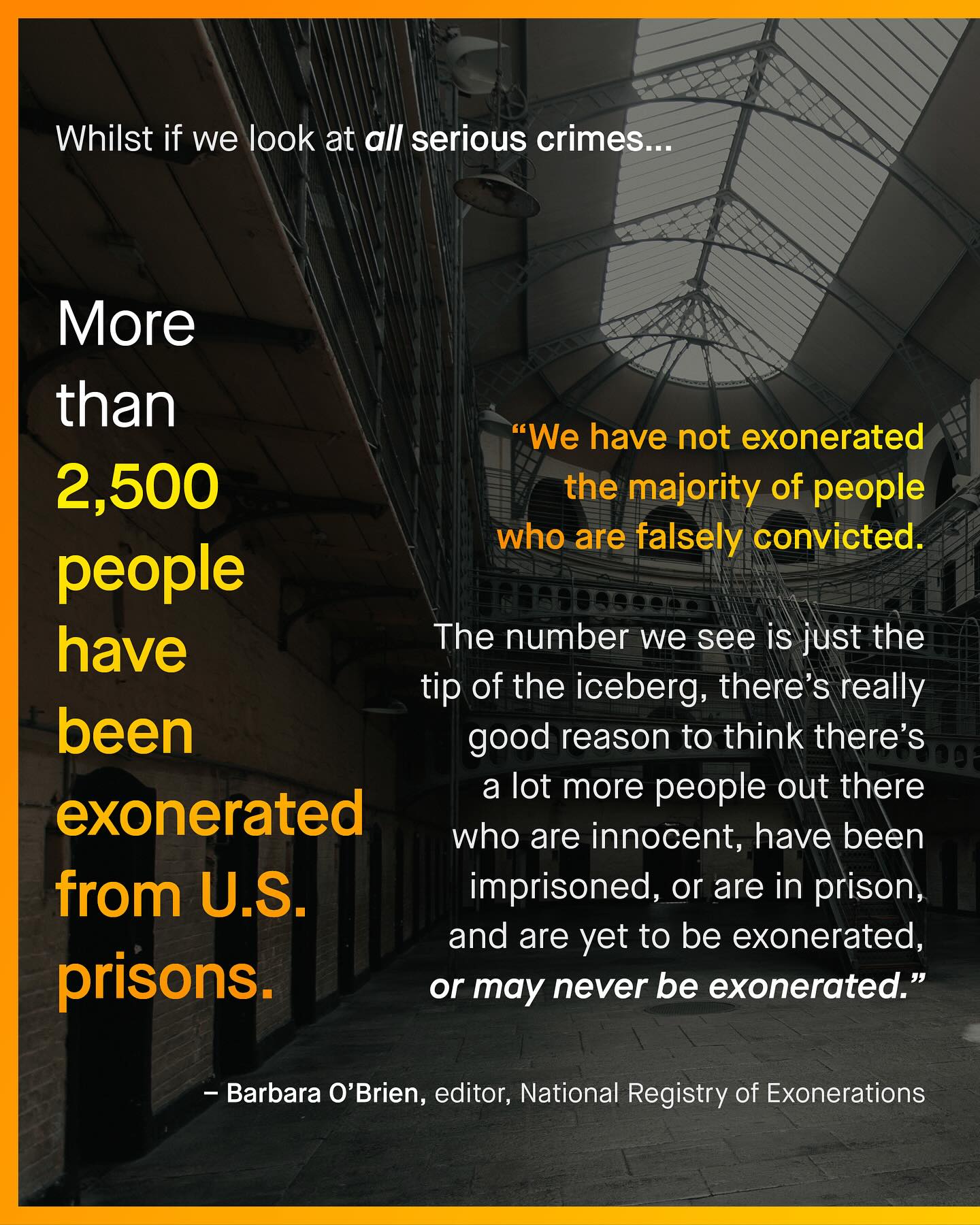
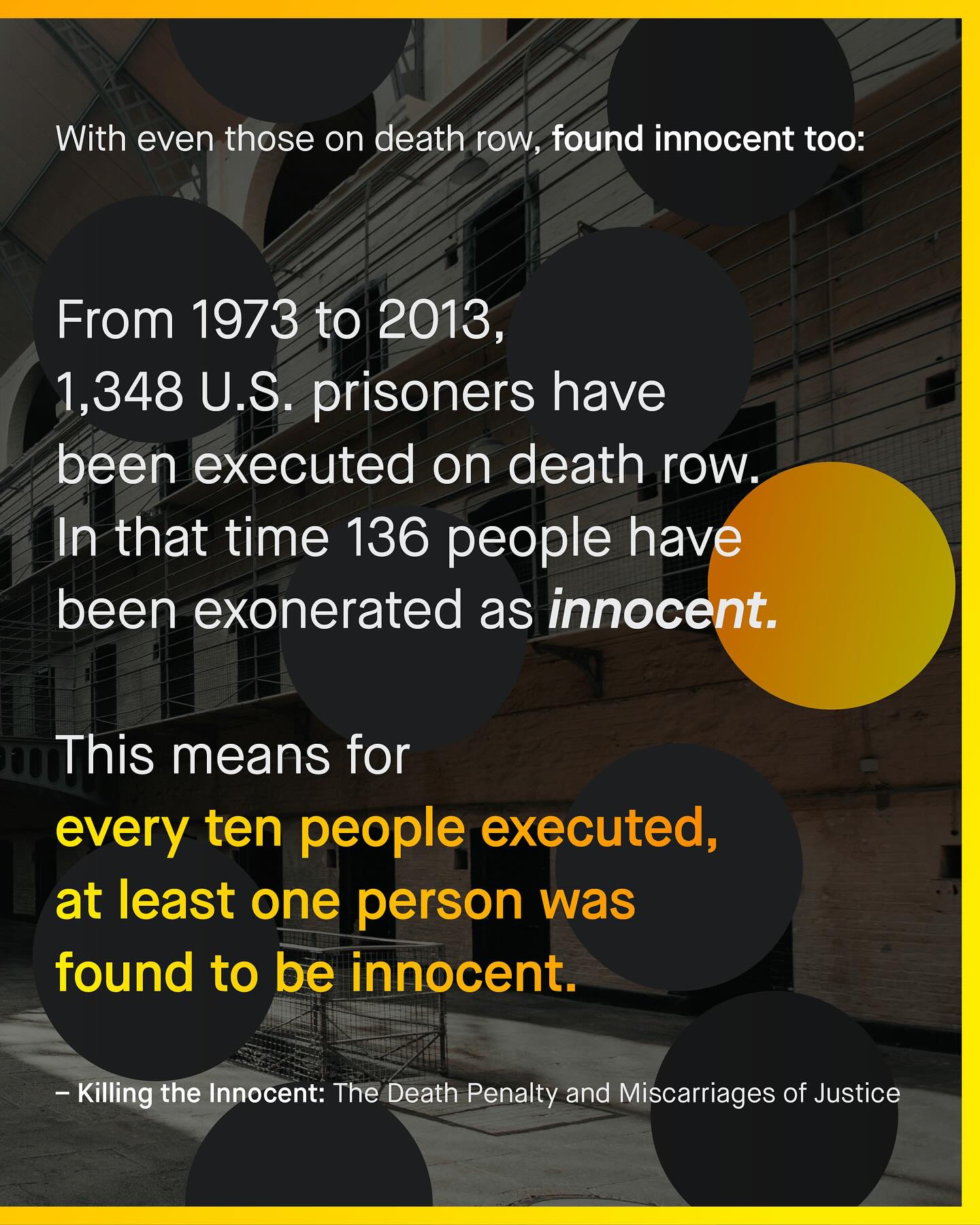
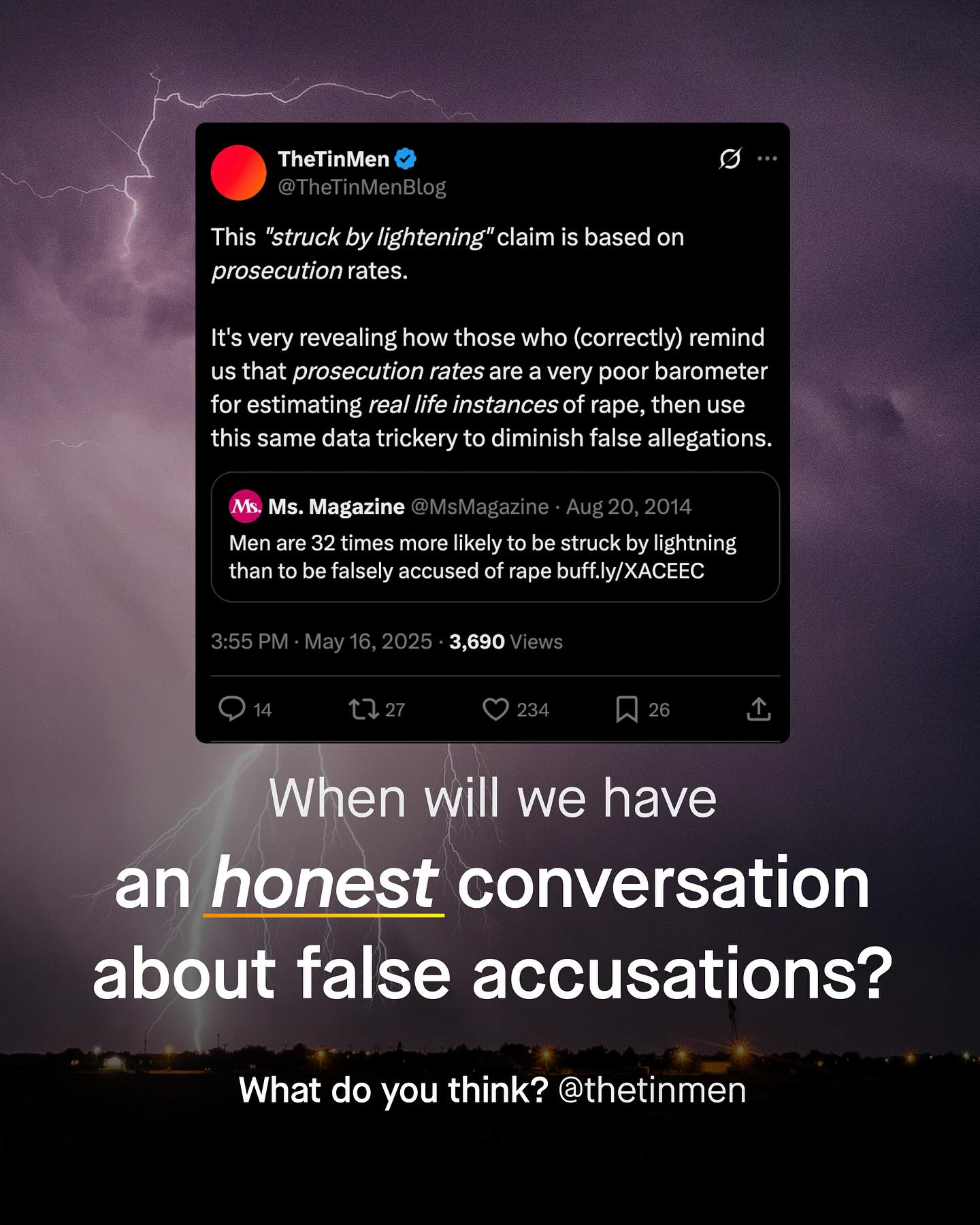
Here it is, probably the most controversial issue, in an already deeply controversial area of advocacy… false allegations of rape. Such a topic is only made worse by the fact it’s impossible to pin down, with huge grey areas of unknown, and enormous margins of error and uncertainty. One thing that’s for sure – Nobody knows the truth; not me, not you, not that sassy feminist know-it-all, or bombastic misogyny bro. But what we can be sure of, is that to compare such a phenomenon to far out events such as being hit by a meteor, or getting struck by lightening, is an obscene and outrageously misleading contortion of the truth. I know people who’ve been falsely accused, I am contacted relentlessly by men attempting to escape the public wrath for things they never did, or fathers trying to wash out the mud slung at them in family court. Six months ago I spoke at a male suicide panel, and was quietly approached by a mother with the story of her son. He was falsely accused at university; he was taken out of student halls, isolated in an empty flat, castigated, denied due process, and later took his own life. I hear similar stories often, and yet, I’ve never met someone who’s been hit by a meteorite, or struck by lightning. The conversation is riddled by lies, mostly by campaigners who twist prosecution data to diminish the scale of the problem; because, like sexual violence, false allegations are rarely reported, or taken seriously, let alone ending in a prosecution. So, can we have a better, more accurate, and productive conversation, that helps shine a light of truth onto men, protects the integrity of legitimate victims, and calls to account those whose lies harm both? Because, the better our data, the better we can help victims. So what do you think?
2025-05-19