
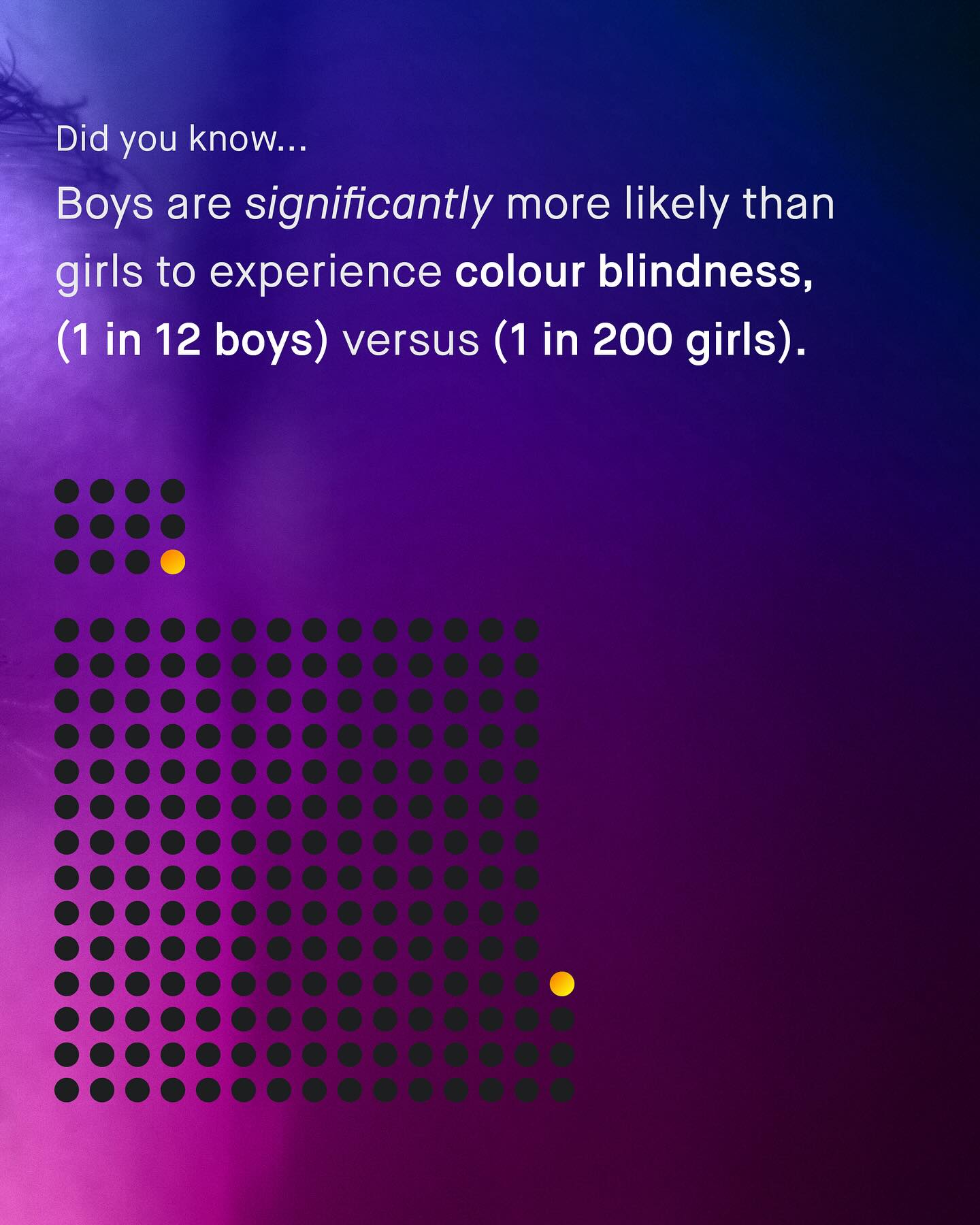
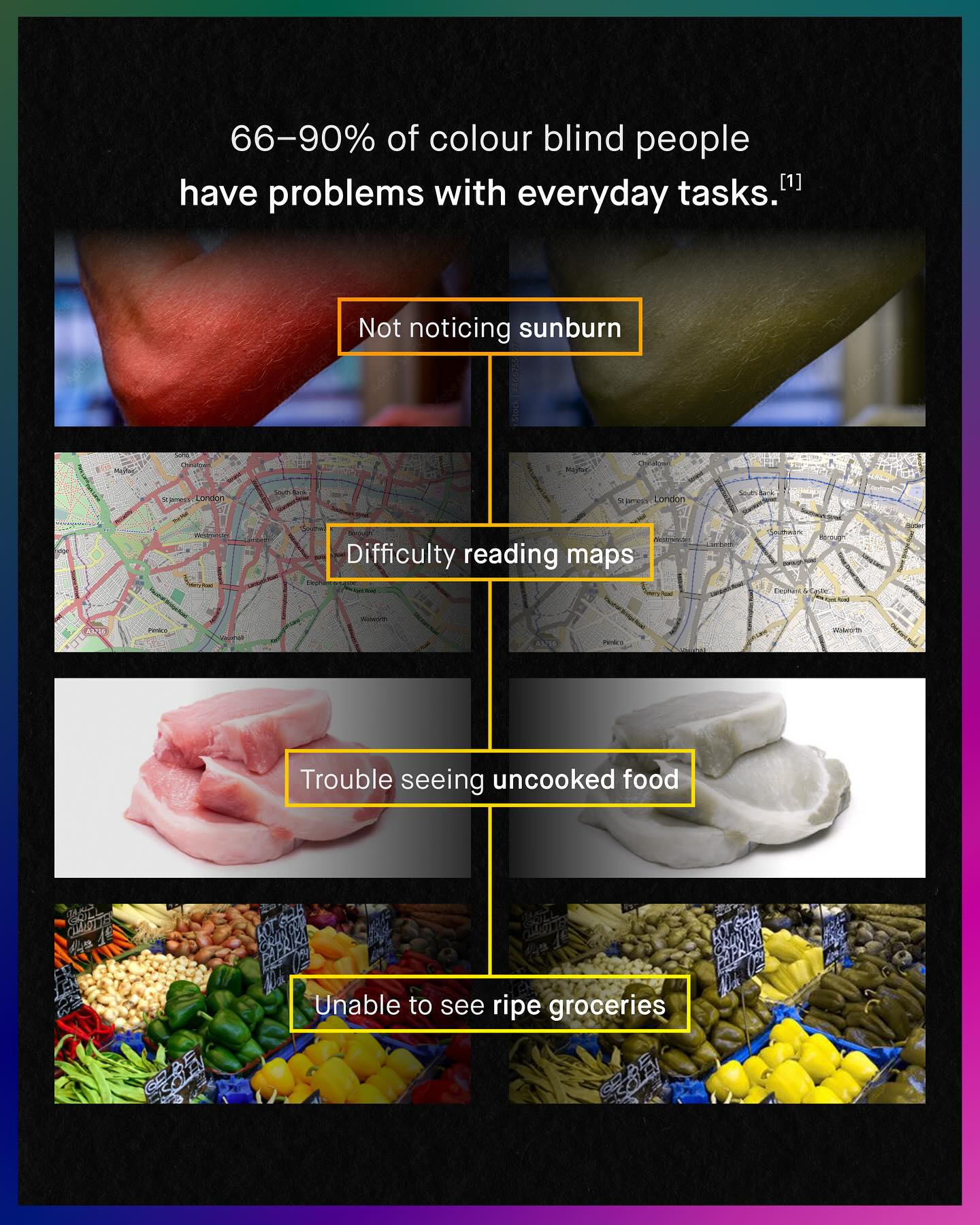
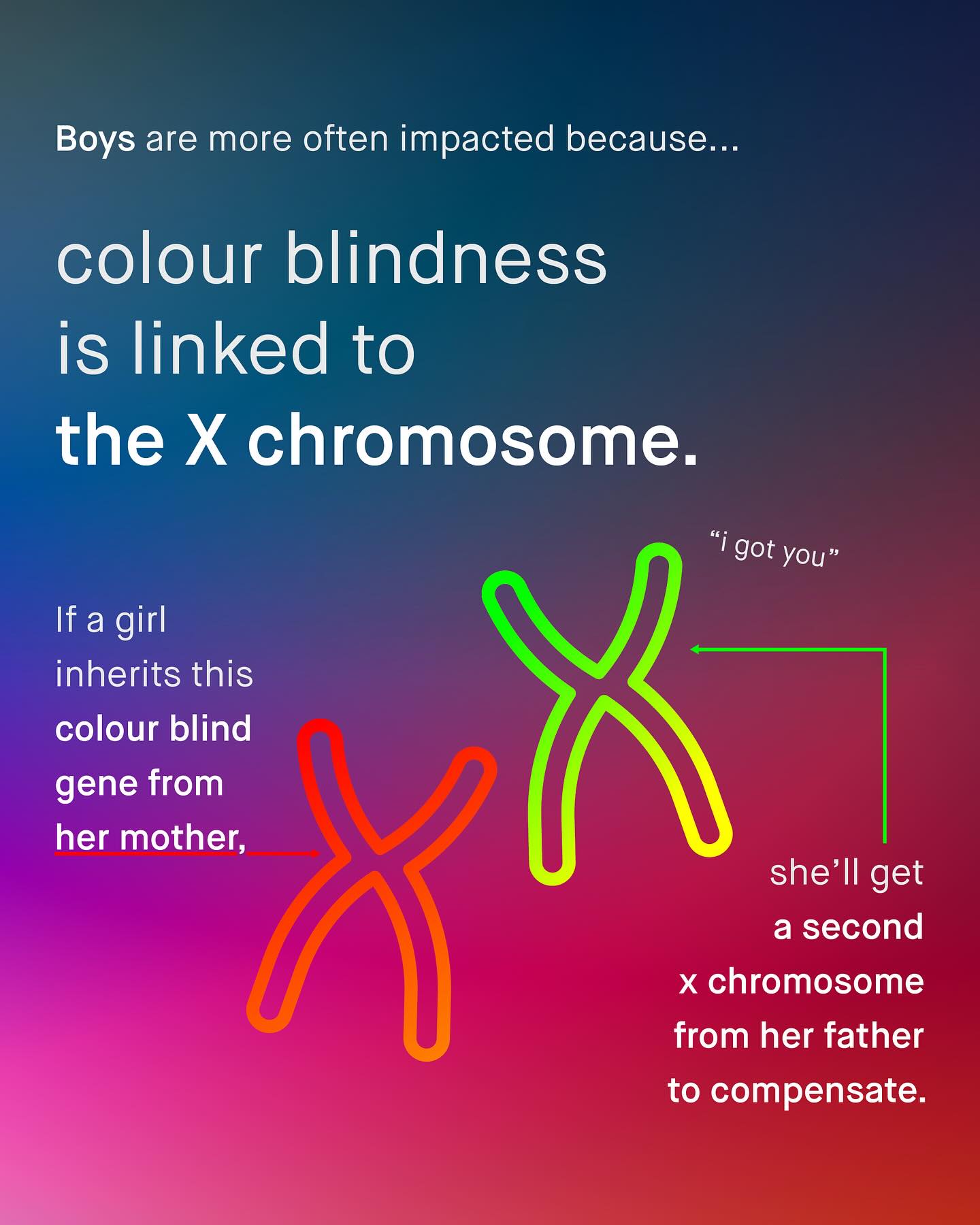
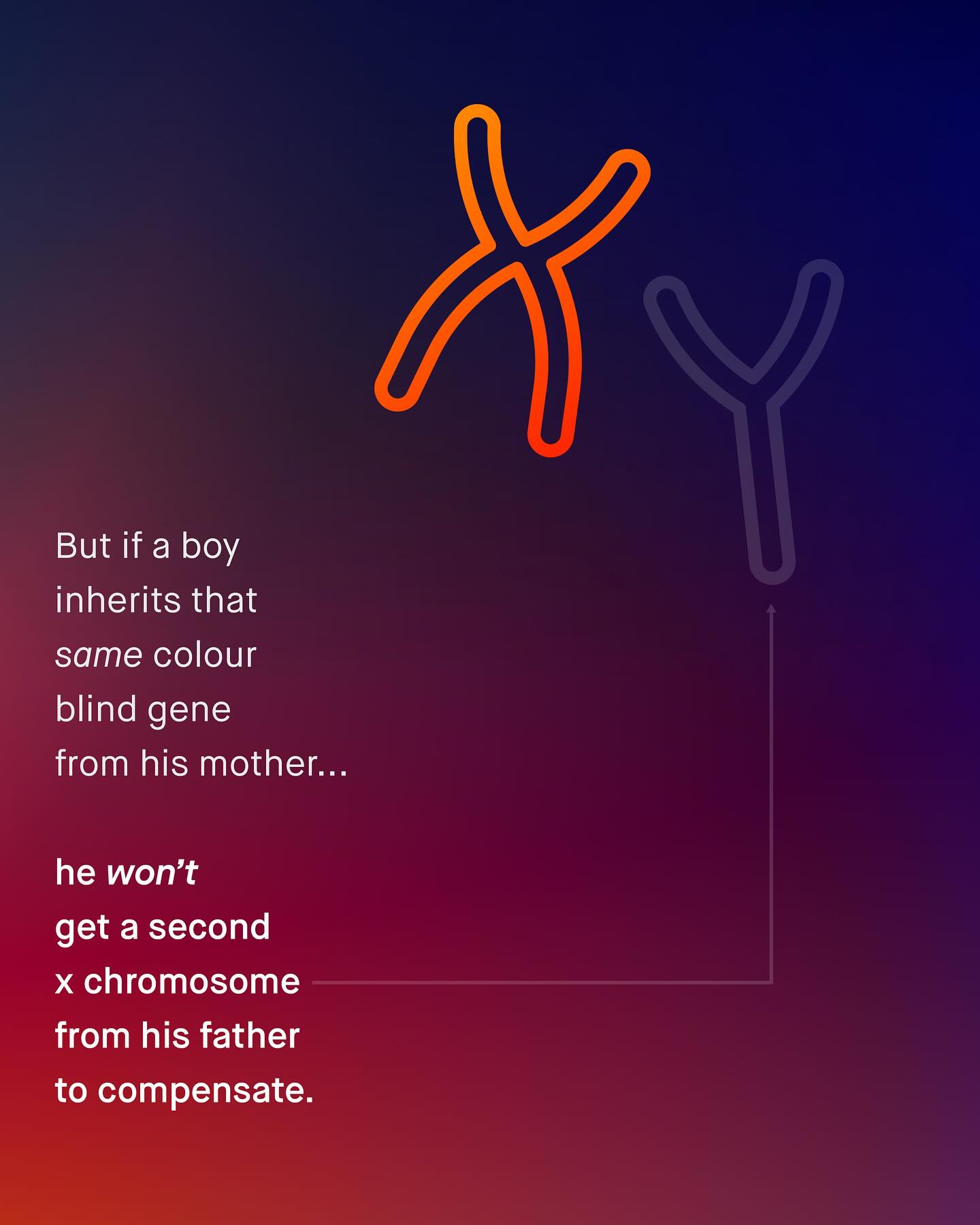
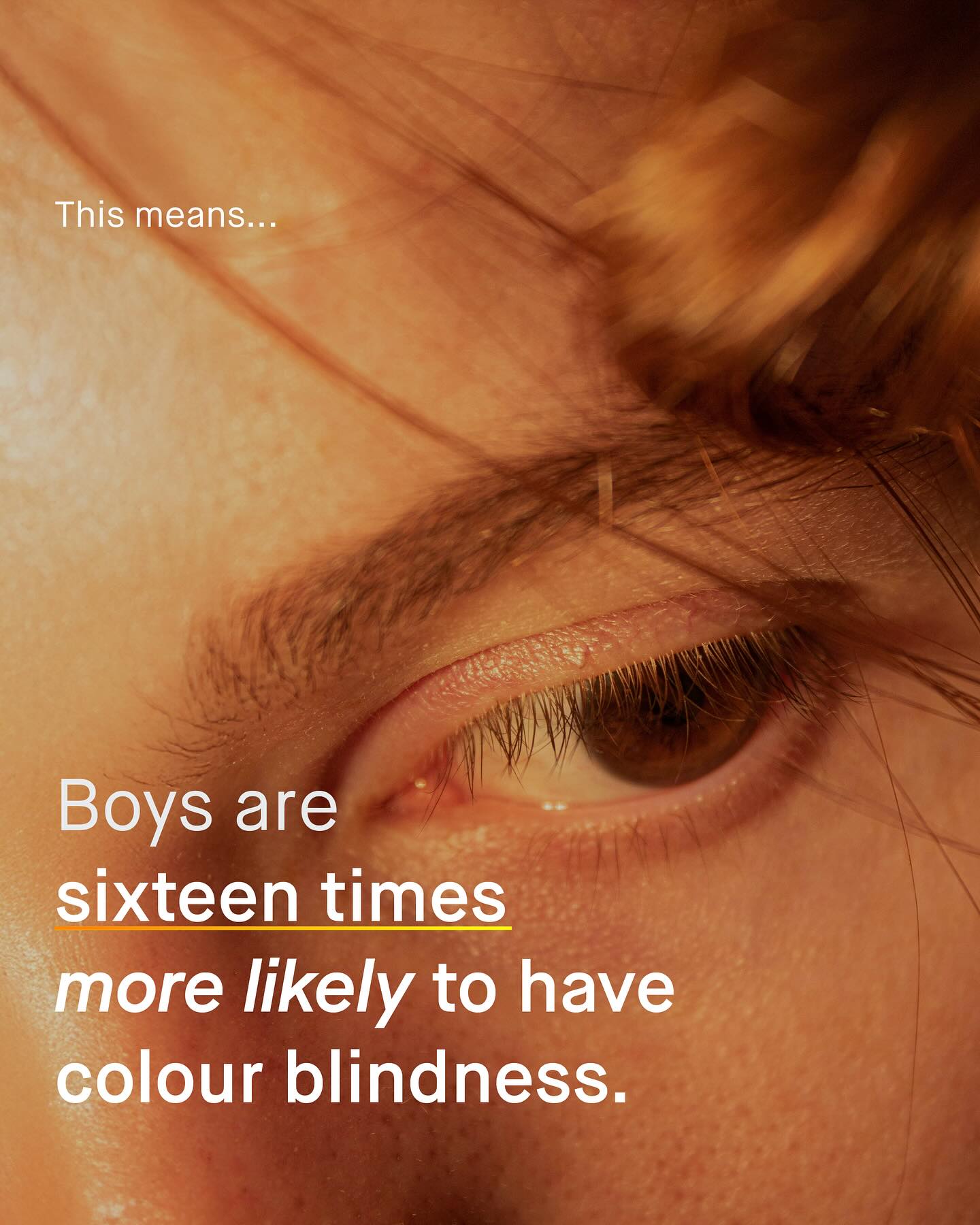
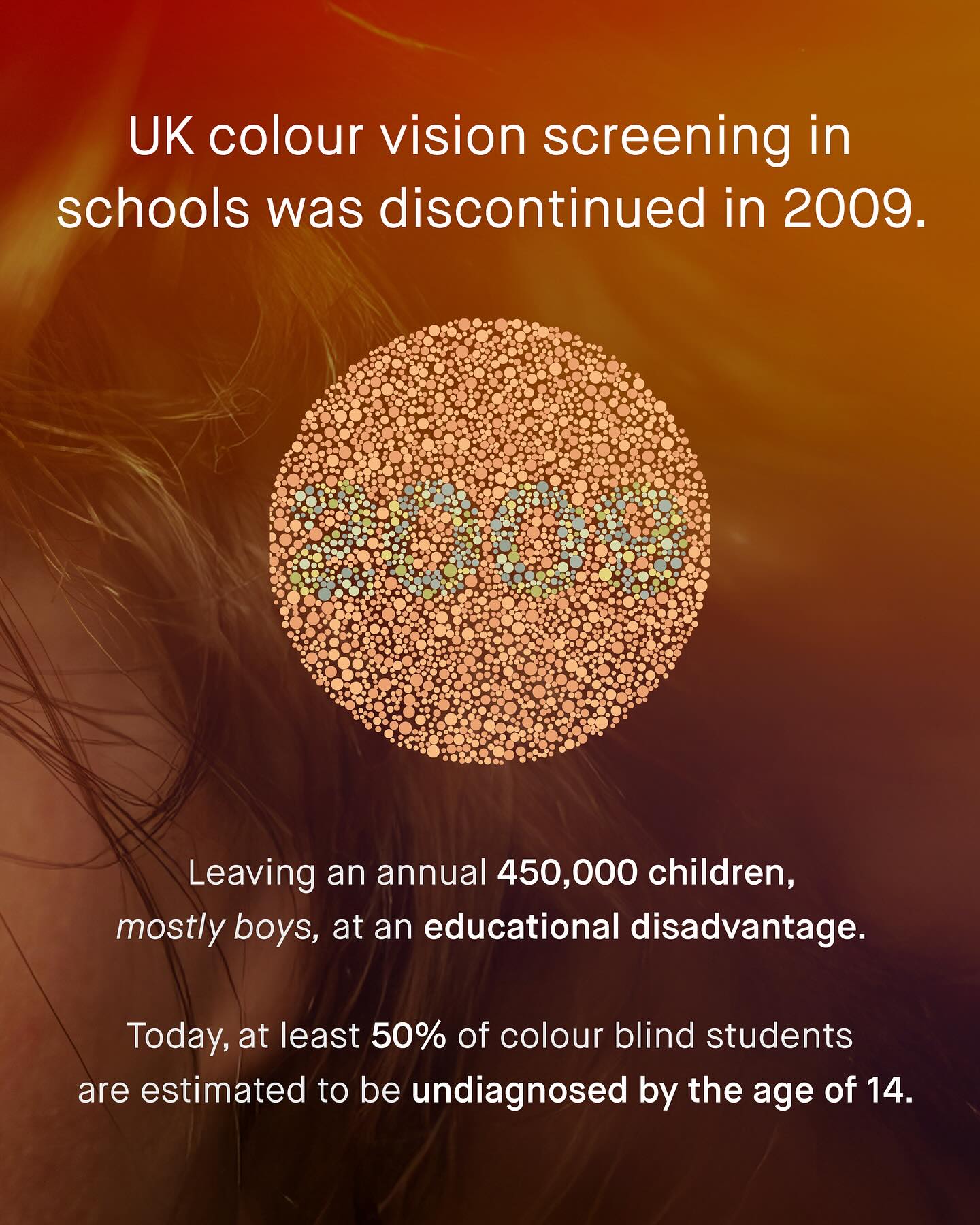
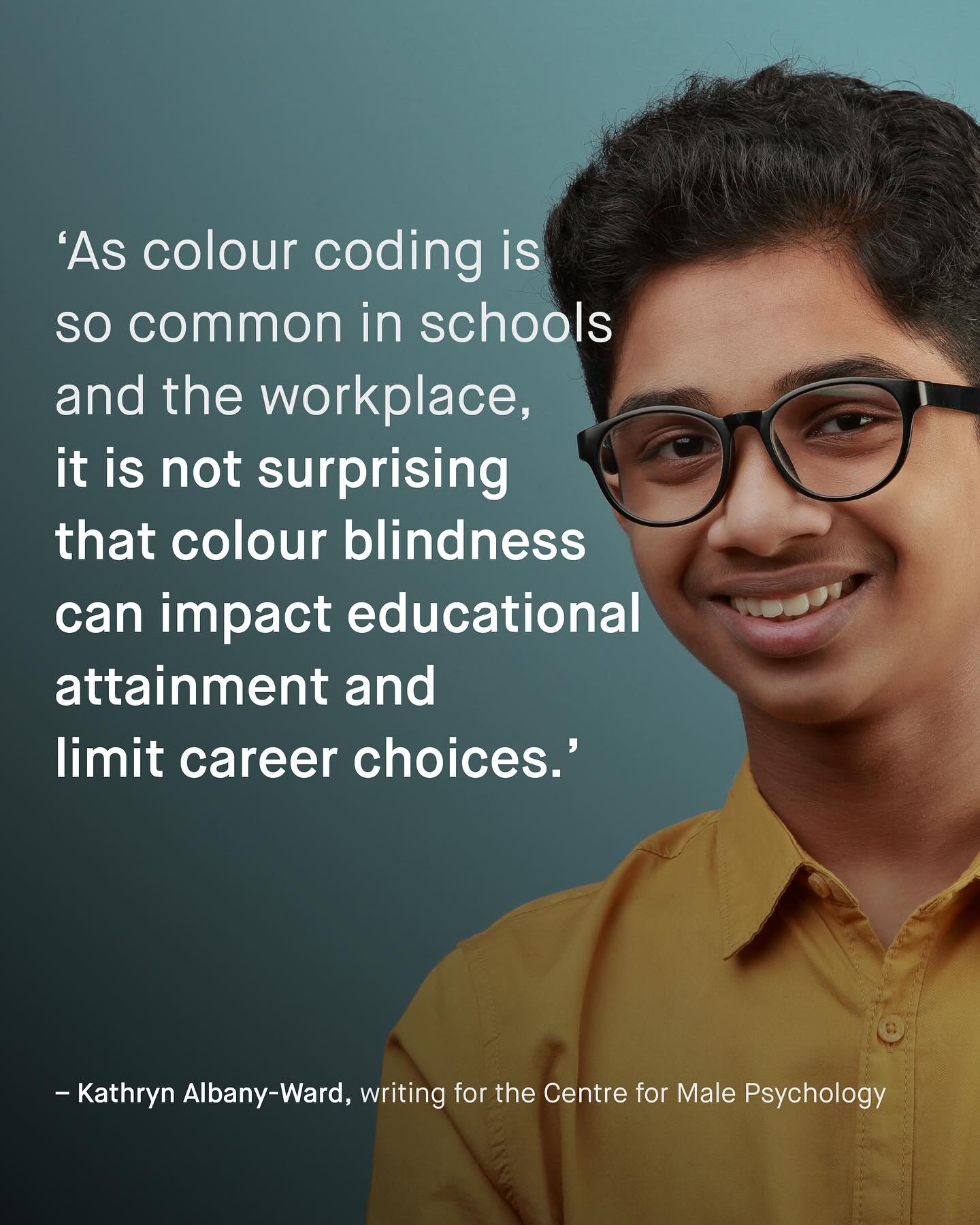
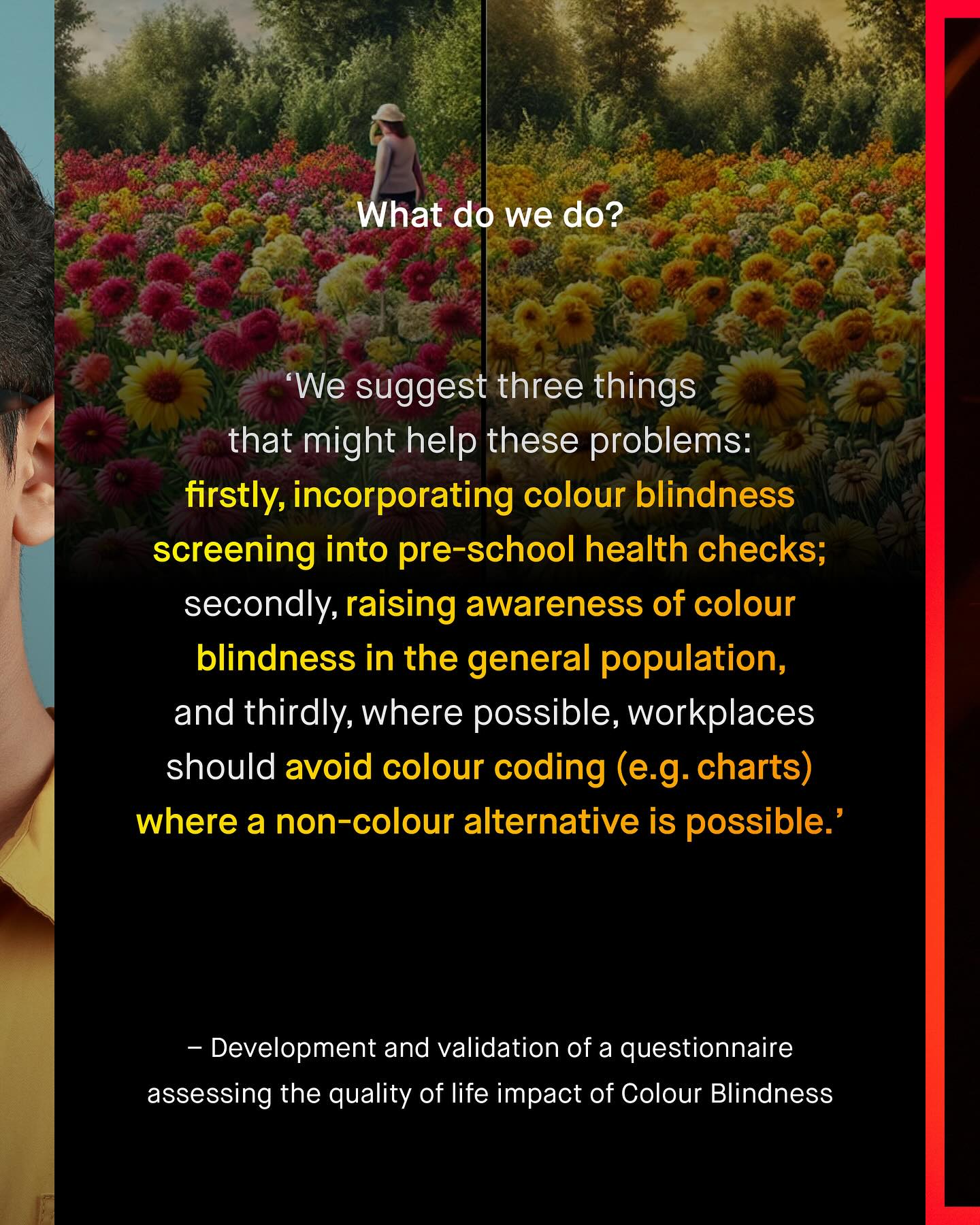
We all see the world differently, and when it comes to colour blindness, some people see it more differently than others. But that’s not the only misperception going on here… For the general public’s understanding of those who are colour blind is also off the mark. Colour blindness is not a trivial thing. It is a lifelong condition that can negatively impact your education, your work, and lifestyle, every day. It can be the difference between knowing that a pork chop is cooked, or uncooked; the difference between seeing that mole has changed colour, or not noticing it at all; it can lead someone to not noticing sunburn, or a change of colour in urine, buying groceries that aren’t ripe, or even taking the wrong coloured pill… In fact – 66% to 90% of those with colour blindness say they are negatively impacted by it every single day, 50% of those with colour blindness make it to their teenage years without even being diagnosed, and perhaps most surprising of all… boys are sixteen times more likely to be colour blind, than girls are. And yet, despite the condition being so prevalent, and the impact it has on a person’s life so significant, schools in the UK no longer routinely test children for colour blindness, nor does it currently form part of the NHS eye test for children in England and Wales. So why not? In our world of colour coded workplaces, text books, maps, supermarkets, medication, and clothes, surely a simple eye test in school is a basic, and essential requirement for children? What do you think? ~ [1] Centre for Male Psychology Study Images by Amanda Dalbjorn, Adrian Rosco, Codioful, Mathias Redding, Nora Hutton, Getty, Dave AJ, and Kiwi Hug. #colourblind #colourblindness #menshealth
2024-11-22