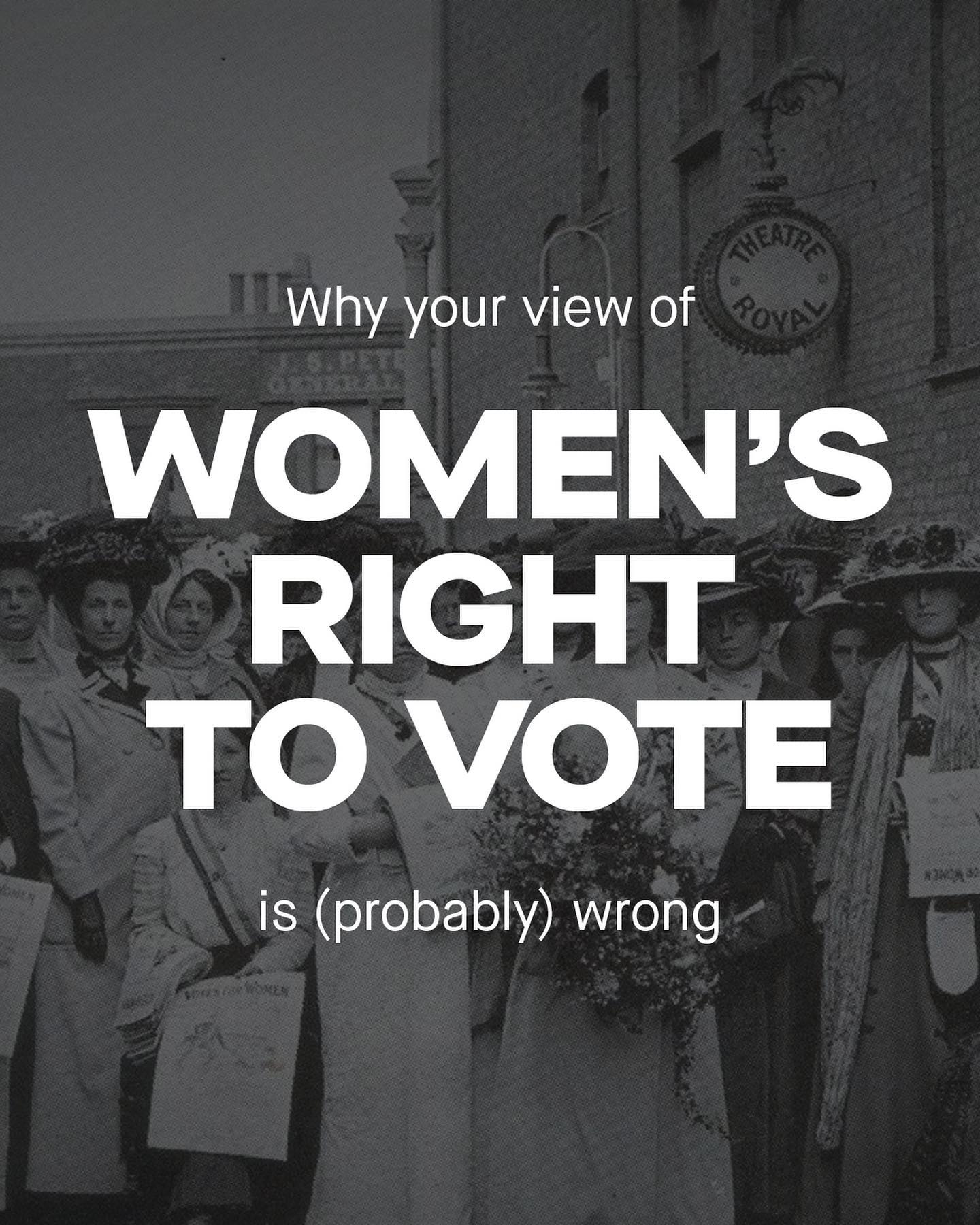
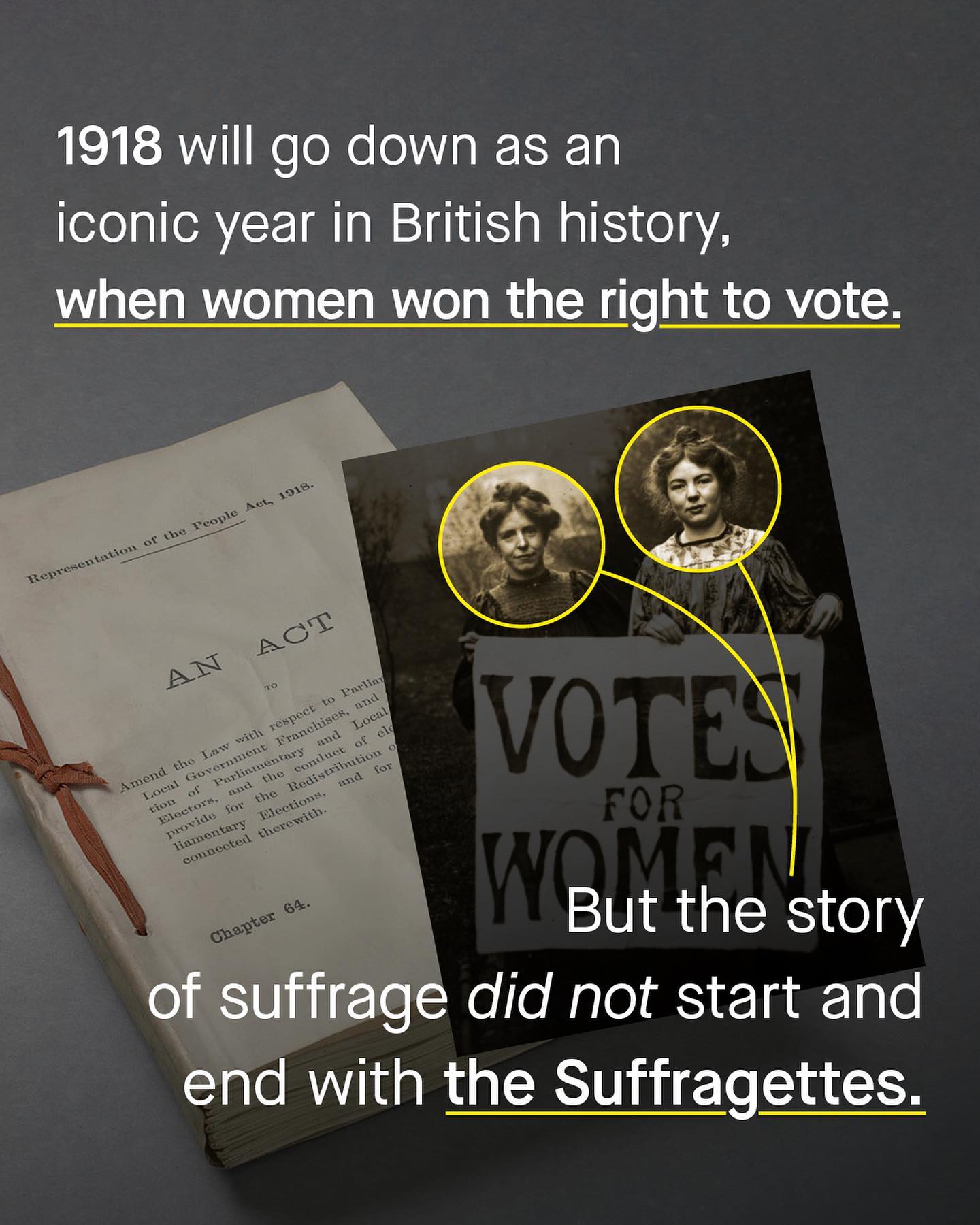
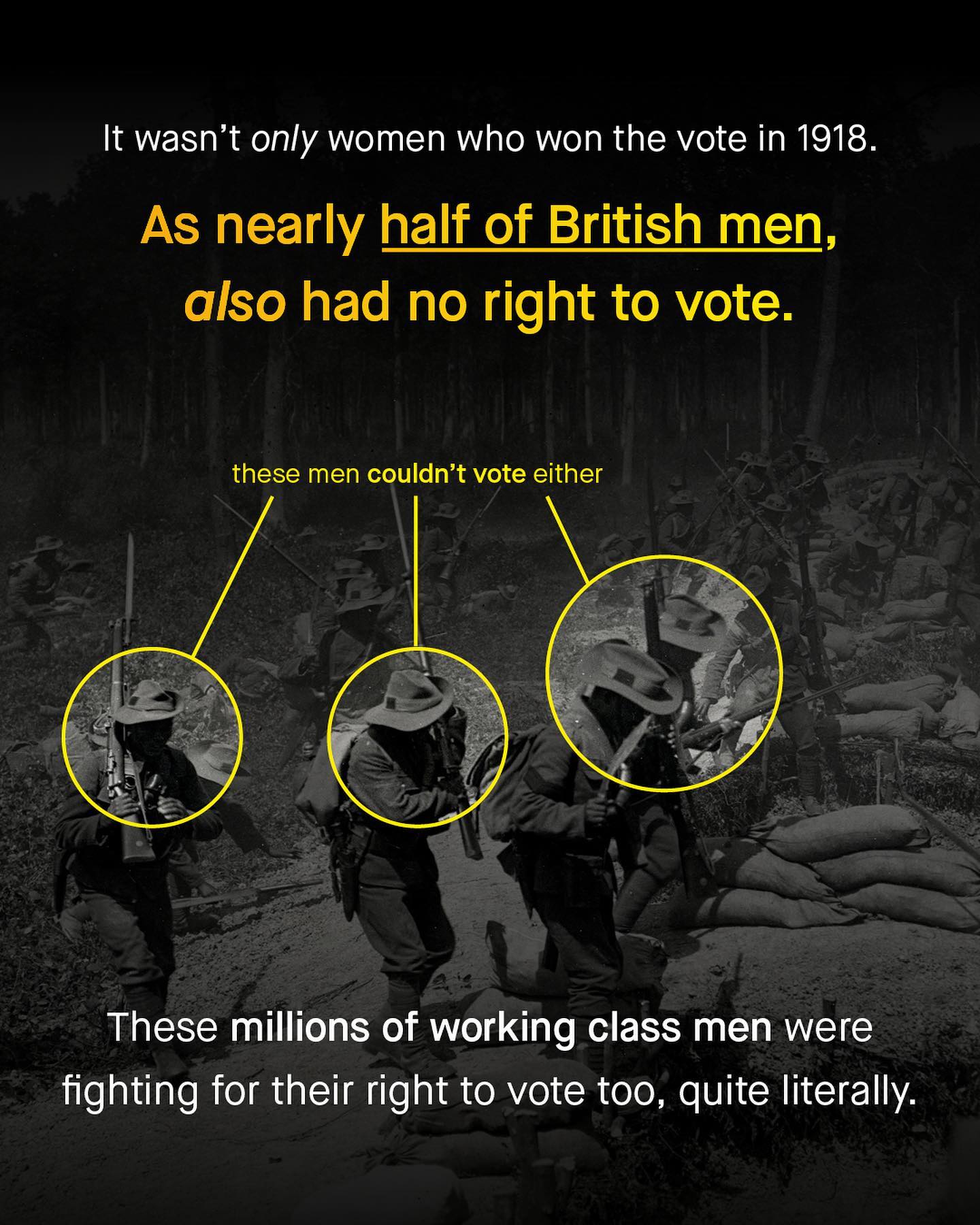
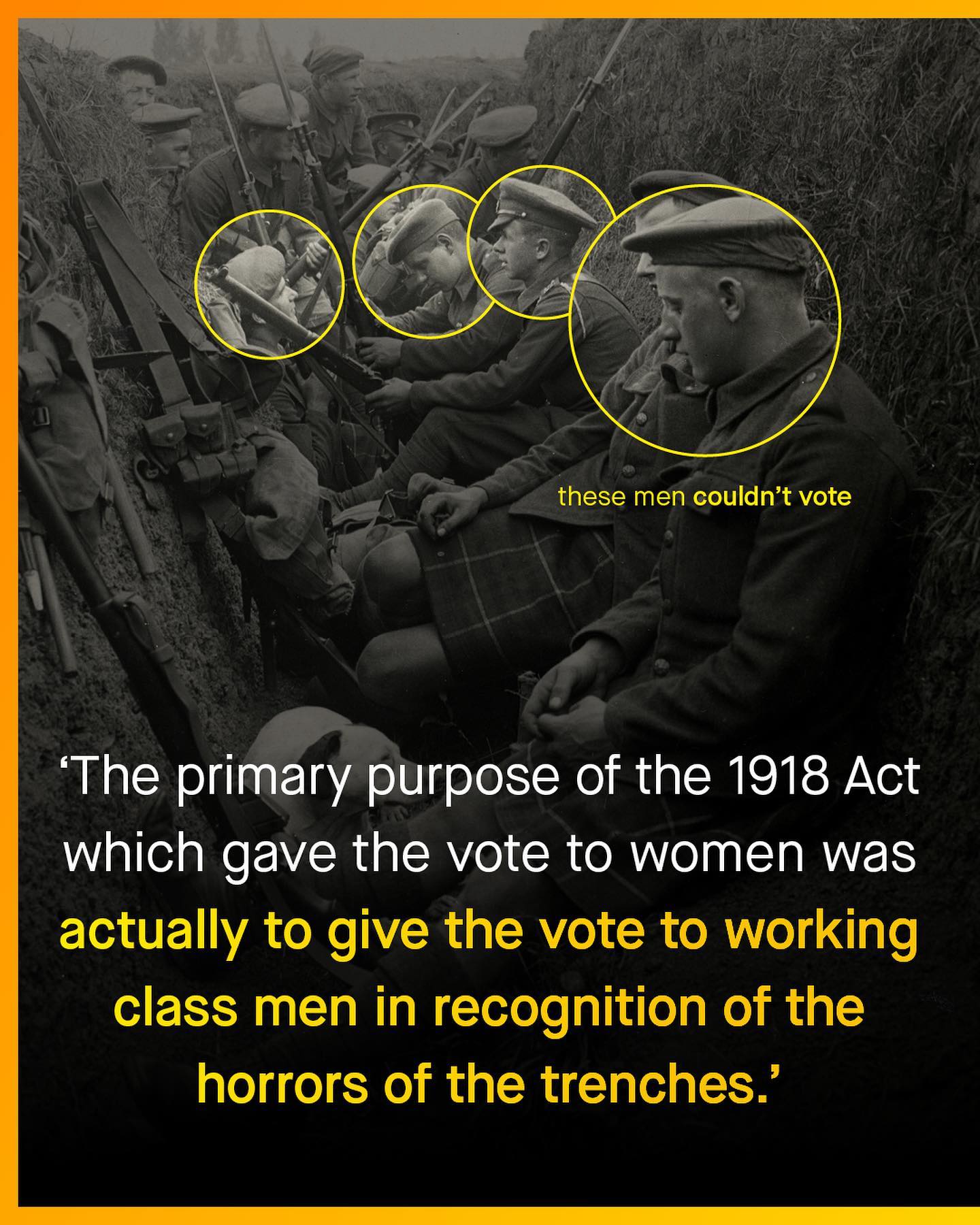
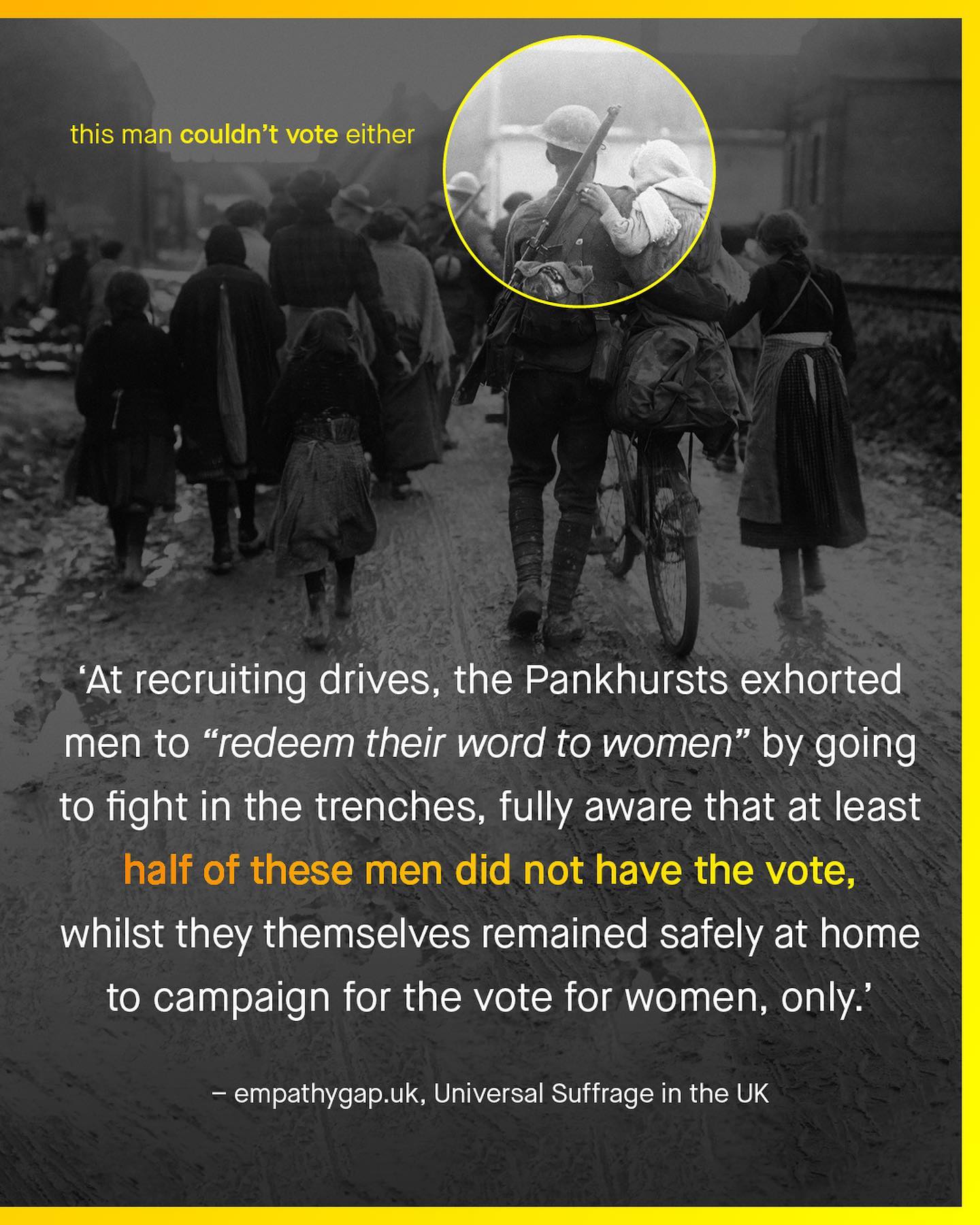
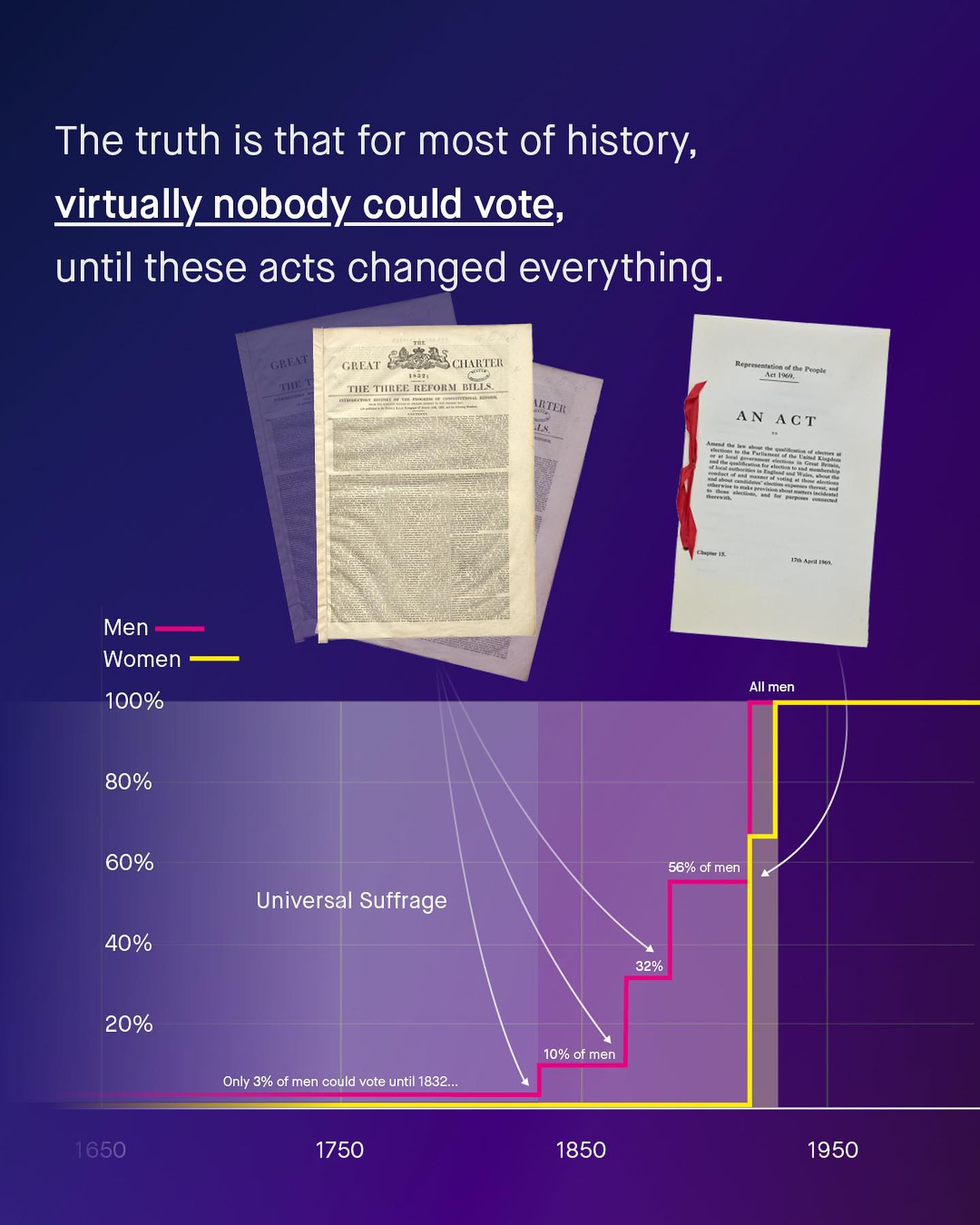
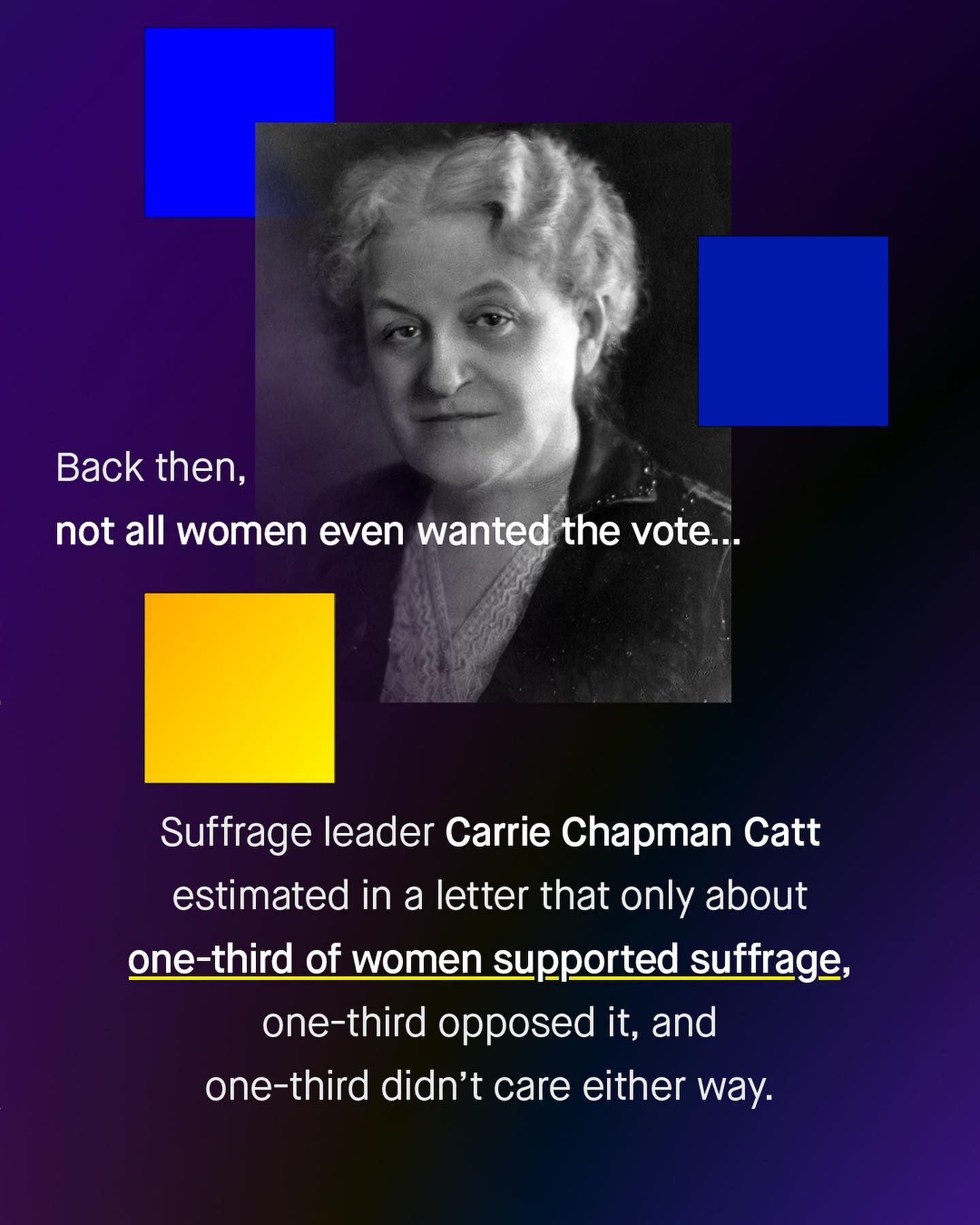
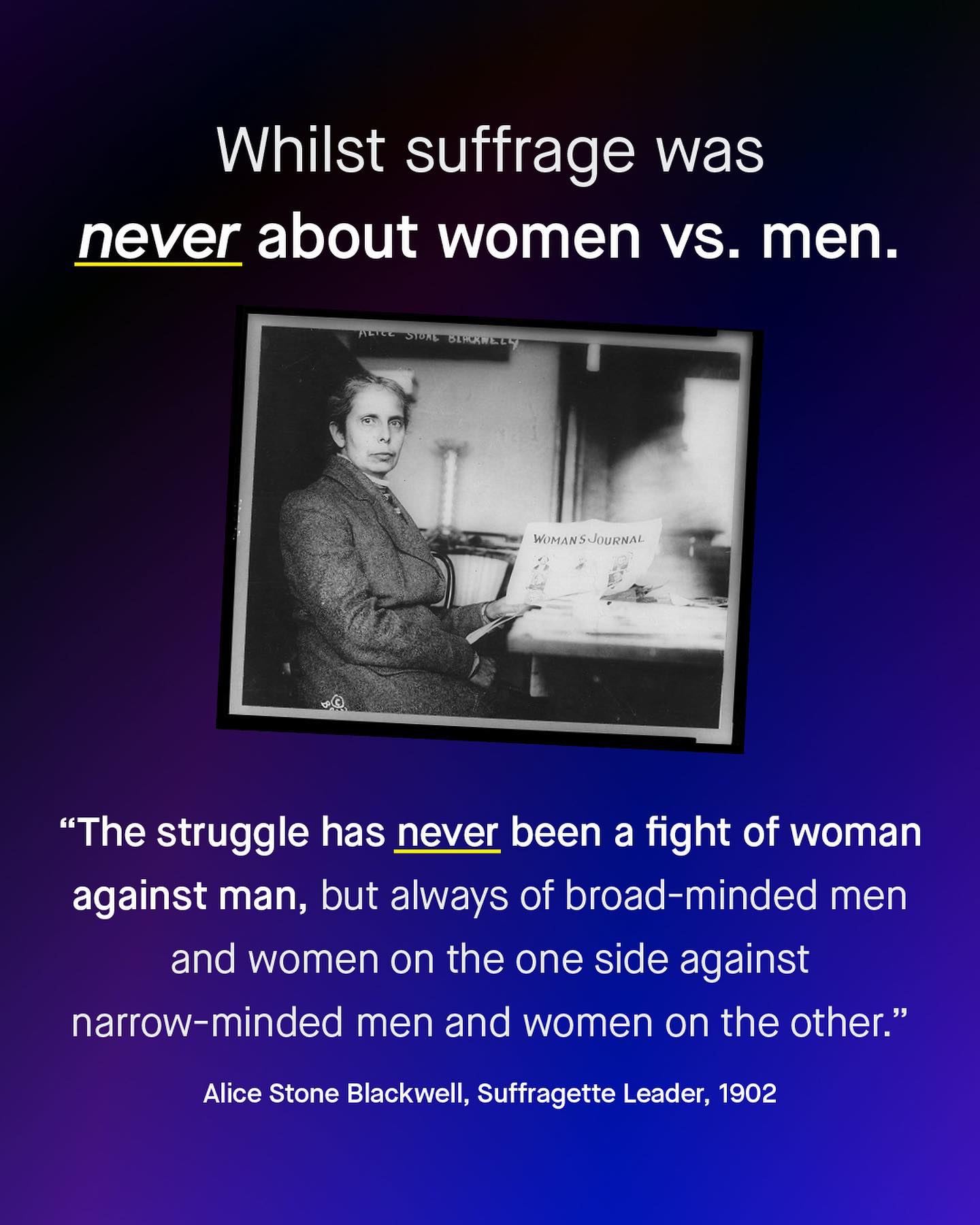
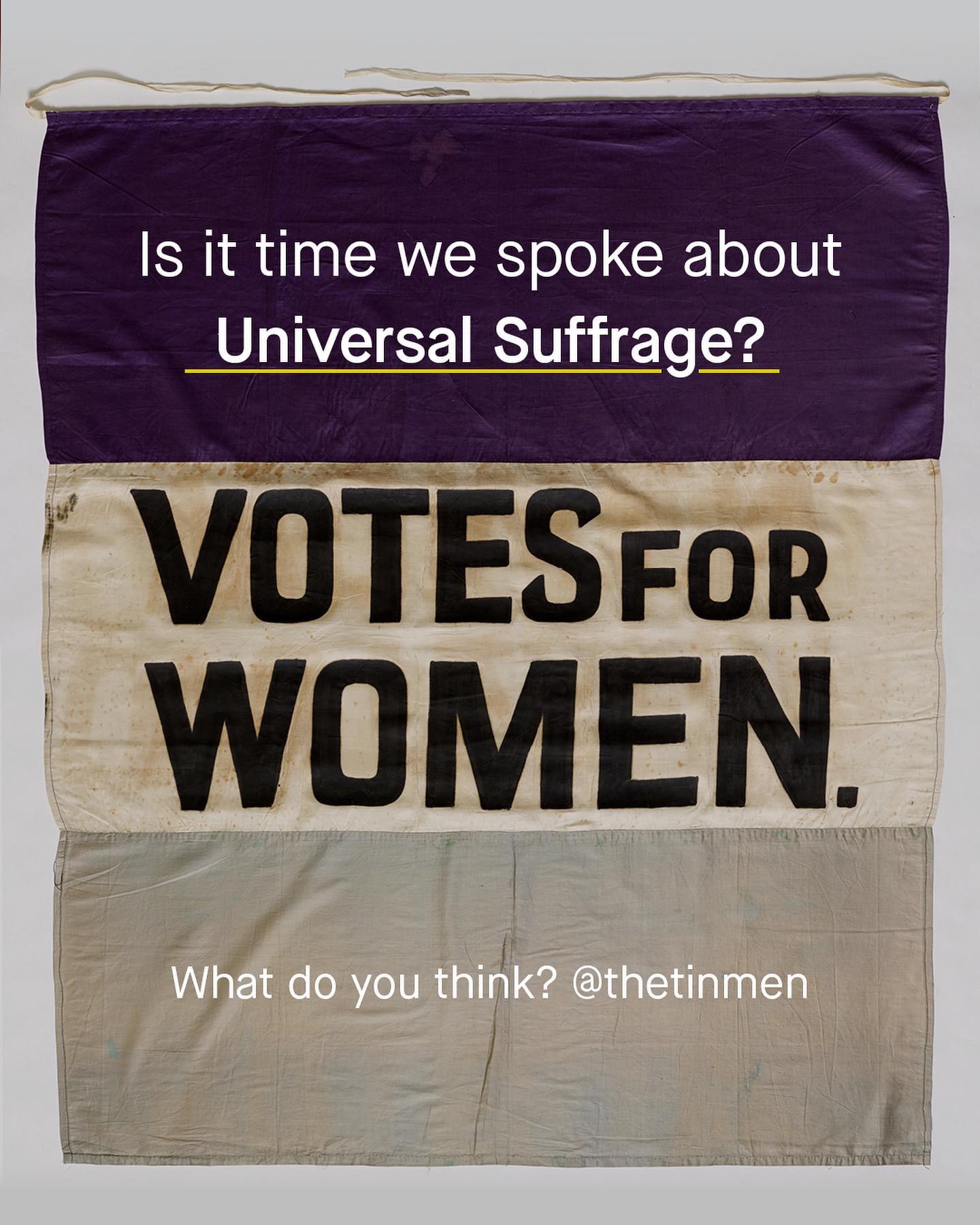
If you have the right to vote in a free society, you are more privileged than 99.9% of people who have ever lived. We can quibble over who is slightly higher in that tiny 0.1% substrata, but the point is – have some perspective. So too perspective is required when discussing the history of ‘the right to vote’; to talk specifically about who had it, when, and who didn’t. “Men could always vote!” I’m sure you’ve heard. The common trope that is wheeled out across social media, angrily squarked in comment sections… But it is simply not true. As for the vast majority of human history, virtually nobody could vote, aside from a tiny percentage of men. Until 1832 only 3% of men could vote, and then 10%, then 32%, and so on. Right up until 1918, where women were campaigning for their vote, half of British men were campaigning for theirs too. Yes. Millions of men were fighting for the vote too, and quite literally. In fact, it was at the cost of hundreds of thousands of male lives, lost in the horrors of the trenches of World War One, that working class men finally won the right to vote in 1918. It’s a truth very few know. As although basking in the limelight of history, the fight for the vote did not start with the Suffragettes, nor did it end with them. To start the story in era of the Suffragettes, is to open the book at the end. The end of a hundred years of fighting, by both men and women, for both men and women, together, for universal suffrage. Sadly the true story has faded, been erased, or rewritten by politically motivated historical revisionists, and fraudulent arm chair experts. So the brave, and brilliant work, and tragic sacrifices of history’s men and women is lost within the fiery breath and bad intentions of naive social justice warriors, tweeting themselves senseless. What we’re left with is half the story, and of half the importance. So tell - what didn’t you know about Universal Suffrage? What are the text books not telling us? ~ Empathy Gap The Suffragettes Images: Codioful, Birmingham Museums Trust, National Library of Scotland, and the British Library. #womensrights
2023-07-04