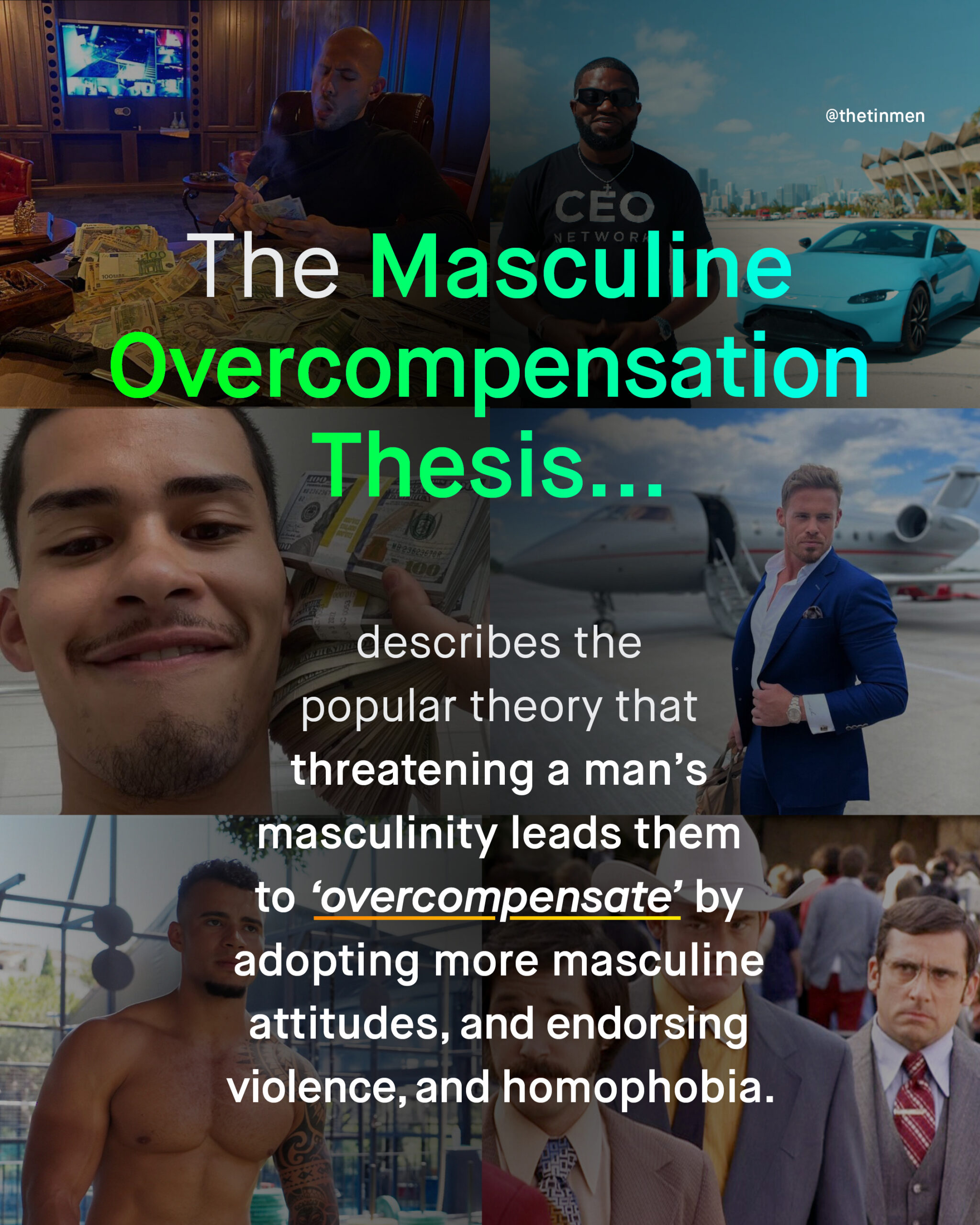
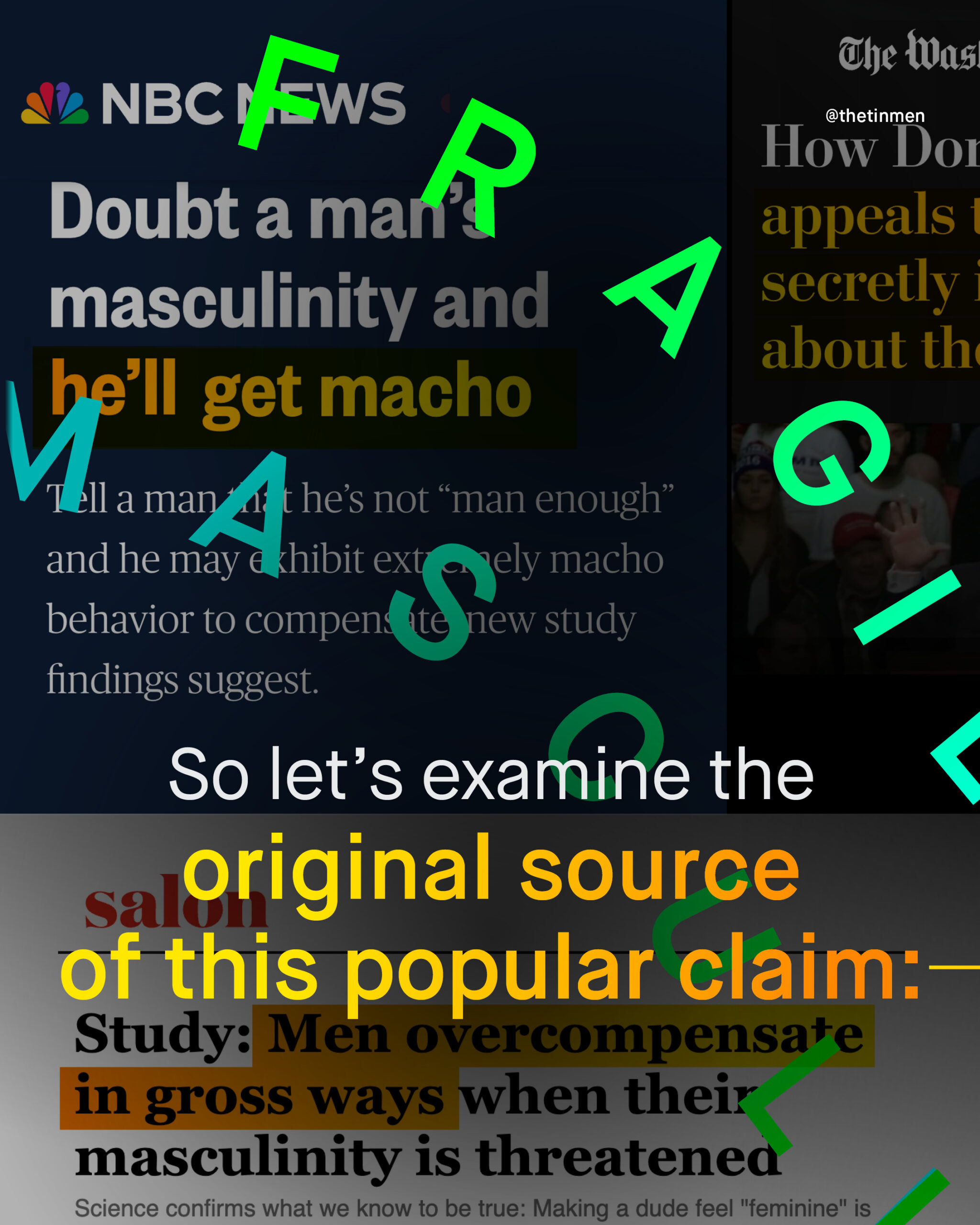
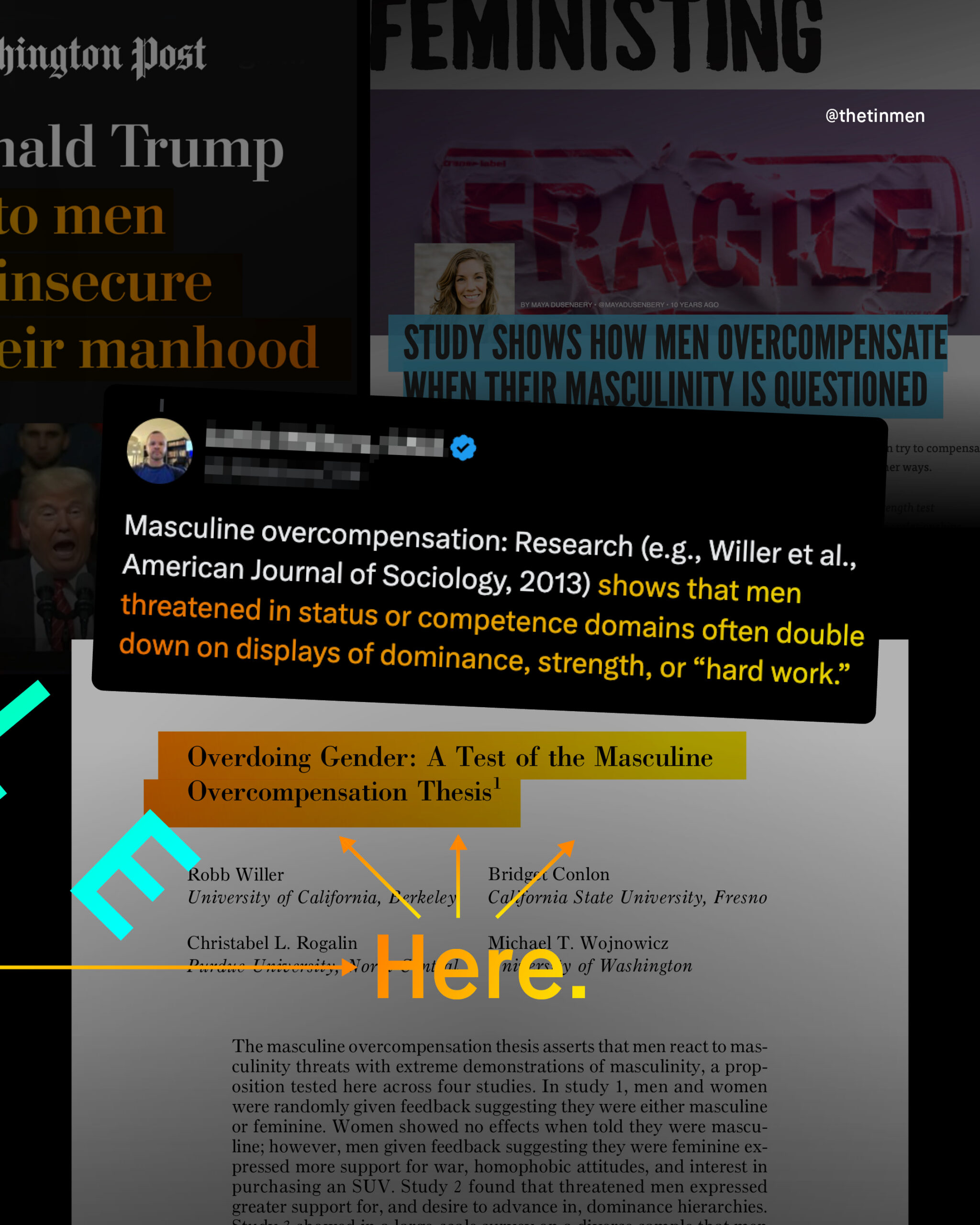
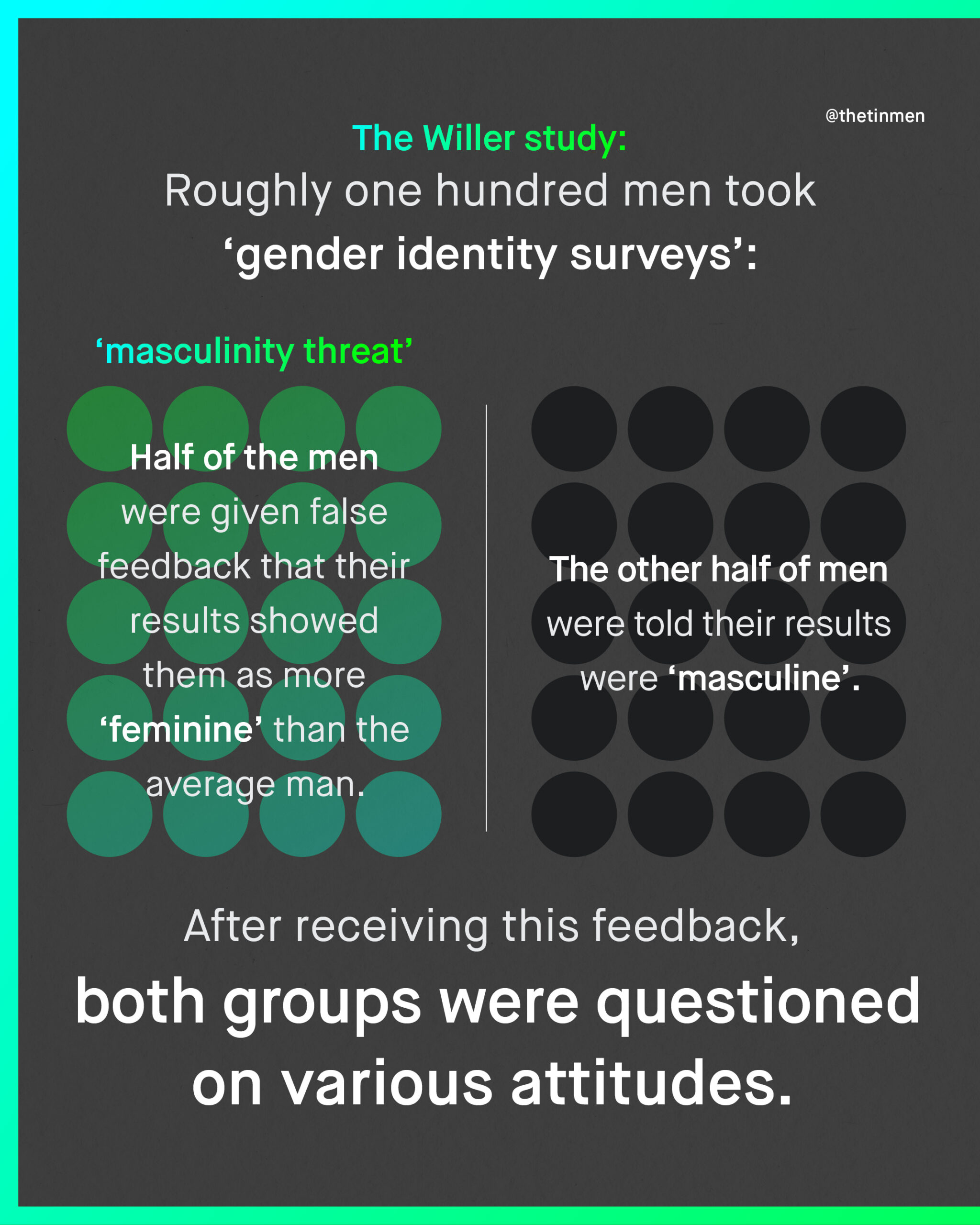
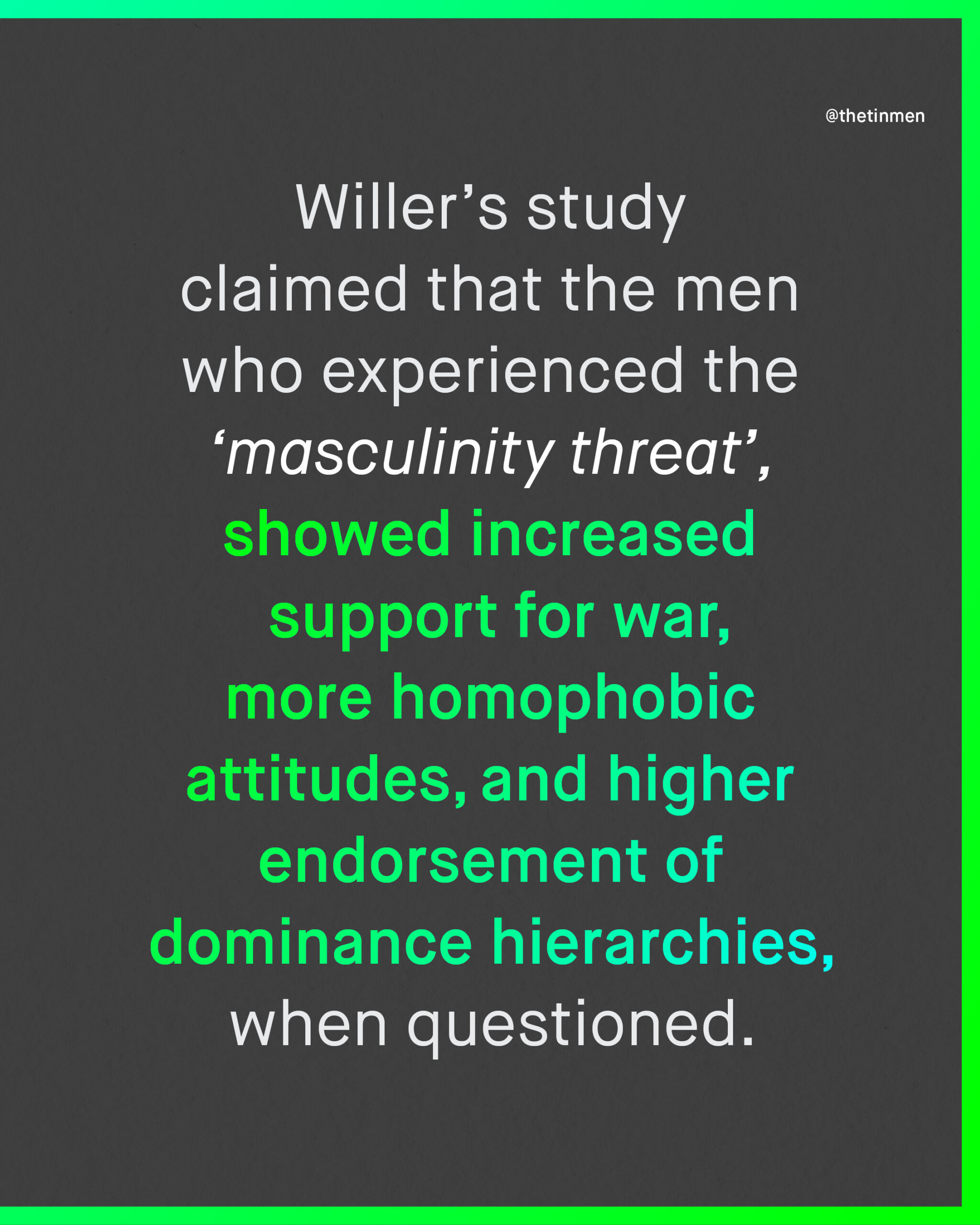
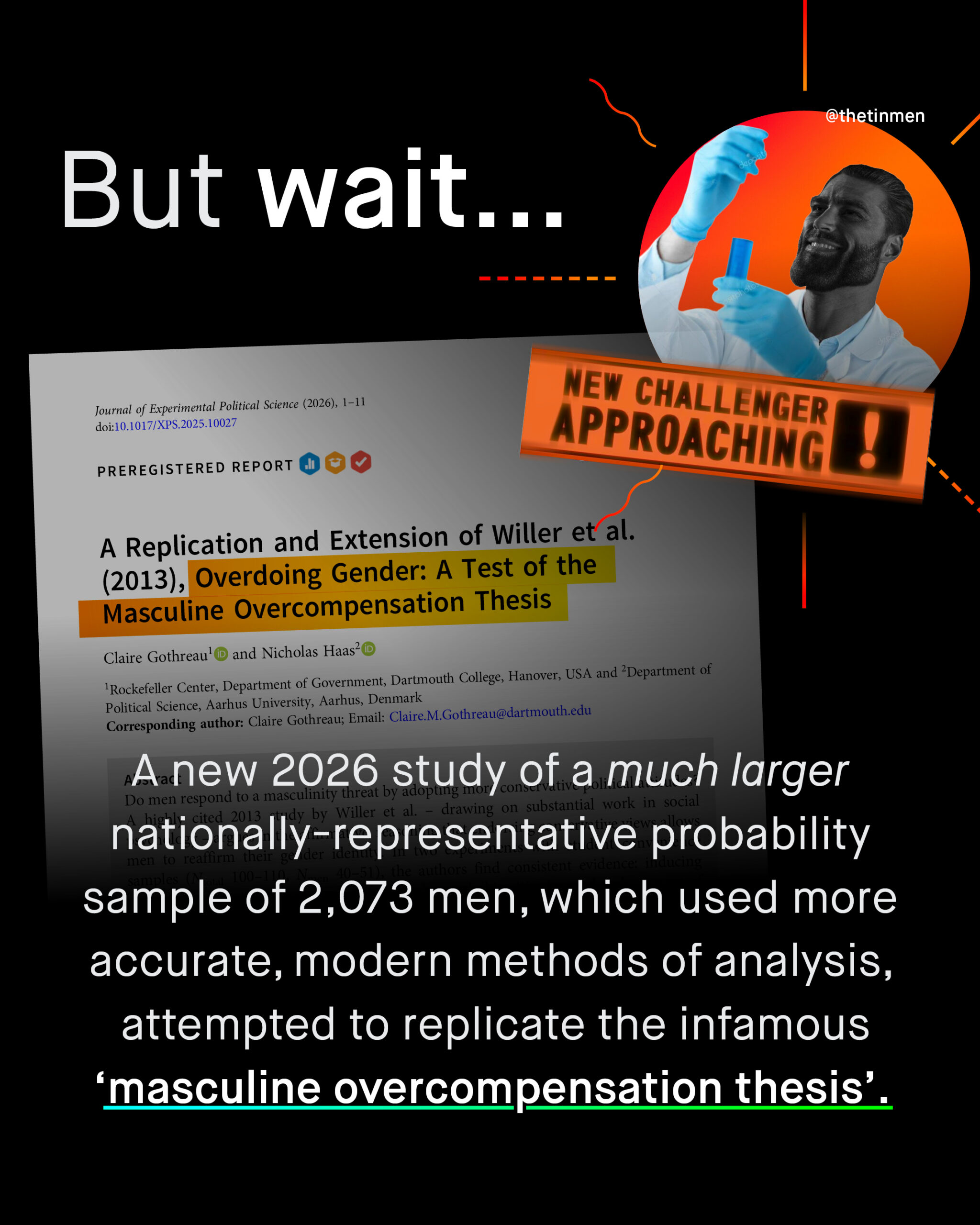
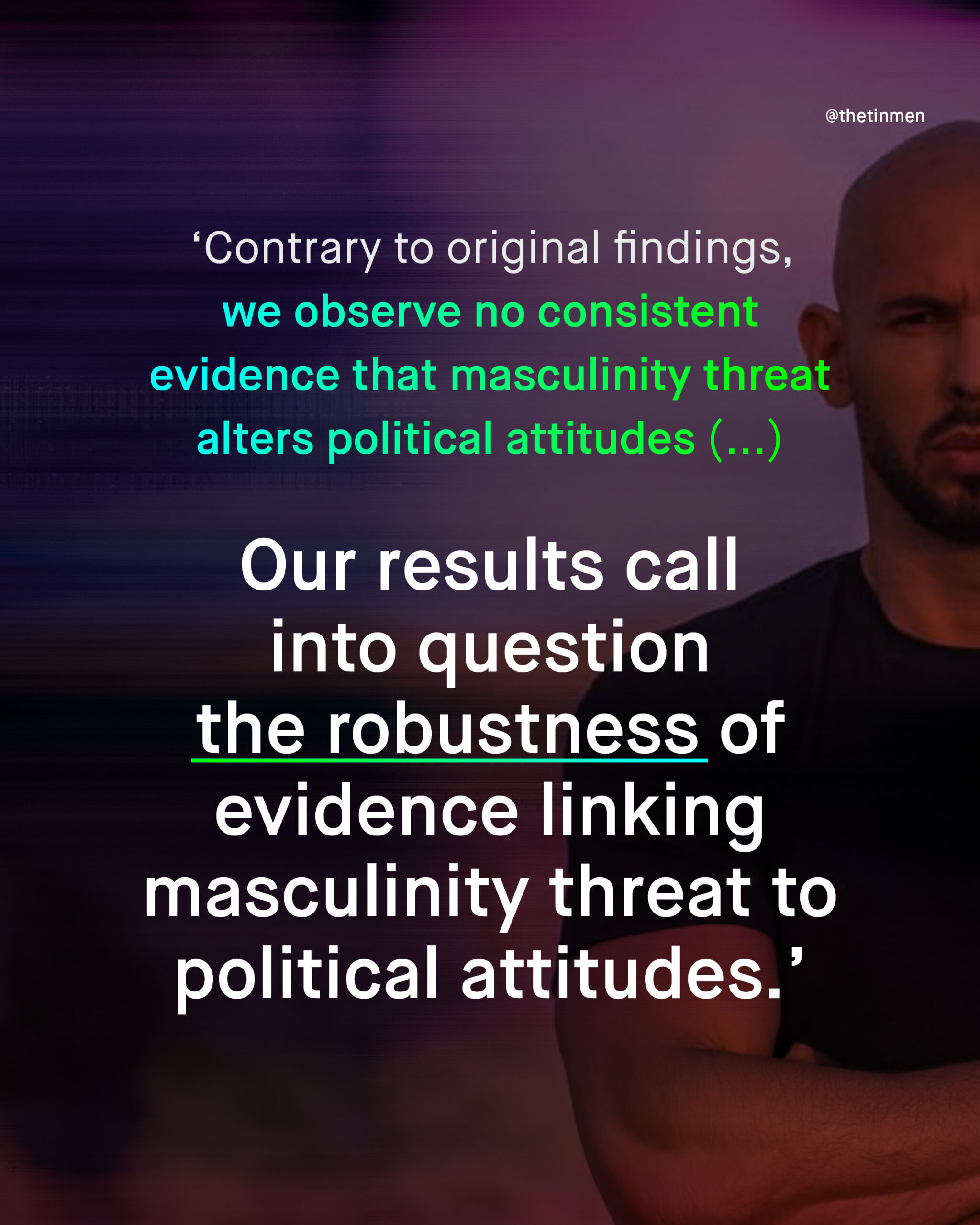
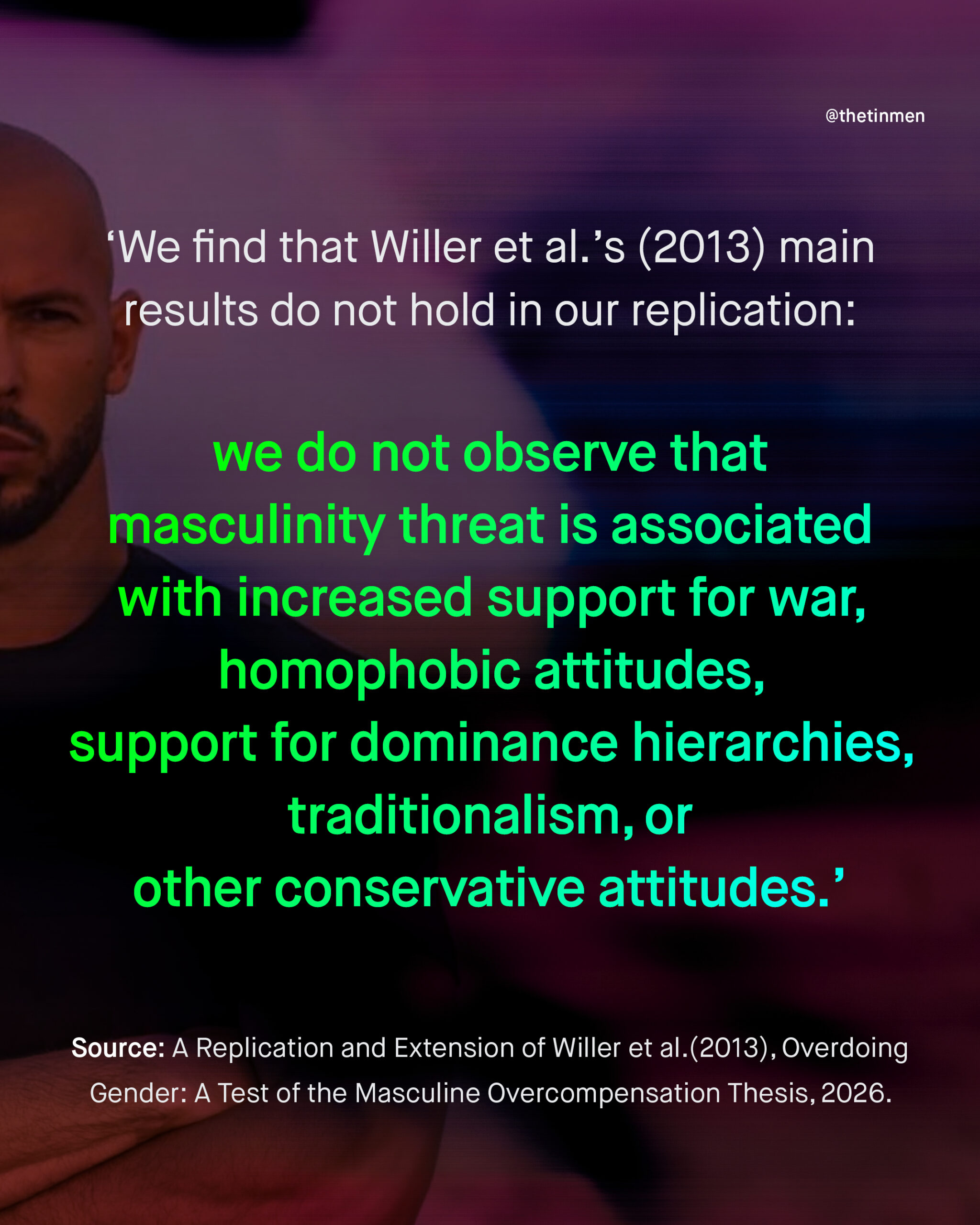
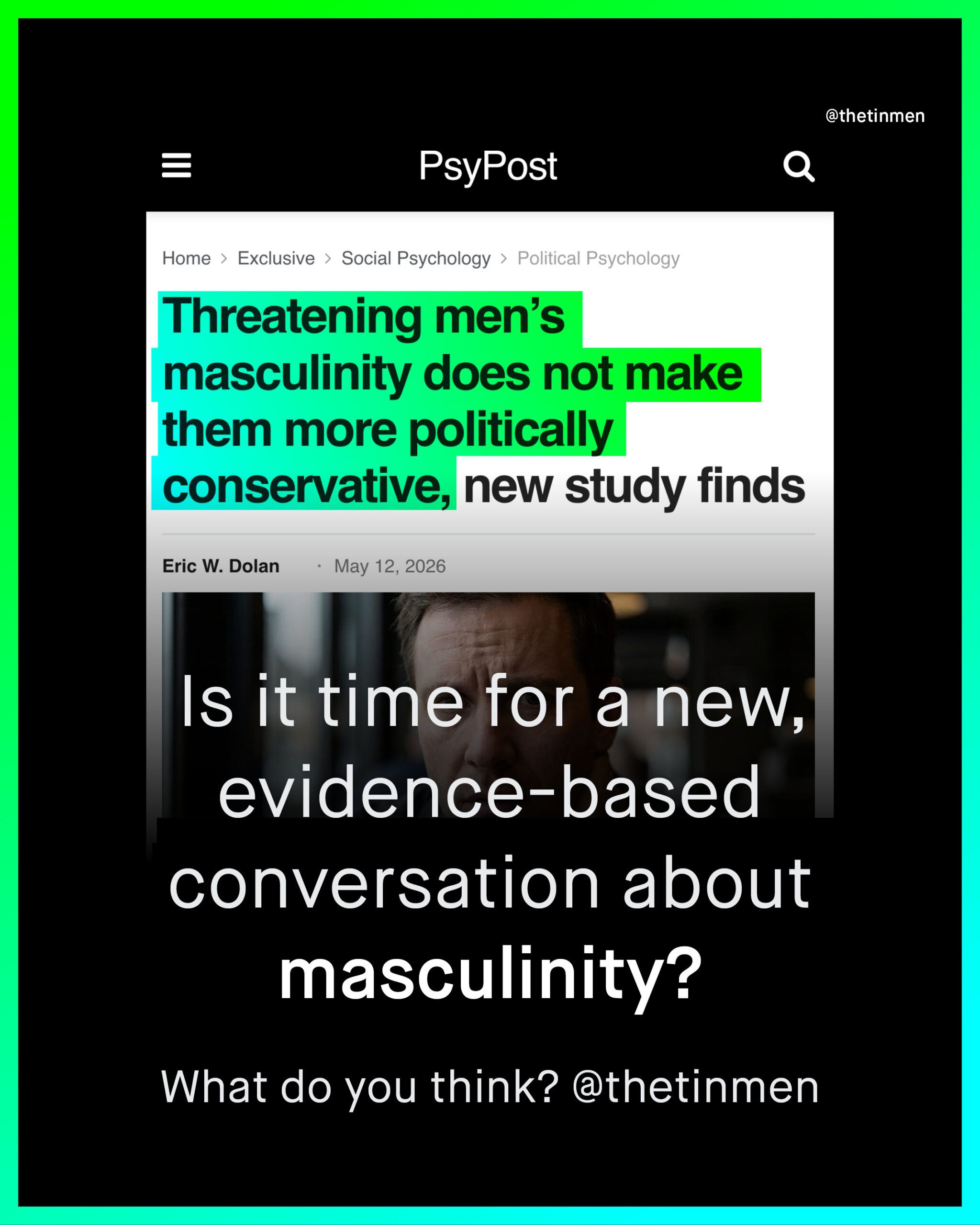

A lot of time on this page is spent cleaning up other people’s mess. Every day, someone - often fresh out of a gender studies course - makes a wild claim with weak evidence, and it goes viral. The internet picks it up without question and spreads it across the world before the facts can catch up. One of the classics is the ‘masculine overcompensation thesis’. It claims that if a man’s masculinity is threatened, he’ll overcompensate by becoming more hyper-masculine; especially by endorsing violence and homophobia. It sounds intuitive, and it fits neatly into the current hysteria around masculinity. But as usual, the study behind the claim doesn’t hold up, as it was based on two tiny samples of around 50 men each, using outdated methods and weak controls. Thankfully, a new 2026 study has now tried to replicate the findings. Instead of a few dozen students, it used a nationally representative sample of over 2,000 men; with modern, rigorous methods and techniques... and they couldn’t replicate the original results. That’s right. No evidence was found for the claim. It’s unlikely this new paper will undo years of viral misinformation, but it does show how disconnected a lot of online and academic discourse around masculinity has become from actual evidence. So do men really “overcompensate” when their masculinity is challenged? And how did we end up in a situation where bad science spreads so easily? What do you think? ~ Full source A Replication and Extension of Willer et al. (2013), Overdoing Gender: A Test of the Masculine Overcompensation Thesis https://www.cambridge.org/core/journals/journal-of-experimental-political-science/article/replication-and-extension-of-willer-et-al-2013-overdoing-gender-a-test-of-the-masculine-overcompensation-thesis/345C42C2B43871D567BF61B0BAA3B309
2026-06-15